Cost Comparison of Industrial Safety Training Companies
Cost Comparison of Industrial Safety Training Companies: 2026 UK Guide
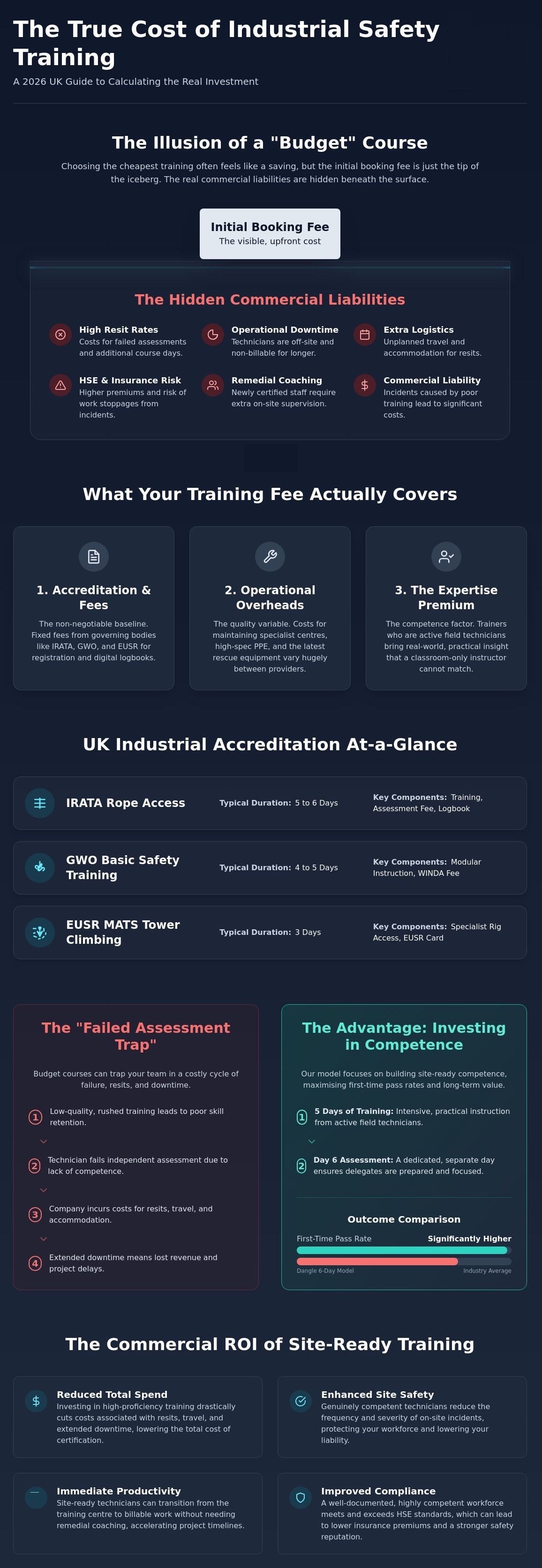
Choosing the training centre with the lowest headline rate often feels like a quick win for the procurement budget. However, when a technician returns from a "budget" course with a certificate but lacks the practical competence to work safely on a wind turbine or a North Sea asset, that initial saving evaporates. High resit rates and the necessity for remedial site coaching quickly turn a cheap course into a significant commercial liability.
You likely understand the pressure to justify every pound of the training budget to directors who primarily focus on the bottom line. This 2026 UK guide provides a comprehensive cost comparison of industrial safety training companies, looking beyond the initial booking fee to reveal the hidden logistics and long-term operational impact of your choice. We'll examine the true "Total Cost of Training," including travel, downtime, and the commercial advantage of choosing trainers who remain active in the field. From our Belfast training hub, we'll explain how site-ready competence and unique models, such as the five-day IRATA training plus a day-six assessment, reduce long-term spend far more effectively than a discounted classroom seat.
Key Takeaways
- Identify the specific factors that cause price variance amongst UK providers, including trainer-to-delegate ratios and the quality of industrial equipment.
- Utilise our 2026 cost comparison of industrial safety training companies to benchmark standard rates for IRATA, GWO, and EUSR accredited certifications.
- Avoid the "Failed Assessment Trap" by calculating the true cost of resits and travel logistics versus investing in high-proficiency training centres.
- Evaluate the commercial ROI of site-ready training, ensuring technicians transition from the training centre to billable work without requiring remedial coaching.
- Understand how a 6-day IRATA training model, led by active field technicians, significantly improves long-term safety standards and reduces total training spend.
Table of Contents
- Analysing the Industrial Safety Training Market in 2026
- Direct Cost Comparison: IRATA, GWO, and EUSR Accreditations
- The Hidden Costs of "Budget" Safety Training
- Evaluating Training Delivery: On-Site vs. Centre-Based
- ROI: Why Site-Ready Training Saves Money Long-Term
Analysing the Industrial Safety Training Market in 2026
Industrial safety training in 2026 focuses on high-stakes environments where failure isn't an option. Whether you're managing teams for wind turbine maintenance or offshore inspections, a cost comparison of industrial safety training companies reveals that headline prices rarely tell the full story. True industrial training requires accredited certifications from bodies like IRATA, GWO, or EUSR. These aren't generic safety briefings. They are rigorous assessments of a technician's ability to survive and rescue others in life-threatening scenarios. Price variance exists amongst UK providers because the infrastructure required to deliver this accredited training varies significantly in quality and scale.
The Three Pillars of Training Costs
Accreditation and registration fees form the non-negotiable baseline of any course. Bodies such as IRATA and GWO set fixed fees for registrations and digital logbooks that every provider must pay. Beyond these, operational overheads play a massive role. Maintaining a specialist centre with indoor climbing structures, high-spec PPE, and the latest rescue equipment is expensive. Finally, there's the expertise premium. Trainers who spend their downtime on active offshore sites bring a level of practical insight that a classroom-only instructor cannot match. For instance, an IRATA Level 1 course delivered by a veteran technician carries far more value than one led by someone who hasn't stepped onto a site in years.
Why Industrial Training is Not a Commodity
Work at height and confined space operations are safety-critical. Treating the associated training as a commodity to be bought at the lowest price is a dangerous strategy. Poorly trained personnel increase the risk of onsite incidents. Failure to meet established standards can result in strict interventions from the UK Health and Safety Executive (HSE). These interventions often lead to work stoppages and substantial legal fees that dwarf any initial savings on training. Insurance premiums are also increasingly tied to the documented proficiency of your workforce. In 2026, the market is shifting toward "competency-based" pricing. This model prioritises the technician's ability to perform tasks safely and efficiently over the mere possession of a certificate.
When conducting a cost comparison of industrial safety training companies, it's vital to remember that you aren't just buying a plastic card. You're investing in the mitigation of high-consequence risks. Technical proficiency is the only true measure of training value because it directly dictates the safety and productivity of your workforce on site. This shift in the UK market recognises that a cheaper course often leads to higher long-term costs through resits, downtime, and increased liability.
Direct Cost Comparison: IRATA, GWO, and EUSR Accreditations
A granular
cost comparison of industrial safety training companies requires a breakdown of what the booking fee actually covers. In the UK market, prices for technical certifications are influenced by the complexity of the accreditation and the specific facility requirements. Procurement teams should evaluate these costs alongside the HSE guidance on selecting training providers to ensure the chosen centre meets the necessary quality assurance and syllabus standards. The table below outlines the core components of the most common industrial certifications.
| Accreditation | Core Course | Typical Course Duration | Key Cost Components |
|---|---|---|---|
| IRATA | Rope Access (Levels 1-3) | 5 to 6 Days | Training, Assessment Fee, Digital Logbook |
| GWO | Basic Safety Training (BST) | 4 to 5 Days | Modular Instruction, WINDA Registration |
| EUSR | MATS Tower Climbing | 1 to 3 Days | Specialist Rig Access, EUSR Card Fee |
| City & Guilds | Confined Space (6160) | 2 to 5 Days | Registration, Assessment, Certification |
Rope Access Training Costs (IRATA)
Rope access certifications are tiered into three levels. Whilst a standard IRATA Level 1 provides the entry point, Rope Access Level 2 and IRATA Level 3 courses command a premium due to the advanced rigging and rescue techniques involved. A major variable in pricing is the assessment structure. Many centres quote for four days of training with an assessment on the fifth. Dangle Academy utilises a five-day training model followed by a day-six assessment. This additional day of practical instruction ensures technicians are more proficient before the independent assessor arrives. It's vital to confirm that your quote includes the assessor's fee, as this is often hidden in lower headline prices.
Renewable Energy Standards (GWO)
The wind energy sector relies on GWO Basic Safety Training (BST), which is delivered in specific modules such as fire awareness and manual handling. For technicians moving into more complex roles, GWO Advanced Rescue Training (ART) is required. When comparing providers, always check for the inclusion of WINDA registration fees. This mandatory digital record is essential for any technician working on offshore or onshore turbines. Multi-course bundles often provide a more cost-effective route than booking modules individually, as they reduce the total administrative overhead per certificate.
Utility and Telecoms (EUSR)
The telecoms industry uses EUSR MATS for tower climbing and rescue certifications. These courses require training centres to maintain expensive steel structures that replicate real-world masts. From 1 April 2026, the EUSR registration price is set at £34.00 excluding VAT. This is a fixed cost across the industry. If you are managing a large team, view our full range of accredited training to see how group bookings can streamline your annual certification budget.
City & Guilds Confined Space (6160)
City & Guilds 6160 qualifications cover low, medium and high-risk confined space operations, including rescue and breathing apparatus. As a result, course duration and cost vary depending on the level of qualification required. Higher-risk programmes demand additional practical exercises, specialist rescue equipment, assessor involvement and greater instructor-to-candidate ratios. When comparing providers, confirm which qualification level is included, whether registration fees are covered and how much practical training is delivered, as these factors have the greatest influence on course cost and learner competence.
Selecting a provider based on the total value delivered rather than the lowest price protects your commercial interests. High-quality training results in technicians who transition seamlessly from the centre to the site, ready to perform billable work immediately.
The Hidden Costs of "Budget" Safety Training
When conducting a cost comparison of industrial safety training companies, many procurement managers overlook the financial impact of a failed assessment. A technician who fails an IRATA or GWO course represents a total loss of the initial fee, a week of wages, and the potential revenue from their scheduled site work. Adhering to HSE training and competence guidelines requires more than just a certificate; it necessitates a level of skill that stands up to the rigours of an industrial environment. Choosing a "budget" centre often means accepting higher failure rates and technicians who lack the practical confidence to work on high-value assets.
Failure Rates and the Cost of Incompetence
Industry data suggests that IRATA assessment failure rates can increase when training is rushed or delivered with high delegate-to-trainer ratios. A failed assessment can be expensive, particularly if a resit is required more than 60 days later, often resulting in the cost of repeating the full course. Choosing a provider with lower delegate-to-trainer ratios gives instructors more time to coach complex rigging techniques, rescue scenarios and practical problem-solving. This personalised approach helps build confidence, improves first-time pass rates and ensures candidates are better prepared for the pressure of an independent IRATA assessment and the demands of real-world rope access work.
Accommodation and Subsistence
The headline price of a course is often eclipsed by the cost of moving and housing a team. For companies based in Northern Ireland, sending technicians to the UK mainland involves flights, car hire, and hotel stays. These expenses can easily add £600 to £800 per person to the total bill. Utilising local hubs like our Belfast centre significantly reduces travel budgets and keeps your team closer to home. When you factor in subsistence and the "loaded" cost of an employee sitting in a classroom, the proximity of the accredited training centre becomes a primary driver of the total cost of ownership.
Some providers offer a low entry price but charge extra for specialist PPE, harness hire, or consumables. In a high-stakes cost comparison of industrial safety training companies, you must verify if the quote includes high-spec rescue gear and the latest industrial equipment. Hidden fees for equipment use or digital logbook registrations can quickly erode any initial savings. You must also calculate technician downtime as a commercial cost. Every day a technician spends in a classroom is a day they aren't generating revenue on site. High-quality training centres minimise this "lost" time by ensuring technicians are proficient enough to pass first time and move straight into billable work.
Evaluating Training Delivery: On-Site vs. Centre-Based
High-risk industrial training for sectors like wind energy and telecoms cannot be effectively delivered through a screen. Whilst digital theory modules can reduce the initial time spent in a classroom, the core of GWO and IRATA certifications relies on physical muscle memory and rescue proficiency. When performing a cost comparison of industrial safety training companies, it's vital to distinguish between centres that offer "blended learning" for theory and those that attempt to cut costs by reducing practical hours. Inadequate training environments don't just lead to lower pass rates; they create significant insurance and liability risks for the employer.
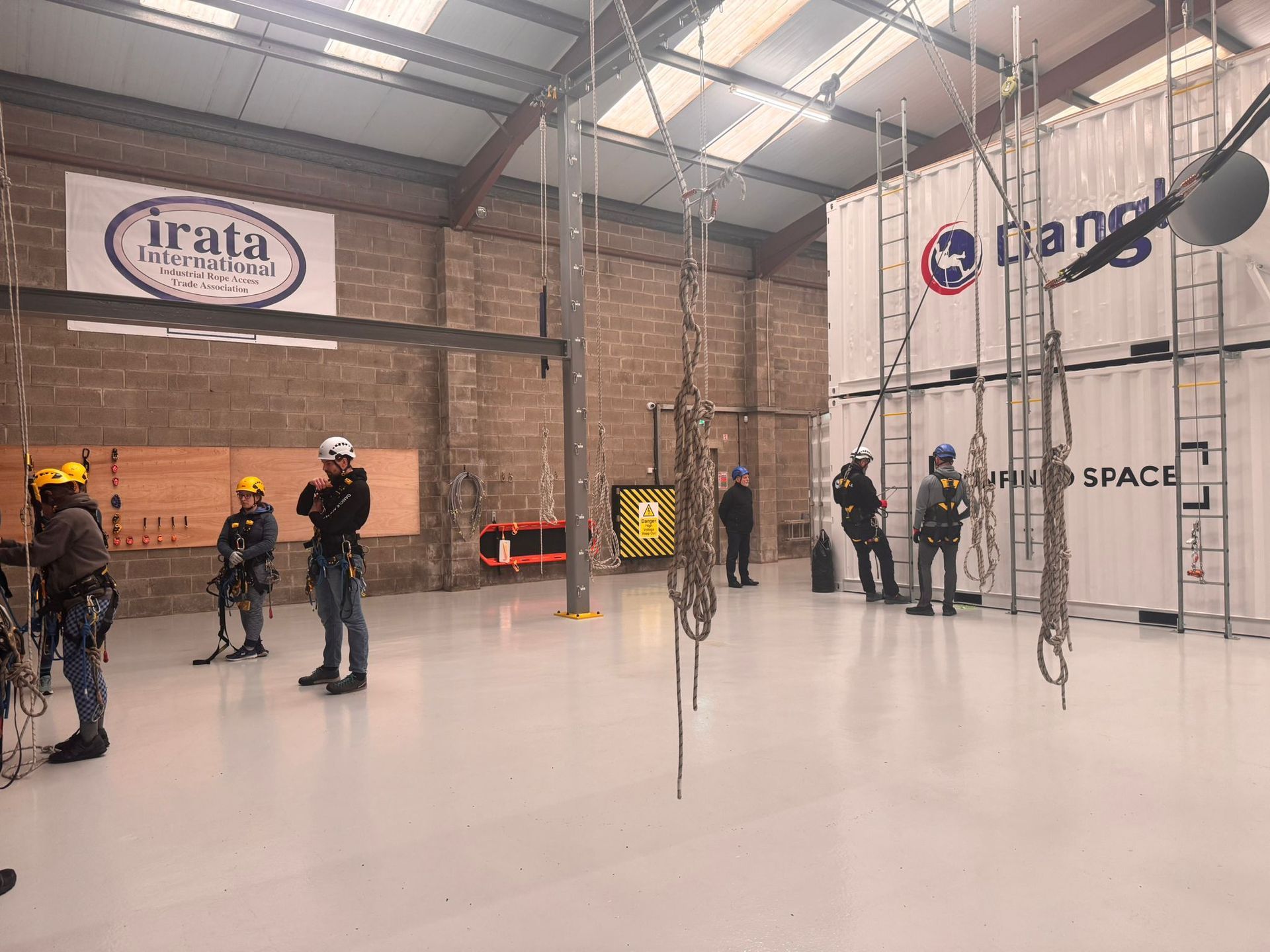
Bringing a trainer to your operational site might seem like a cost-saving measure to avoid travel expenses. However, the facility requirements for high-stakes training are immense. Simulating a wind turbine nacelle or a telecoms tower requires purpose-built steel structures and certified anchor points that most active sites lack. Sending a team to a specialist centre ensures they are trained on rigs designed for safety and repeatability. For companies based in Northern Ireland or the Republic, choosing a hub in Belfast often provides a more competitive total price compared to the high-overhead centres found in London or the South East of England.
The Value of Specialist Training Centres
Industrial environments present unique medical challenges that generic office-based courses ignore. Purpose-built rigs are essential for courses like First Aid at Work (FAW), allowing technicians to practice casualty care whilst suspended in a harness or within a confined space. This context-specific training ensures that your personnel are ready for the physical realities of the field. Using a centre that integrates active site services into its curriculum means your team learns from professionals who understand current industrial standards and technical requirements.
Group Bookings and Corporate Discounts
EHS managers can often secure better rates by negotiating group bookings for annual certifications. A "closed" course, where the centre is dedicated solely to your team, allows for training tailored to your specific equipment and internal safety protocols. This is often more cost-effective than booking individuals onto "open" public courses spread across the year. If you are managing a large workforce, contact us to discuss bespoke group training rates at our Belfast facility.
A thorough cost comparison of industrial safety training companies must weigh the convenience of on-site delivery against the technical superiority of a dedicated centre. The goal is not just to secure a certificate, but to ensure that technicians return to site with the proficiency required to manage high-risk tasks without incident. Investing in centre-based training provides a controlled environment where safety is the only priority, ultimately protecting both your personnel and your commercial reputation.
ROI: Why Site-Ready Training Saves Money Long-Term
The true value of industrial training is not found in the initial booking fee. It is found in the speed at which a technician becomes a billable asset. A "site-ready" technician is someone who can transition from the training centre to a wind turbine nacelle or a telecoms mast and perform high-risk tasks with immediate proficiency. When technicians graduate from budget centres without practical site awareness, they often require weeks of remedial coaching and close supervision. This "competency gap" is a significant hidden cost that erodes the perceived savings of a cheaper course.
High-quality training also acts as a primary driver for lowering incident rates. There is a direct correlation between the depth of a technician's rescue proficiency and the long-term reduction in insurance claims and legal liabilities. Personnel who are trained to international benchmarks like IRATA and GWO by active field experts are less likely to make the technical errors that lead to costly downtime or HSE interventions. Furthermore, investing in clear, accredited career paths from Level 1 to Level 3 improves employee retention. Technicians stay with companies that prioritise their professional progression and safety.
Justifying the Budget to Leadership
EHS managers often face the challenge of justifying training spend to directors who view safety as a compliance burden. To change this perception, safety training must be framed as an operational investment. A detailed cost comparison of industrial safety training companies using a Total Cost of Ownership (TCO) model reveals that the "cheapest" providers often have the highest long-term costs. By accounting for resit fees, travel logistics, and the revenue lost during extended downtime, the commercial case for premium, site-focused training becomes undeniable. Training is not a box-ticking exercise. It is a performance driver that protects your most valuable assets.
The Dangle Academy Advantage
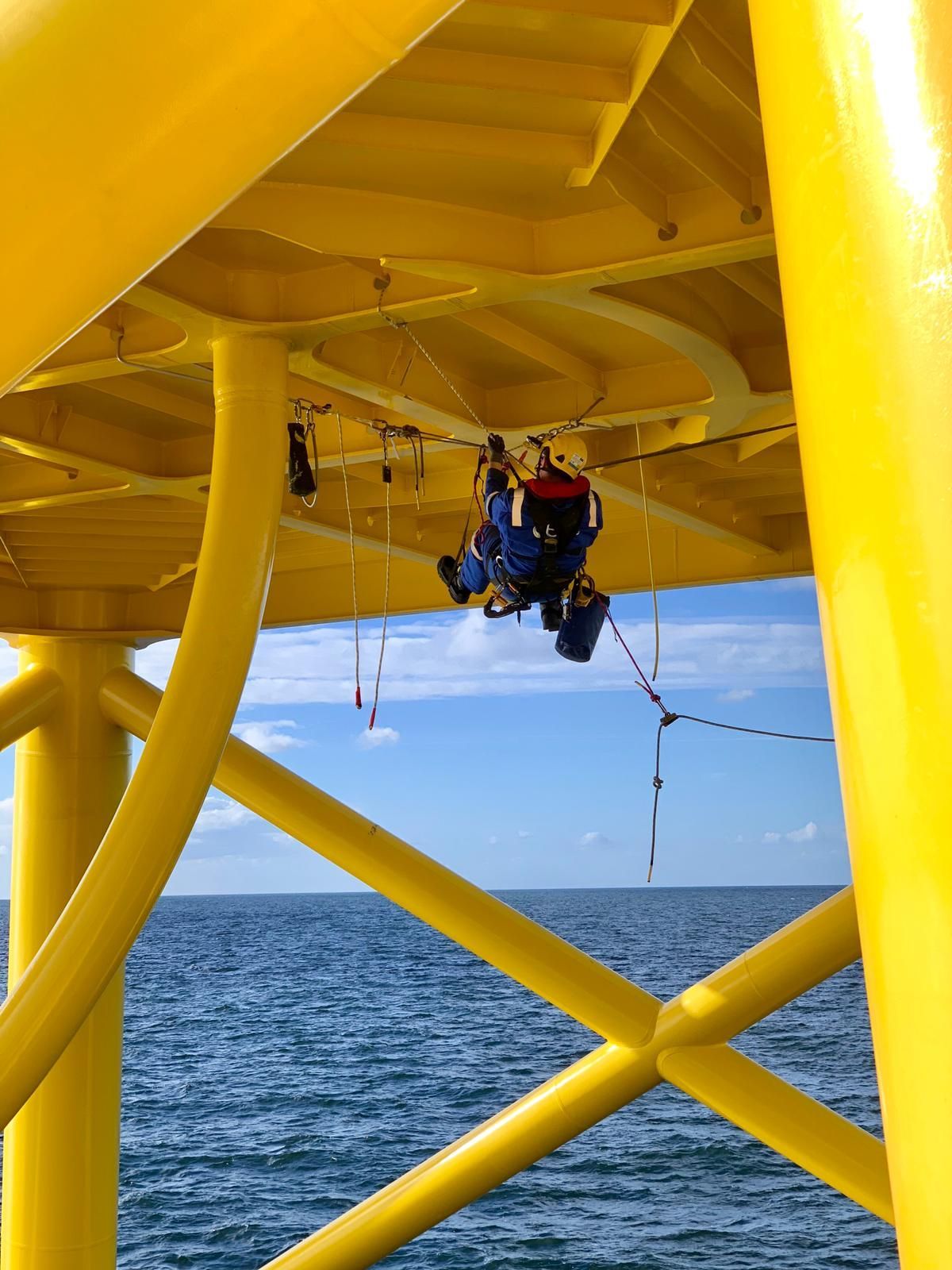
Our Belfast centre has become the preferred choice for industrial leaders across the UK and Ireland because we bridge the gap between certification and site reality. Dangle is unique because we operate an active industrial services division specialising in inspection and wind turbine maintenance. This real-world experience informs every module we teach. Our trainers don't just recite manuals; they share practical insights from live offshore and onshore projects. This ensures our trainees are not just certified, but truly competent.
For organisations looking to reduce their total training spend whilst improving workforce safety, the choice of provider is critical. We provide the technical rigour and industrial context required to prepare your teams for the most challenging environments in the world. Contact Dangle Academy for a bespoke corporate training quote to secure your 2026 training dates and ensure your personnel are site-ready from day one.
Optimising Your Industrial Training Strategy for 2026
A thorough cost comparison of industrial safety training companies proves that the most expensive choice is often the one with the lowest initial price. By prioritising technical proficiency over a simple certificate, you reduce the long-term burden of resit fees, travel logistics, and site downtime. Our Belfast centre bridges the gap between the classroom and the rig, ensuring your technicians are site-ready from the moment they qualify.
As an IRATA, GWO, and EUSR accredited centre with an active industrial service division, we provide the practical expertise that generic providers cannot match. Our unique 6-day IRATA model is specifically designed to maximise first-time pass rates and technical confidence. We are ready to help you justify your training spend through improved operational efficiency and reduced risk.
We look forward to supporting your team's professional progression and ensuring they remain protected in the most demanding industrial environments.
Frequently Asked Questions
How much does an IRATA Level 1 course typically cost in the UK?
Market rates for IRATA Level 1 training fluctuate based on the centre's location and the specific training model provided. Whilst some providers offer a standard four-day training block, centres that prioritise technician proficiency often provide a five-day model with an assessment on the sixth day. You should always ensure that any quoted rate includes the mandatory independent assessor's fee and digital registration.
Are there hidden fees in GWO training prices?
Common hidden fees in GWO training include mandatory WINDA registration charges and equipment hire costs. Some providers exclude these from the headline price to appear more competitive in a cost comparison of industrial safety training companies. Always verify if the total includes the digital upload to the global database and the use of all necessary fall arrest and rescue gear.
What is the "Total Cost of Training" for an offshore technician?
The total cost includes the booking fee, travel expenses, accommodation, and the technician's daily wage whilst they're away from site. For offshore personnel, these logistical costs often exceed the actual course fee. Selecting a local hub like Belfast significantly reduces this "loaded" cost for Northern Ireland-based teams by eliminating flights and hotel stays.
Why is in-person industrial training more expensive than online courses?
High-risk industrial training requires purpose-built rigs, such as simulated wind turbine nacelles and telecoms towers, which are expensive to maintain. Online courses can't replicate the muscle memory needed for safe rigging or rescue operations. The higher price reflects the cost of specialist equipment, low trainer-to-delegate ratios, and comprehensive liability insurance for high-stakes activities.
Can I get a discount for booking multiple safety courses at once?
Most centres offer corporate discounts for group bookings or multi-module bundles like the GWO Basic Safety Training (BST) package. Booking a "closed" course for your team allows the trainer to focus on your specific operational equipment and internal protocols. This approach is usually more cost-effective than booking individual delegates onto public courses throughout the year.
What happens to the cost if a technician fails their assessment?
If a technician fails their assessment, the employer typically loses the initial fee and must pay for a full resit. This also doubles the cost of technician downtime and travel logistics. Investing in a centre with high-proficiency training models and trainers who are active in the field is the most effective way to mitigate this financial risk.
Does the training fee include PPE and course materials?
Quality training providers include all necessary high-spec PPE, harnesses, and technical manuals within the standard fee. Some budget centres might charge additional daily hire fees for specialised rescue equipment or digital logbooks. Always clarify whether high-spec gear is provided or if your technicians are expected to bring their own site-ready equipment.
How do training costs in Northern Ireland compare to the UK mainland?
Course fees in Northern Ireland are generally comparable to mainland UK, but the logistical savings for local firms are substantial. Avoiding flights, car hire, and hotel stays for a full team can save thousands of pounds per training cycle. Choosing a Belfast-based centre keeps your workforce closer to home whilst maintaining international accreditation standards like IRATA and GWO.
Contact Us
We'd Love a Share...
Recent Blog Posts