WIND TURBINE LEADING EDGE PROTECTION (LEP) | BELFAST
All wind turbine blades will experience leading edge erosion at some stage in the assets lifecycle management (ALM). Leading edge erosion is caused by rain, salt spray, sand, insects and ice. Without leading edge protection (LEP), most unprotected blades will show signs of leading edge damage in 2 to 5 years.
Safety, Access & Competence
Leading Edge Protection Solutions
Based in Belfast, Northern Ireland, we provide leading edge protection installation for onshore and offshore wind assets across Northern Ireland and the wider UK.
LEP Options We Install
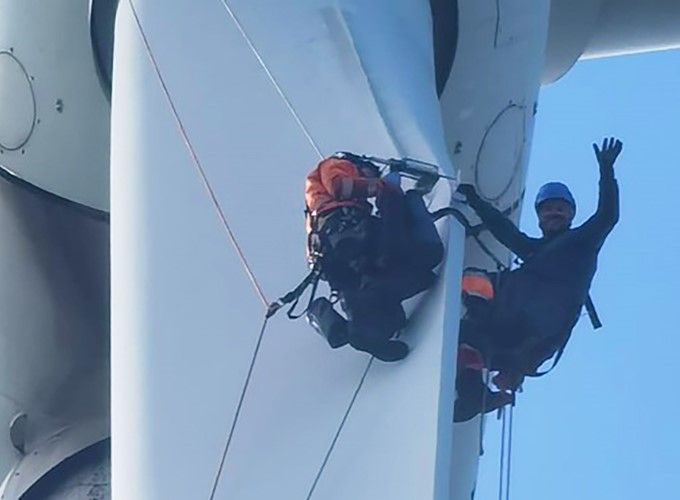
Our LEP work is delivered by competent rope access technicians with wind blade training, planned around safe systems of work and site-specific risk assessments. We follow controlled surface preparation, installation/application, cure/finish checks and documented QA so asset owners can track what was installed and where. Whether onshore or offshore, we plan around weather windows and access constraints to minimise downtime without compromising safety or finish quality.
Onshore Wind Protection
Our team specialises in the installation of advanced protection systems for onshore wind assets, ensuring optimal performance and longevity.
Offshore Wind Protection
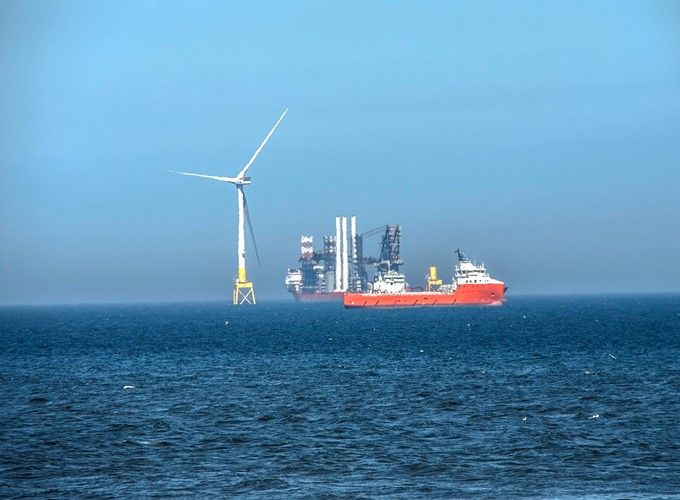
We provide tailored protection solutions for offshore wind installations, safeguarding your assets against harsh marine conditions.
Erosion-Resistant Coatings
Erosion-resistant coatings create a tough, flexible barrier on the blade’s leading edge to reduce pitting, coating loss and composite exposure. We select systems suited to site conditions (rain intensity, salt spray, airborne grit) and apply them to manufacturer-aligned prep standards for consistent adhesion and finish.
3M Polyurethane Tape
Polyurethane leading edge tape (including 3M options) is a fast, effective upgrade where you want strong erosion resistance with minimal downtime. Correct surface prep, alignment and edge sealing are key — we install to reduce lifting, water ingress and premature edge failure.
Pre-cast Soft Shells
Soft shells provide a robust physical layer over the impact zone and are often chosen for high-erosion sites or where repeatability is important across multiple turbines. We handle fit checks, bonding, finishing and QA to ensure the shell integrates cleanly with the blade profile.
What is leading edge erosion (and why it matters)
Leading edge damage manifests itself as pitting on the blade’s surface, especially on the leading edge, where the most impact will occur. This leading edge erosion causes a reduction in aerodynamic efficiency and a loss in operating performance.
Some studies have shown that leading edge erosion can result in a drag increase of up to 500%, leading to a decrease in annual energy output of up to 20%. The effects of this wind turbine rotor blade damage can be apparent in as little as two years from installation. Wind turbines can be reasonably expected to perform continuously for 15 or more years. This means erosion is a significant problem for operators. Once installed, retrofitting of LEP should be a strong investment.
Leading the Way in Leading Edge Protection
Wind Turbine Blade Protection
LEP Application
Leading Edge Repairs
Rapid LEP Installation
Interested in our leading edge protection services?
We’re here to help!
Our experienced, specialist blade repair technicians are IRATA-certified. They’ve also undergone GWO blade repair training courses. We’ve been providing asset integrity services to the energy sector from the outset. Our combined skills and know-how ensure the highest safety levels and the effectiveness of repairs.
What is leading edge protection (LEP) on wind turbine blades?
LEP is a protective coating, tape or shell applied to the blade’s leading edge to reduce erosion from rain, salt spray and airborne particles, helping maintain aerodynamic performance.
How do I know if my blades need LEP?
Common signs include pitting, roughness, coating loss and visible edge wear. If erosion is present, LEP (often alongside minor repair) can help stabilise the damage and slow progression.
What’s better: LEP coating, polyurethane tape, or soft shells?
It depends on site conditions, erosion severity and your maintenance strategy. Coatings can be ideal for blended repairs and finishing, tapes can be fast to install, and shells can be robust for high-erosion zones.
How long does LEP last?
Service life varies with rainfall intensity, tip speed, offshore exposure and maintenance intervals. The best approach is planned inspection cycles and timely touch-ups before erosion reappears.
How much downtime is involved for LEP installation?
Downtime depends on access, weather windows and the LEP system selected. We plan work to minimise turbine disruption and can combine LEP with blade inspection/repair where appropriate.
Can you apply LEP after blade repairs?
Yes — LEP is often applied after repairs to protect the repaired area and reduce repeat erosion, especially in high-impact leading edge zones.