Rope Access Structural Inspection
Rope Access Structural Inspection: A Practical Infrastructure Buying Guide
When a defect is high above ground, behind equipment or beneath a structure, the challenge is reaching it well enough to inspect it. A rope access structural inspection can bring technicians close to difficult-to-reach areas, but rope access alone does not guarantee useful findings. The inspection scope and access plan need to work together.
To decide whether rope access suits your structure, start with the asset, the inspection objective and the site constraints. Defining these early helps identify coverage gaps and agree what evidence the work needs to produce.
This expert guide, written by Dangle® explains how to assess rope access for a structural inspection, define the scope and plan around safety and operational requirements. It also covers the information to agree before work starts, so findings can support practical next steps. Drawing on industrial access and inspection experience, Dangle® treats rope access as a way to reach the evidence, not as a substitute for a well-defined inspection test plan (ITP).
Key Takeaways
- Start with the asset decision the inspection needs to inform, so the findings have a clear purpose.
- Map inspection locations against drawings, site restrictions and known concerns to identify potential coverage gaps.
- For a rope access structural inspection, distinguish visual examination from specified non-destructive testing. Each produces different evidence.
- Build the project brief around the asset, inspection tasks, access arrangements and agreed reporting outputs.
- Use practical site experience to align the access plan with the structure and the inspection work required.
Table of Contents
- Rope Access Structural Inspection: Define the Asset Question First
- How Rope Access Supports Structural Inspection in Difficult-to-Reach Areas
- Choose Inspection Methods by Defect, Material and Required Evidence
- Commission Rope Access Structural Inspection with a Clear Project Brief
- Plan the Next Step with Dangle® Rope Access Inspection Services
Rope Access Structural Inspection: Define the Asset Question First
A report can include photographs and observations yet still leave an asset owner unsure what to do next. Often, the issue is not a lack of access. It is a brief that never defined what decision the findings should support.
A structural inspection gathers condition evidence to inform maintenance or engineering decisions. Rope access provides a way to reach selected work areas. It does not, by itself, define what to inspect or how to assess the findings. Set the inspection objective first, then plan access around it.
Rope access may suit locations that are difficult to reach using conventional access, when a task-led plan allows rope access technicians to examine the required areas. General background on rope access can help explain the method, but project suitability depends on the asset, work locations and inspection scope.
Which infrastructure assets may need difficult-access inspection?
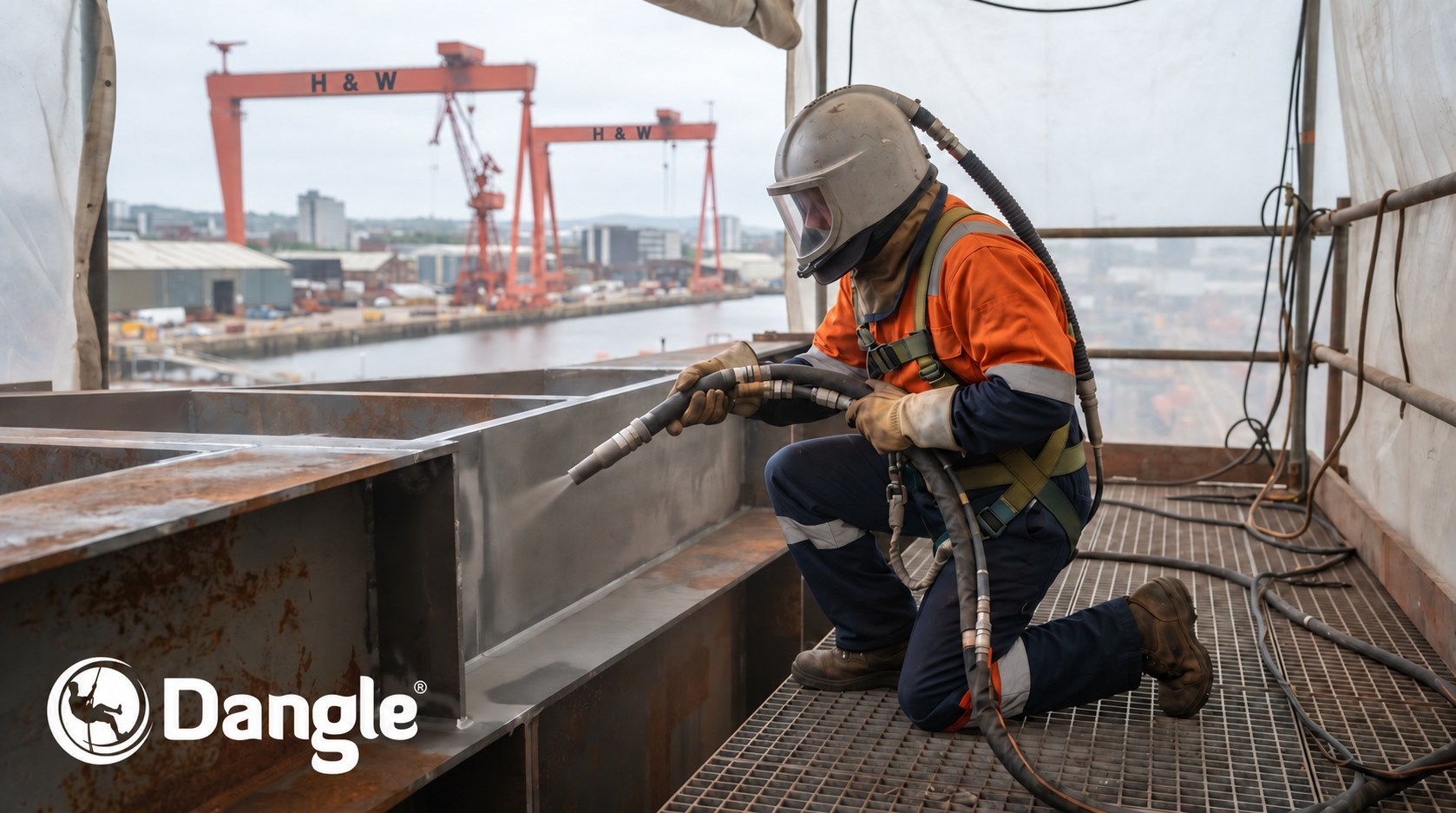
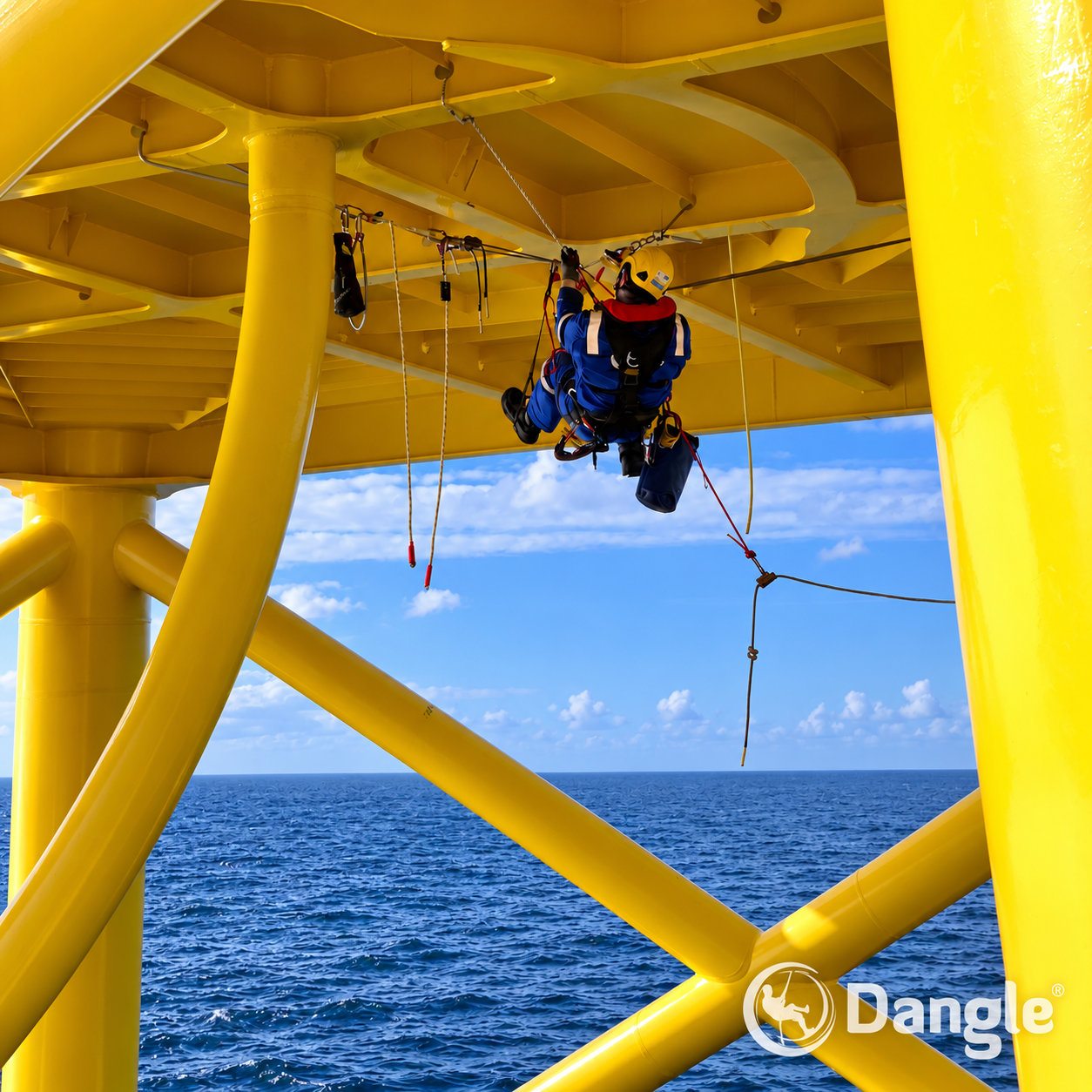
Bridges, industrial structures, marine assets and elevated components can all have areas that are hard to view or approach from ground level. These might include the underside of a bridge deck, steelwork within an industrial facility or elevated sections of a marine structure. Asset type alone does not determine the access method. Condition, location, inspection tasks and site constraints all matter.
For an asset in Belfast or elsewhere in Northern Ireland, consider how site access, nearby operations and restrictions on work areas could affect where technicians can work and how the inspection is sequenced. Dangle® provides industrial rope access and inspection services, informed by practical site experience across the UK and Ireland.
What decision should the inspection help you make?
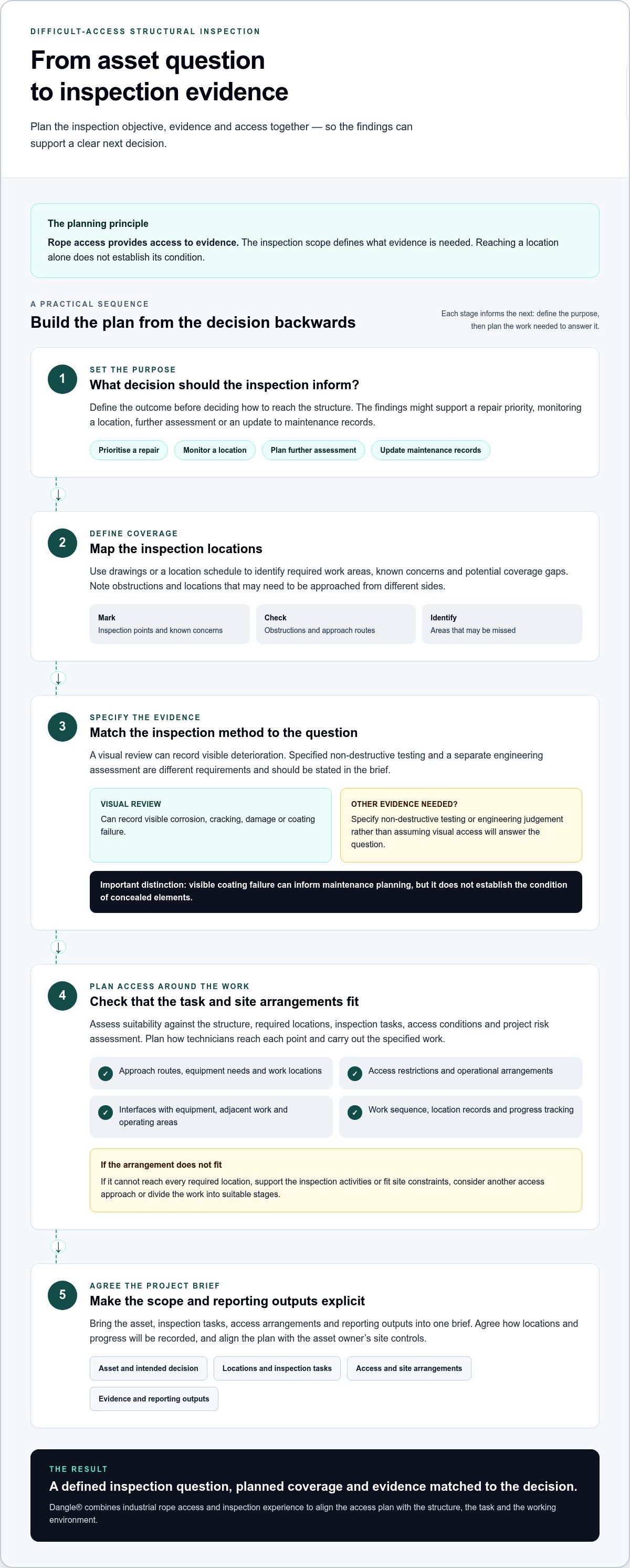
Be specific about the intended outcome. Do you need a general condition assessment, a record of known or suspected defects, or evidence to support maintenance planning? A visual review can record visible deterioration, such as corrosion, cracking or damage. That is different from a scope requiring specified non-destructive testing or a separate engineering assessment.
These distinctions affect what technicians examine, what evidence they record and what the report can reasonably conclude. For example, recording the location and visible extent of coating failure can help inform maintenance planning, but it does not establish the condition of concealed elements. If you need a particular test or engineering judgement, include it in the brief rather than assuming visual access will answer the question.
State the decisions the findings should inform: prioritising a repair, monitoring a location, planning further assessment or updating maintenance records. This gives the rope access structural inspection a clear purpose and helps align the tasks and reporting outputs with the asset owner’s needs.
How Rope Access Supports Structural Inspection in Difficult-to-Reach Areas
Plan access around the structure, the locations to examine and the tasks in the inspection scope. A bridge may have separate inspection points beneath its deck, while an industrial structure may require access around pipework, platforms or operating equipment. The plan should show how technicians can reach each location and carry out the specified work. Reaching a location is not, on its own, evidence of its condition.
Rope access provides access to evidence. The inspection scope defines what evidence is needed. Technicians use the access system to position themselves at agreed locations, then carry out the tasks defined for those areas. The chosen access method does not automatically mean that the inspection coverage is adequate.
Infrastructure applications span different sectors. The U.S. Bureau of Reclamation describes its use of rope access at dams and facilities in Reclamation's Rope Access Program. It is an example of the method being used on infrastructure. A UK project still needs planning around its own structure, tasks and site arrangements.
What should an access plan account for?
Build the plan around work locations, approach routes, equipment needs and site constraints. A marked-up drawing or location schedule can show where technicians need to work, including areas that are obscured or approached from different sides. The order of work matters too. Sequencing can affect how the team moves around the structure and whether the planned coverage can be completed as intended.
- Identify inspection points and known obstructions.
- Record access restrictions and relevant site arrangements.
- Note interfaces with equipment, adjacent work and operational areas.
- Agree how inspection locations and progress will be recorded.
Coordinate the plan with the asset owner’s operational controls and site arrangements. Active plant, restricted zones or nearby work, for example, may affect where and when technicians can access the structure. Dangle® brings practical site experience to industrial rope access and inspection work, aligning access planning with the task and working environment.
When might another access approach need consideration?
Rope access suitability depends on the task, structure, access conditions and project risk assessment. Consider whether the proposed arrangement can reach every required location, support the inspection activities and fit the site’s operational constraints. If it cannot, another access approach may be needed, or the work may need to be divided into suitable stages.
Compare options against the job rather than assuming one method is always safer, quicker or more economical. A dense run of inspection points, limited rigging locations or interfaces with ongoing operations can change what is practical. The aim is a workable plan that provides the required coverage while managing disruption and site risks.
A useful rope access structural inspection plan links each work location to an inspection task and a workable access arrangement. Make those links explicit in the brief. They give the site team a shared basis for coordinating the work and identifying access gaps before inspection begins.
Choose Inspection Methods by Defect, Material and Required Evidence
Choose the method to answer the inspection question, not simply because it is familiar or convenient. A close visual examination can document visible conditions, but it cannot answer every question about a structure. If the concern requires evidence that cannot be established visually, the scope may need to specify a suitable non-destructive testing method and the result required.
Keep three elements distinct: the inspection objective, the method used to gather evidence and the access arrangement. Rope access gets the technician to a work location. The inspection method determines what is examined there. Dangle® provides Industrial Rope Access Trade Association (IRATA) rope access inspection services, with practical site experience informing how access relates to the task. For wider rope access industry context, see the Society of Professional Rope Access Technicians (SPRAT).
- Inspection question: What visible condition is present at this location?
- Evidence sought: Recorded visual observations, with location references and supporting images where agreed.
- Access implication: The technician needs a suitable position and line of sight to the area being examined.
- Scope-dependent method: Visual examination defined to match the inspection brief.
- Inspection question: Is additional material evidence needed beyond what can be seen?
- Evidence sought: A result from a specified non-destructive testing method, where suitable for the asset and question.
- Access implication: The work location must be reachable and suitable for the specified test equipment and procedure.
- Scope-dependent method: A method such as ultrasonic testing may be considered if the inspection brief calls for it.
These examples show why you should not select a method simply because a location is difficult to reach. Define the defect concern, material and intended use of the result first. Then specify the methods required and who is responsible for interpreting the findings.
When could ultrasonic testing form part of an inspection scope?
Ultrasonic testing may be specified when the brief requires relevant material evidence that a visual examination cannot provide. Its suitability depends on the asset material and condition, access at the test location and the result the project needs. Rope access may provide a way to reach that location, but it does not perform or validate the test. Define the method, procedure and reporting requirements separately.
How should inspection findings be made useful?
Agree the record format before work starts. Useful outputs may include location references, observations, photographs where agreed and a report structured around the original inspection question. A consistent reference system helps the asset team relate findings to drawings, components or maintenance records, rather than interpreting notes without clear locations.
Define the limits of the reporting remit too. Recorded observations describe what was found during the agreed inspection. Engineering conclusions or recommendations are separate outputs and should only be expected if they are included in the scope. This distinction helps the rope access structural inspection produce clear, traceable findings that are relevant to the decision at hand.
Commission Rope Access Structural Inspection with a Clear Project Brief
A clear brief reduces ambiguity before technicians mobilise. It connects the condition question to the locations, inspection tasks, access arrangements and reporting outputs. For a rope access structural inspection, each part should reflect the asset and the decision the findings need to support.
Build the brief in a practical order:
- Define the asset question. State what decision the inspection should inform, such as documenting a known concern or supporting maintenance planning.
- Share site information. Provide available drawings, identify inspection locations and describe access restrictions, operational interfaces and known concerns.
- Set the inspection scope. Describe the areas to examine, tasks required and any method-specific requirements. Distinguish visual observations from testing or engineering assessment.
- Plan access and coordination. Link each work location to an access arrangement, site controls and the planned work sequence.
- Agree the outputs. Specify the reporting format, location references and records needed to make findings useful to the asset team.
This sequence helps prevent a common commissioning gap: drawings show where to work, but the brief does not explain what evidence is needed there. If a drawing is out of date, note that and share the best available location information. A marked-up plan, component reference or clear description can help align the inspection scope with the asset.
What information belongs in the inspection brief?
Include the asset type, inspection locations, known issues and intended use of the findings. Add relevant existing documents, site access arrangements, operational constraints and interfaces with adjacent work. State the required reporting format and any method-specific requirements. If a location is restricted or a concern is suspected rather than confirmed, make that distinction clear. It helps shape an accurate task plan without presenting assumptions as inspection findings.
How do competence and site experience support delivery?
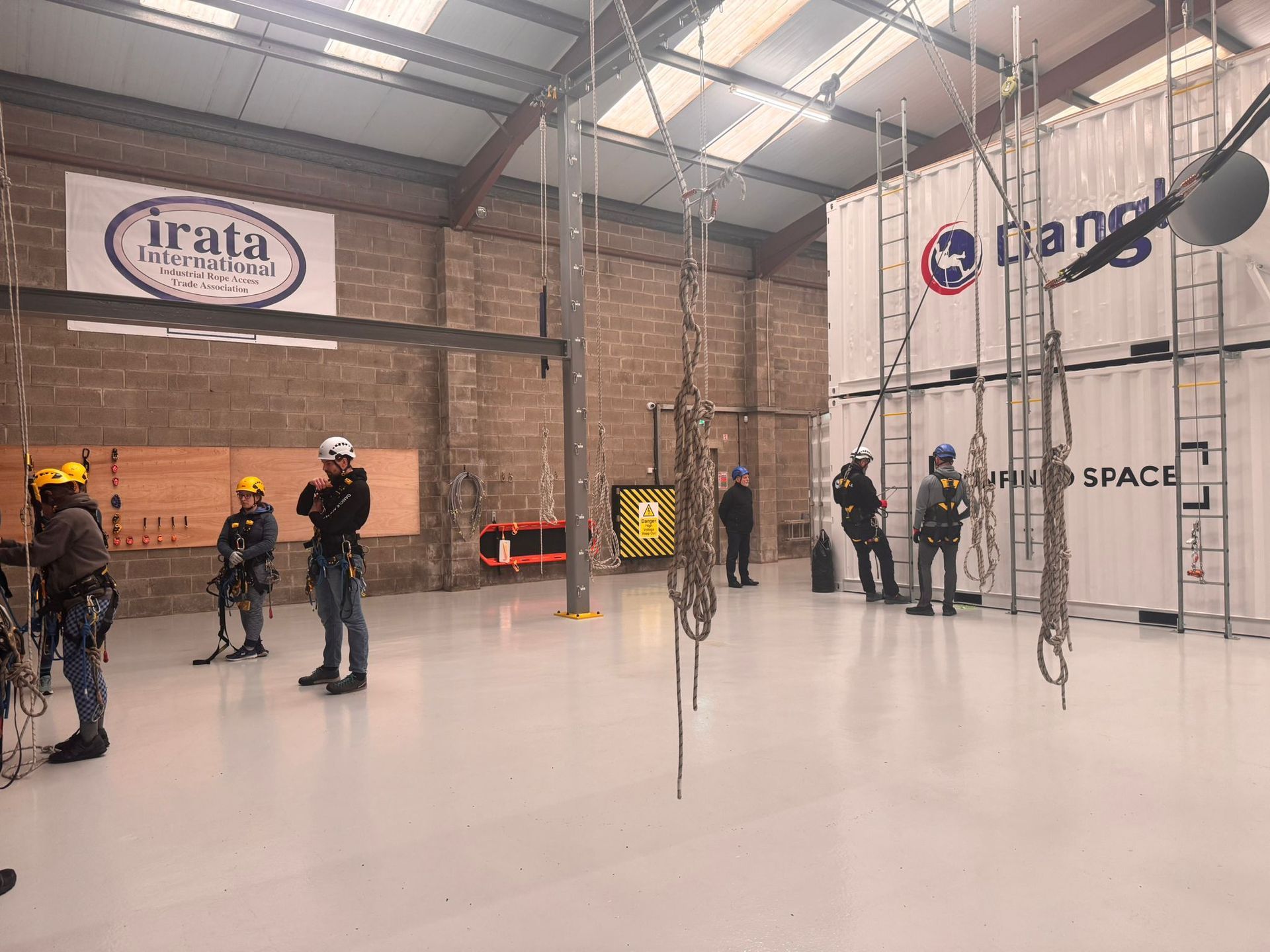
Work at height and difficult-access tasks require careful planning and personnel with competence relevant to their roles. Site experience matters because a plan needs to account for real conditions, not just a drawing. Obstructions, operating areas and changing access needs can affect how the work is carried out. Dangle® combines industrial site services with an accredited training division. Dangle® Academy delivers IRATA rope access training at multiple levels, bringing a training perspective alongside practical operational experience.
Based in Belfast and working across the UK and Ireland, Dangle® brings that operational perspective to industrial rope access and inspection projects. If your brief needs to connect inspection requirements with difficult-access work, discuss your rope access inspection scope with Dangle®’s industrial services team. A well-prepared brief gives the team a sound basis for planning the work and agreeing useful outputs.
Plan the Next Step with Dangle® Rope Access Inspection Services
A useful project discussion starts with a clear view of the asset and the decision you need to make. Define the asset question, consider how technicians can reach the required locations, agree the inspection scope and specify the records or report the work should produce. This sequence keeps the rope access structural inspection focused on the evidence the asset team needs, not access alone.
Before discussing a project, bring together the information you have:
- Asset type, drawings or other background documents.
- Known or suspected concerns and the locations to inspect.
- Site restrictions, operational interfaces and access constraints.
- The maintenance or engineering decision the findings should inform.
- Any client-specified inspection method or reporting requirement.
Drawings do not need to answer every question. Partial plans or clear location references can still help frame the discussion. Note where information is uncertain, so the project scope can distinguish established facts from areas that need examination.
What to prepare before discussing a project
Be clear about the purpose of the work. Are you recording visible condition at defined locations, documenting a known concern or supporting maintenance planning? Share any method or reporting requirement set by your organisation. This gives the initial conversation a practical starting point and helps connect the access request to the work that needs to be completed.
How Dangle®’s operational experience informs the work
Dangle® combines industrial rope access, inspection and technical site experience. That matters because access decisions need to reflect both the structure and the working environment. Dangle® Academy’s IRATA training is part of this wider experience, connecting accredited training with operational site services without treating training as a substitute for project-specific planning.
Consider an elevated industrial structure with inspection points on different faces and operational areas nearby. The team needs to understand the target locations, how they relate to one another and which site arrangements may affect access or sequencing. That practical view shapes a project discussion around the worksite, not just a list of locations on a drawing. The inspection scope and agreed outputs still determine what the work is intended to establish.
To discuss your asset, constraints and intended inspection outcomes, discuss your rope access inspection scope with Dangle®’s industrial services team. Bringing together the asset question, available site information and required outputs is a sound first step towards planning useful inspection work.
Turn Inspection Findings into a Clear Next Step
The value of a rope access structural inspection continues after the team leaves site. Consider how findings will inform asset records and future maintenance decisions. Consistent location references can help your team compare observations over time and identify where further action may be appropriate.
Before commissioning work, bring your asset information and project priorities together. This gives the scope a clear starting point and helps keep the inspection focused on the decisions your team needs to make. A well-defined purpose also makes it easier to judge whether the agreed outputs will be useful in practice.
Share the asset details, areas of concern and outcome you need and take the next step towards a well-planned project.
A clear brief gives your team a practical foundation for turning inspection observations into informed asset decisions.
Frequently Asked Questions
Can rope access be used for structural inspection on infrastructure?
Yes. Rope access can support infrastructure inspection where the structure, task and site conditions make it suitable. Technicians may, for example, need to reach the underside of a bridge deck or elevated steelwork that is difficult to approach from ground level. The inspection brief still needs to identify the areas to examine and evidence required. Access planning should account for the asset and surrounding operations.
Is ultrasonic testing the same as a rope access inspection?
No. Ultrasonic testing is a method that may be specified to gather particular material evidence. Rope access is a way to reach a work location. A project might use rope access to reach a component where a separate testing method is required, but that method must suit the material, condition and inspection question. Specify the required test and result in the scope rather than assuming the access method determines the inspection method.
What information should I provide for a structural inspection quote?
Provide the asset type, areas of concern, known defects and the outcome you need from the inspection. Drawings or marked-up photographs can help identify locations, particularly where asset labels are not obvious on site. Include access restrictions, nearby operations, relevant background reports and any preferred reporting format. If you have a client-specified inspection method, state it clearly so the project discussion can distinguish that requirement from the access task.
Can rope access inspection be carried out while an industrial site is operating?
It may be possible, depending on site operating conditions, work location and controls. Activity beneath an inspection area, for example, could affect how the work is scheduled or separated from other operations. The asset and access teams need to coordinate site arrangements, restricted areas and interfaces with adjacent tasks. A site-specific plan should establish whether work can proceed alongside operations or needs a different sequence.
What should a structural inspection report include?
A useful report should match the agreed scope and make each observation traceable to its location on the asset. It may include component references, recorded observations, photographs where agreed and any areas that could not be inspected. It should distinguish observations from engineering conclusions or recommendations unless those are expressly part of the remit. Clear records help asset teams compare findings with earlier information and decide what follow-up is appropriate.
Does rope access remove the need for inspection planning?
No. Rope access does not replace planning. The project still needs a defined inspection task, suitable access arrangements and coordination with site activities. Planning should also consider how technicians will reach each work area, what equipment the task requires and how findings will be recorded. At a Belfast industrial site, for instance, nearby plant or restricted access zones may affect work sequencing and need to be reflected in the arrangements.
Contact Us
We'd Love a Share...
Recent Blog Posts