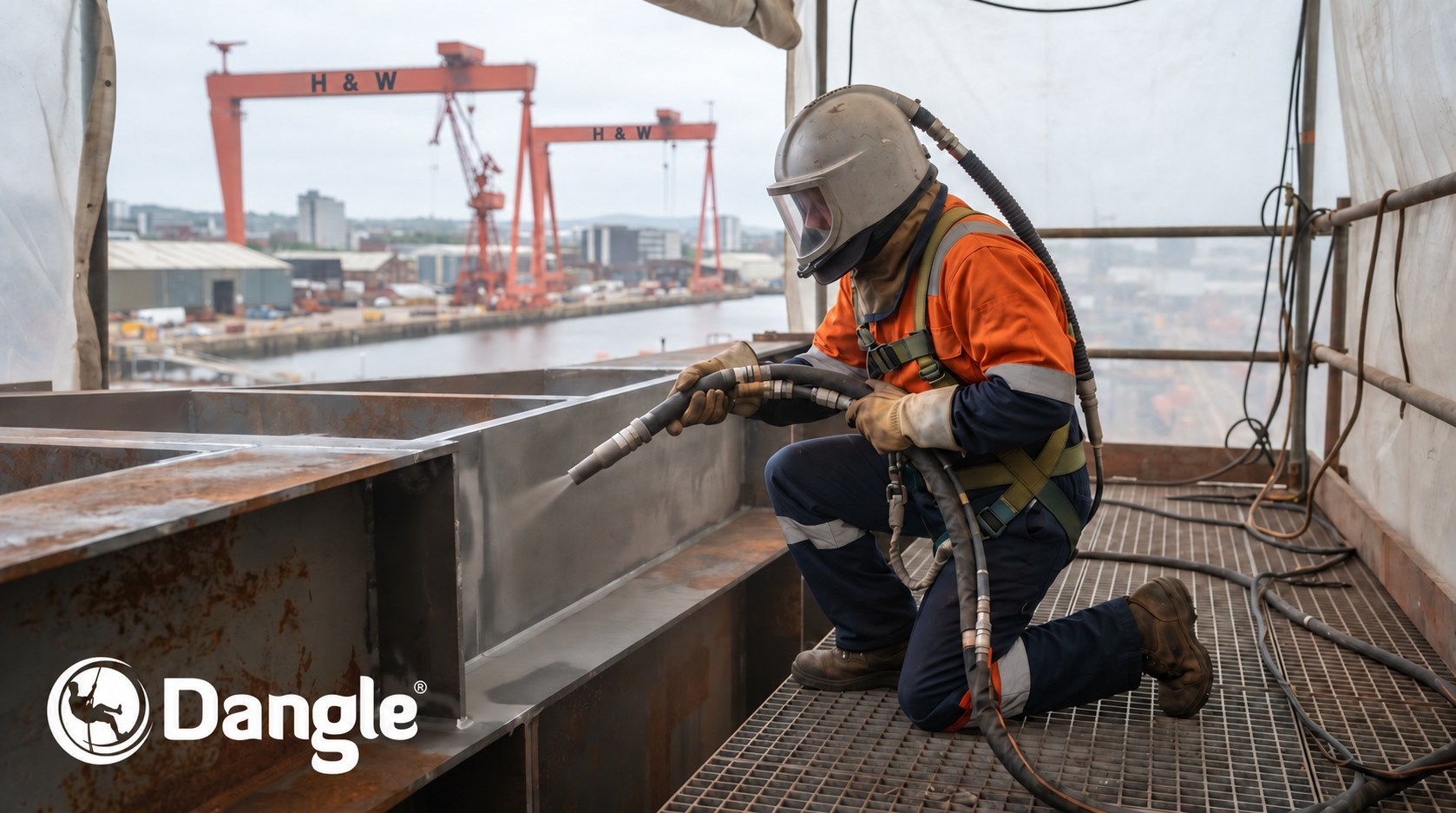
Industrial Painting Courses
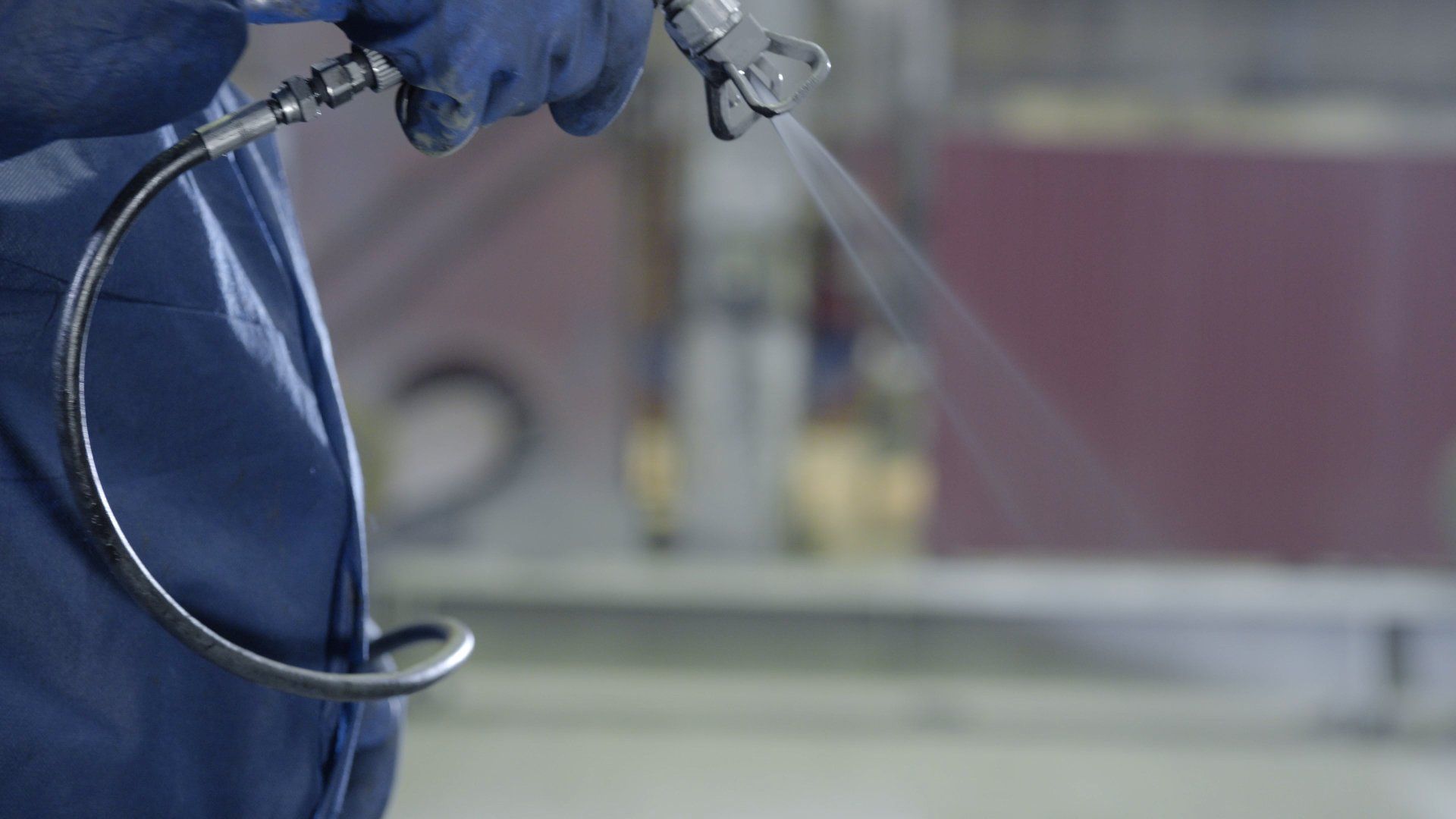
Industrial Painting Courses: A Guide to Accredited Coating Qualifications in 2026
A painting qualification doesn’t automatically prepare you to protect an industrial asset. If you’re aiming to work on wind turbines, marine structures or oil and gas sites, choosing the right industrial painting courses matters. Employers need evidence of coating competence, not just general painting experience.
It can be difficult to know which training is recognised, what practical skills a course covers and whether it reflects the demands of a live site. Poor surface preparation or incorrect coating application can undermine asset integrity. Training without relevant experiance may also fail to support your next career step.
This expert guide, written by Dangles senior corrosion technoligst and Level 3 coating inspector with 15 years experiance in some of the harshest enviroments explains what to check when choosing industrial painter training in 2026. It covers qualifications such as TTP Bronze and ICATS along with the practical knowledge behind surface preparation, coating application and quality control. You’ll also see why experience in high-risk and difficult-access environments matters. Dangle® Academy, Belfast-based training division, offers industrial painter training informed by a specialist industrial services provider’s experience with coatings, inspection and rope access work.
Key Takeaways
- Understand why industrial coating work protects asset integrity, not just appearance.
- Learn what to check when comparing industrial painting courses, including recognition and practical assessment.
- See why surface preparation is essential to reliable coating performance.
- Explore how rope access and coating skills can support work on wind turbines and other difficult-to-reach assets.
- Find out how Dangle® Academy’s Belfast-based, practitioner-informed training can help you plan your next step.
Table of Contents
- What is Industrial Painter Training and Why Does It Matter?
- Core Modules of Professional Industrial Painting Courses
- Accredited vs. Unaccredited Training: Making the Right Choice
- Industrial Painting in Difficult Access Environments
- Starting Your Career with Dangle® Academy in Belfast
What is Industrial Painter Training and Why Does It Matter?
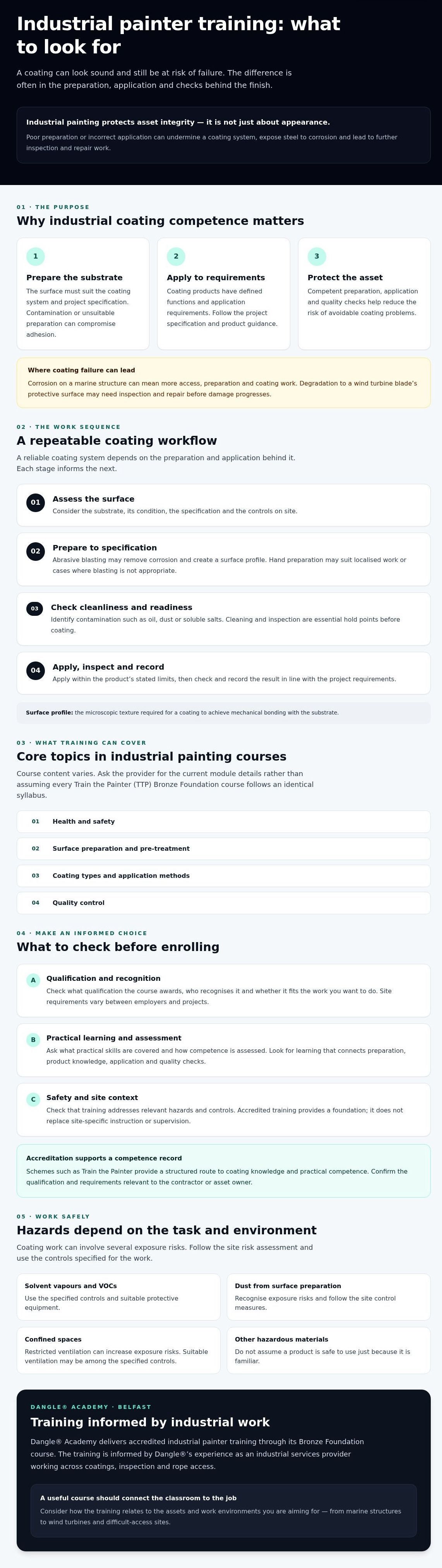
A coating can look sound while still being at risk of failure if the substrate wasn’t prepared properly or the product wasn’t applied as specified. In industrial settings, coating failure can expose steel to corrosion, shorten an asset’s service life and lead to further inspection and repair work. Industrial painting is therefore a protective process focused on asset integrity, not simply appearance. A coating may be decorative, functional or both. On an industrial asset, its protective function can be critical.
The consequences are tangible. Corrosion on a marine structure can mean more access, preparation and coating work. Degradation to a wind turbine blade’s protective surface may need inspection and repair before the damage progresses. The cost and disruption depend on the asset and the extent of the failure. Competent preparation, application and quality checks help reduce the risk of avoidable coating problems.
Schemes such as Train the Painter (TTP) provide a structured route to coating knowledge and practical competence. Dangle® Academy delivers industrial painter training through its Bronze Foundation course in Northern Ireland. Before enrolling, check what Certification a course awards, who recognises it and whether it fits the work you want to do. Explore Bronze Foundation industrial painter training.
The Difference Between Commercial and Industrial Painting
Commercial painting often prioritises finish and appearance. Industrial work must also meet the protective purpose and application requirements set for the asset. Surface preparation is there critically central. Abrasive blasting may be specified to remove corrosion and create a surface profile, while hand preparation may suit localised work or situations where blasting isn’t appropriate. The correct method depends on the substrate, its condition, the specification and site controls.
High-performance and intumescent coatings have defined functions, so applicators must follow the project specification and product guidance. Application conditions, coverage and inspection records also matter. Site access requirements vary between employers and projects in the UK and Ireland. A recognised qualification can support a competence record, but check specific requirements with the contractor or asset owner, to be sure.
Safety Standards and Environmental Impact
Coating work can involve solvent vapours, volatile organic compounds (VOCs), dust from surface preparation and other hazardous materials. Restricted ventilation can increase exposure risks in confined spaces. Training should help painters recognise these hazards, follow the site risk assessment and use the specified controls, including suitable ventilation and protective equipment. Don’t assume a product is safe to use just because it’s familiar.
Accredited training helps establish a consistent foundation for safety-critical work, but it doesn’t replace site-specific instruction or supervision. Before accepting a contract, check the required certification, task competence and controls for the work environment. This supports the applicator’s safety and the coating system’s performance.
Core Modules of Professional Industrial Painting Courses
A coating system is only as reliable as the preparation and application behind it. Professional industrial painting courses should teach a repeatable workflow: assess the surface, prepare it to the project specification, apply the coating within its stated limits, then check and record the result.
Course content varies, so don’t assume every provider teaches an identical Industrial Painter Bronze Foundation syllabus. Ask for the current module details. Industrial painter training commonly covers health and safety, surface preparation, coating types, application methods and quality control. These topics connect directly on site: a painter needs to understand both the product and the substrate before selecting and using application equipment.
Surface Preparation and Pre-Treatment
Surface profile is the microscopic texture required for a coating to achieve mechanical bonding with the substrate. The preparation method, such as abrasive blasting or hand preparation, must suit the asset’s condition and the project specification. Before coating, the team also needs to identify contamination such as oil, dust or soluble salts. Residue left on the surface can compromise adhesion, so inspection and cleaning are essential hold points in the work sequence.
Training should help painters recognise when a surface is ready and when it needs further preparation. For example, steel can look clean while still carrying contamination that isn’t visible to the eye. Follow the specified inspection and test process instead of relying on appearance alone.
Coating Application and Inspection
Coating thickness affects performance. Wet film thickness (WFT) is measured while the coating is still wet; dry film thickness (DFT) is measured after it has dried or cured. A WFT gauge lets the painter check application as work progresses and adjust technique to meet product and project requirements. DFT checks help verify the finished film against the specification.
On larger assets, airless spray can be an efficient application method, but control is essential. Keep the gun at a consistent distance and angle, overlap passes evenly and watch for runs, holidays or uneven coverage. Equipment checks are part of the task: inspect hoses, connections, filters and spray components, then clean and maintain the system according to manufacturer guidance. A blocked or worn component can disrupt the spray pattern and affect the finish.
Painters also contribute to inspection by monitoring conditions, recording checks and reporting defects or changes in the substrate. For further context on painting hazards in shipyard work, the US OSHA safety standards for painting describe controls for that setting. They don’t replace applicable UK or Irish requirements.
When comparing course content with your career goals, review Dangle® Academy’s Bronze Foundation industrial painter training.
Accredited vs. Unaccredited Training: Making the Right Choice
A course certificate is useful only if an employer or site accepts it for the work you’re seeking. Before paying for training, check what certification it leads to, who accredits or recognises it, and whether it meets the contractor’s requirements. A generic attendance certificate may confirm that you completed a course, but it may not demonstrate the competence or recognised training record a project requires.
UK health and safety requirements place importance on workers receiving suitable information, instruction, training and supervision for their tasks. That doesn’t mean one painter qualification is legally required on every site. Employers and contractors set requirements according to the work, hazards and project. In renewables or oil and gas, a contractor may specify a recognised coating qualification or card as part of its competence checks. If your evidence is missing, out of date or not accepted for the project, site access could be refused or delayed while it’s verified.
The Train the Painter (TTP) Scheme
Train the Painter (TTP) is one industry example - its focused protective coatings training scheme with progressive Bronze, Silver and Gold levels. The appropriate level and module depend on your experience and intended work, so confirm current entry and assessment requirements with the provider. TTP is a CSCS partner card scheme, but check site access requirements with the relevant contractor.
For wider context on standards and professional development in coatings, see the Association for Materials Protection and Performance (AMPP).
Dangle® Academy offers Industrial Painter Training Bronze Foundation, using our own AMPP (formally NACE) Senior Corrosion Technologist for expert training and guidance on all matters regarding industrial coating protection, that many other competitors can not replicate.
Industrial Coating Applicator Scheme (ICATS)
ICATS is another recognised training and certification scheme for industrial coating operatives, administered by Correx, a subsidiary of the Institute of Corrosion. Its core Industrial Coating Applicator course covers surface preparation, coating application, health and safety, and quality control, with additional specialist modules available in abrasive blasting and paint spraying. Candidates must complete the core qualification before progressing to these specialist modules. The appropriate training depends on your experience and intended work, so confirm current entry and assessment requirements with an approved provider and check which qualifications and cards your employer or principal contractor requires.
Recognising Quality in a Training Provider
Accreditation matters, but so does the quality of delivery. Ask which practical tasks are included, what equipment learners use and how their performance is assessed. If a course covers blasting or spray application, check that the training environment supports those activities and that safe working practices are part of the exercises. Don’t assume every industrial painting course has identical modules. Request the current syllabus and assessment details.
Trainer experience should also relate to the work. A practitioner who understands how preparation, application and inspection fit into a site workflow can explain why a process matters, as well as how to carry it out. Dangle® Academy’s training is informed by Dangle®’s industrial site services experience, connecting technical learning with the realities of coatings and difficult-access work.
Finally, verify the provider’s accreditation if they claim it, directly and ask which organisation recognises the certification. If a provider claims ISO standards or industry affiliations, request the relevant scope and current evidence rather than relying on a logo. These checks help you choose industrial painting courses that support your intended role and lower the risk of investing in training a client won’t accept.
Industrial Painting in Difficult Access Environments
On a turbine blade or offshore structure, reaching the workface is only part of the challenge. The technician must also maintain a safe working position, manage tools and coating materials, prepare the surface and apply the system without compromising quality. Industrial painting and rope access work best as coordinated disciplines, not as separate tasks.
IRATA rope access can reduce the need for large scaffold structures on difficult-to-reach assets, although the access plan must suit the site, task and risk assessment. A rope access team can support inspection and coating work on structures where conventional access would be difficult to install or disruptive. Technicians need to plan how paint, tools and other equipment will be raised, secured and handled at height, while keeping the work area controlled and following site procedures.
Rope Access Painting: Efficiency and Safety
At an industrial site in Belfast, the access method should be selected to suit the asset and work scope, not assumed in advance. Rope access may suit localised coating repairs, but the surface condition, weather exposure, equipment loads and rescue arrangements all need consideration. A painter with rope access competence can better understand how work positioning affects preparation and application. Explore IRATA Rope Access Level 1 training as a complementary skill to industrial painter training.
Wind Turbine Blade and LEP Repairs
Blade work brings access and coating challenges together. Curved surfaces, exposed conditions and restricted working positions can make consistent preparation and application more difficult. Leading Edge Protection (LEP) is a specialised area. The coating or repair approach must match the blade’s condition and the relevant work specification. Inspection helps establish whether the task involves protective coating work, blade repair or further assessment.
Wind-sector work also requires technicians to meet the safety and training requirements set by the employer and site. GWO Basic Safety Training (BST) provides wind-industry safety training. Confirm which GWO modules and other competence evidence the project requires. See GWO Basic Safety Training as part of a relevant training pathway.
For employers, technicians with both coating and access skills can help align work planning, inspection and execution. This doesn’t remove the need for a competent team, task-specific controls or supervision. It can give the team a shared understanding of how access constraints affect surface preparation, coating application and quality checks.
Dangle® combines industrial site services with accredited training through Dangle® Academy. If you’re building skills for difficult-access coating work, review Dangle® Academy’s industrial training options and check the qualifications required for your target sector.
Starting Your Career with Dangle® Academy in Belfast
Choosing a course is the start of a development plan, not a guarantee of a particular job. Dangle® Academy is Dangle®’s Belfast-based training division, offering industrial painter training alongside rope access, wind-industry and telecoms training. Its connection to Dangle®’s industrial site services gives learners a practitioner perspective, helping them relate coating principles to the access, inspection and work planning challenges found on site.
Belfast is a local training option for candidates in Northern Ireland. Before booking, check the current course syllabus, accreditation, assessment method and any employer requirements for the work you’re targeting. These details help you choose a pathway that supports your next step rather than simply adding another certificate to your CV.
Training Grounded in Site Experience
Industrial painter training builds foundational coating knowledge. Progression towards specialised responsibilities, such as inspection-related work, depends on the role, experience and additional competence required by the employer. Treat a Bronze Foundation certificate as a starting point, not as automatic qualification for every coatings task. Ask how the course’s practical learning and assessment relate to the work you want to do.
Dangle® combines training with experience across industrial services, including rope access, inspection and coatings. That perspective matters when a painter needs to consider the coating system, how the workface will be accessed and how the task fits into the wider site plan. Safe delivery also includes looking after equipment. Dangle®’s guide to Managing PPE Inspection is relevant reading alongside practical training.
How to Prepare for Your Course
Don’t assume there are no prerequisites or that every course has the same entry requirements. Confirm these directly with Dangle® Academy before booking, along with what to bring and what the assessment involves. The course information should explain the current arrangements. If anything is unclear, ask before making travel plans to Belfast.
For company training, describe the tasks your team carries out, the assets they work on and any client or site qualification requirements. This gives the training provider useful context when discussing suitable options. Don’t assume a general course will satisfy a particular contractor’s competence checks.
To compare course details, review Dangle® Academy’s Industrial Painter Training Bronze Foundation. Check the current syllabus and entry requirements, then choose training that aligns with your intended role and the standards expected on the sites where you plan to work.
Build Your Next Step in Industrial Coatings
Protective coating work demands more than a steady hand. It requires sound surface preparation, controlled application, safety awareness and evidence of competence. The right industrial painting courses can help you build that foundation and understand how coating work connects with inspection and access requirements on industrial sites.
Choose training carefully. Check that the qualification is recognised for the work you’re pursuing and that the practical learning supports the theory. Dangle® Academy is a Belfast-based training division offering industrial painter training alongside IRATA and GWO courses. Its training draws on Dangle®’s industrial site services experience, linking course learning with the realities of industrial work. For candidates in Belfast and Northern Ireland, it offers a local training option.
Take the next step by exploring industrial painter training at Dangle® Academy. Check the course requirements and how the qualification aligns with your career goals.
Frequently Asked Questions
Do I need prior experience to take an industrial painting course?
Prior experience may not be needed to attend a foundation course, but check the provider’s current entry requirements before booking. Course attendance and card eligibility can differ. Under Train the Painter guidance, Bronze card eligibility depends on 1800 hours of verified industry experience, and a trainee card may apply if that experience hasn’t yet been gained. Ask Dangle® Academy which route applies to its Bronze Foundation training and your experience level, if you have any.
Is the industrial painting certification recognised offshore?
Recognition offshore isn’t automatic for every qualification or project. Acceptance depends on the asset owner, contractor, job scope and site competence requirements. A Train the Painter card or ICATS card may support your coating competence record, but it doesn’t replace other required training, experience or site approvals. Before travelling to an offshore project, ask the hiring contractor which painter certificate and supporting evidence it accepts. Candidates training in Belfast should confirm this before choosing a course.
What is the difference between ICorr and Train the Painter?
They’re separate industry certification routes, so compare the specific course and job requirement rather than assuming one replaces the other. Train the Painter focuses on protective coatings application training, with progressive card levels. ICorr qualifications relate to corrosion-related roles and can cover different competencies, depending on the course. Check the syllabus, assessment and intended role for each qualification, then ask the employer or client which one it accepts for the work.
Can I combine painting training with rope access courses in Belfast?
Yes. Dangle® Academy offers industrial painter training as well as IRATA rope access training in Belfast. These are distinct certificates, and completing both doesn’t automatically qualify you for a particular site role. Check course dates, prerequisites and the sequence that suits your experience, then confirm the project’s requirements for both coating competence and rope access. This combination can be relevant if you’re targeting difficult-access work in wind or industrial environments.
Are there any medical requirements for industrial painters?
There isn’t one medical requirement that applies to every industrial painter. Fitness or medical checks may depend on the employer, work environment and role, particularly for safety-critical or offshore work. Confirm requirements with the contractor before starting a job. Dangle® provides occupational health screening and OEUK medicals. Ask which assessment, if any, is relevant to your position rather than booking one based on assumption.
Contact Us
We'd Love a Share...
Recent Blog Posts