INITIAL TRAINING
Starting at Level 1
No previous rope access qualification or experience is required for entry-level training. Build practical skills progressively, alongside the theory behind each method.

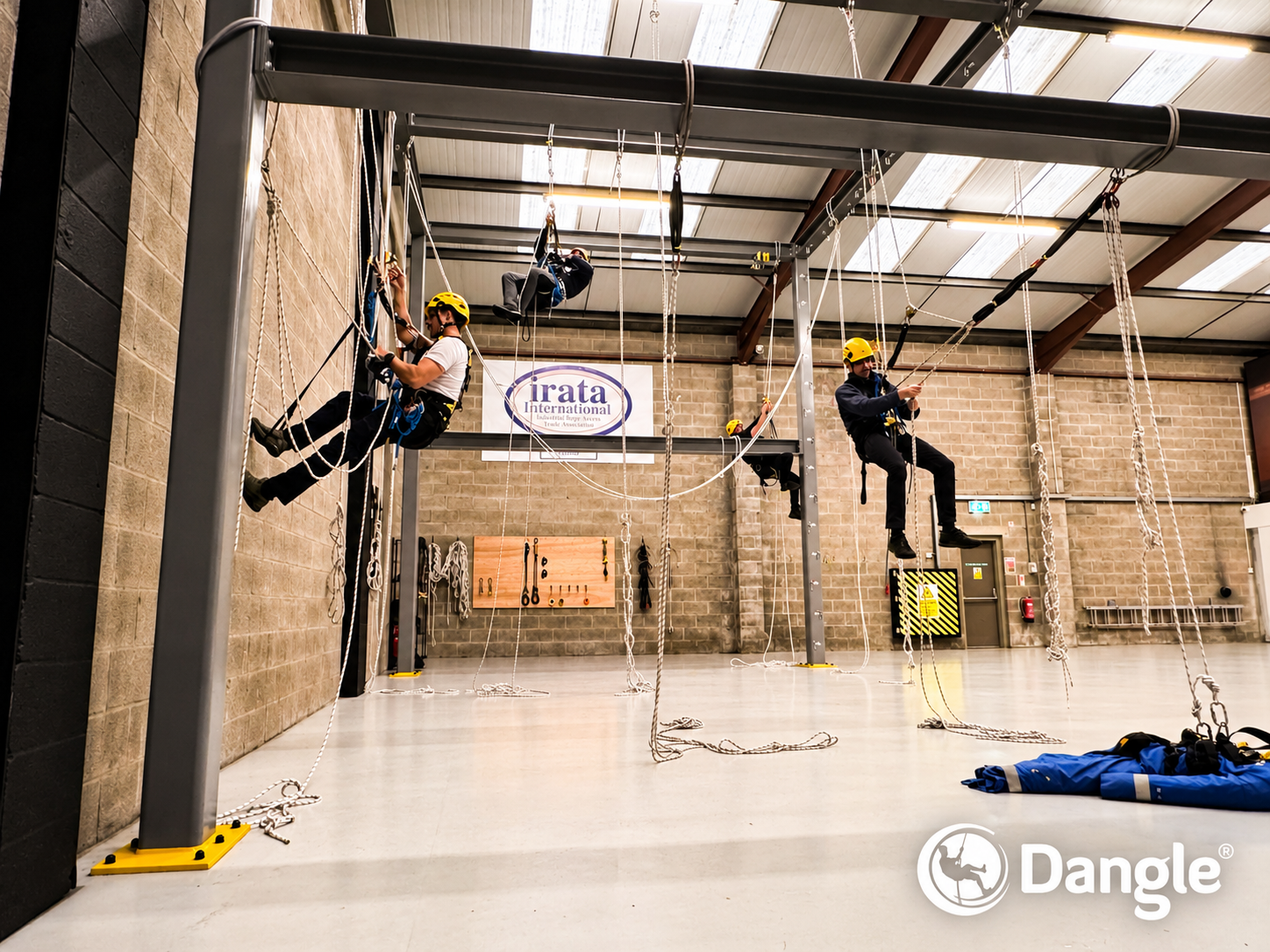
Start your rope access career with practical skills, confidence and a clear route to assessment. Dangle Academy delivers IRATA Level 1 rope access training in Belfast for people entering the industry and technicians returning for revalidation.
Our course gives you five full days of training, followed by an independent assessment on day six. That extra practice time helps you become familiar with the equipment, develop controlled movement on ropes and work through techniques with your instructor before assessment.
This guide explains what a Level 1 qualification covers, how to prepare and what to expect at Dangle. For current dates, prices and booking options, see our IRATA Level 1 course page.
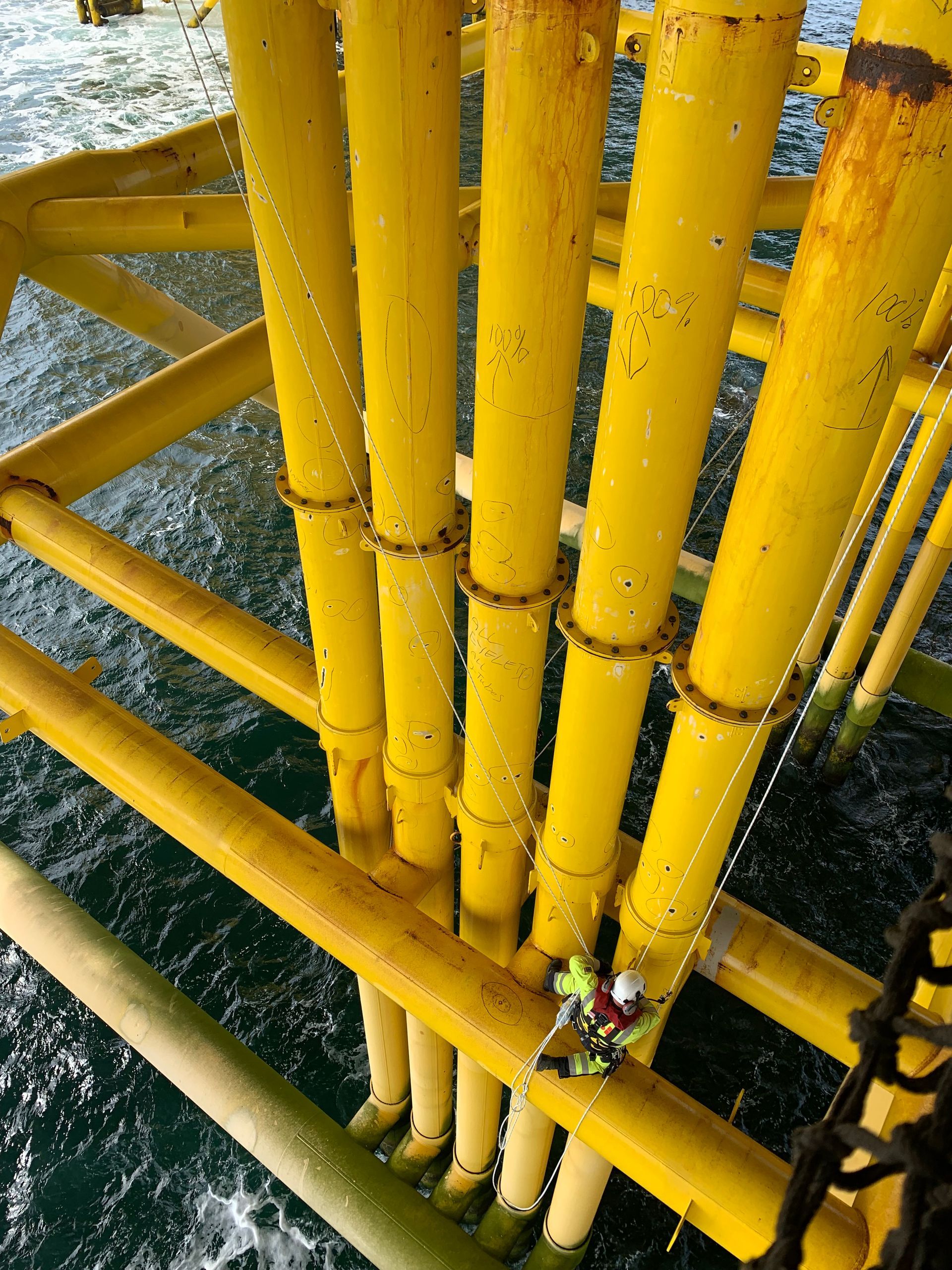
Level 1 provides the foundation for working as a rope access technician under an IRATA Level 3 supervisor. Rope access can support inspection, maintenance, coatings and other industrial work where access is difficult. The qualification covers access skills; any specialist trade or inspection task also needs the appropriate competence.
For a new entrant, the benefit is a structured starting point. For an employer, it is a recognised way to develop a technician’s access skills while keeping supervision and task competence clear.
Allow six days: five full training days and assessment on day six. IRATA’s published minimum is 30 training hours over at least four days, followed by a separate assessment day. Dangle’s five-day training format gives candidates more time to practise, ask questions and develop consistent technique.
Training and assessment dates should both be included when arranging work, travel or accommodation. Check the selected course dates and joining information before making arrangements. Passing depends on demonstrated competence; attendance alone does not guarantee certification.
You do not need previous rope access experience. Candidates must be at least 18 and meet IRATA’s fitness requirements. Complete the required medical self-declaration honestly and raise any fitness concerns before booking so the appropriate advice can be sought.
Follow the joining instructions for identification and IRATA TechConnect registration. Returning technicians should bring their logbook and current qualification details. Tell us whether you need initial training, revalidation or an upgrade so we can check the correct route.
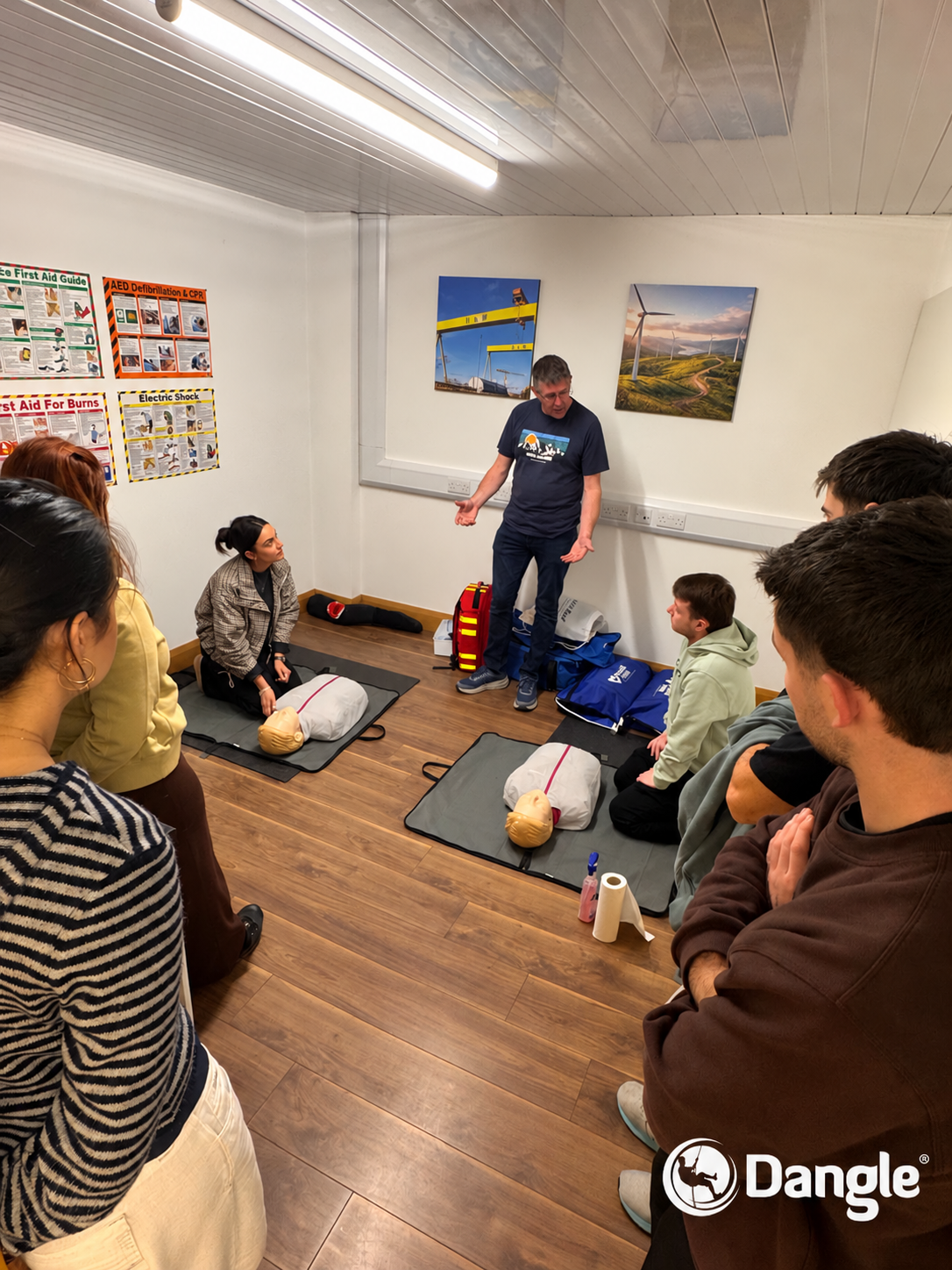
Rescue practice helps you understand how your actions fit into a planned team response. At Level 1, you learn relevant basic rescue skills under supervision, alongside communication and equipment handling.
Training connects these skills to real working considerations: a clear rescue plan, suitable equipment and an agreed response for the site. Your instructor explains the limits of the Level 1 role and why more complex decisions sit with the appropriately competent supervisor.
DANGLE® · ROPE ACCESS QUALIFICATION GUIDE
Know which route you need, what the six-day course involves and where a Level 1 technician’s responsibilities begin and end.
Your route affects the evidence and preparation you will need.
INITIAL TRAINING
No previous rope access qualification or experience is required for entry-level training. Build practical skills progressively, alongside the theory behind each method.
REVALIDATION
Revalidation includes assessment. Have your logbook ready to present to the training member company at the start of the course.
UPGRADE
Upgrade candidates need the required experience for their next level, a logbook and a certificate that is valid on the assessment day.
REFRESHER TRAINING
Technicians who have not worked in rope access for more than six months must attend suitable refresher training before returning to work.
Practice comes first; an independent assessor then evaluates competence.
Practise equipment handling, rope manoeuvres, safe work positioning and basic rescue. Theory explains why a method is appropriate, not just how to repeat it.
Demonstrate practical performance and theoretical knowledge against IRATA criteria. Completing the training is not the same as passing the assessment.
IRATA’s TACS requires at least four training days plus an independent assessment day. A five-day training programme followed by assessment on day six provides additional practice time before competence is evaluated.
Each level has a defined role and progression requirement.
LEVEL 1
Carries out rope access work under the supervision of an IRATA Level 3 technician. Level 1 does not authorise independent supervision or management of rope access work.
LEVEL 2
Requires at least 1 year and 1,000 correctly logged working hours at Level 1, with a certificate valid on assessment day.
LEVEL 3
Requires holding a Level 2 certificate for at least 1 year, plus at least 1,000 hours of Level 2 work experience.
Keep your logbook accurate. Recorded experience helps establish progression eligibility. Upgrade candidates must also hold a valid certificate on the assessment day.
An IRATA Level 1 certificate is valid for 3 years. Plan revalidation around the expiry date. An expired certificate affects eligibility to progress through an upgrade assessment.
Candidates must be medically fit to work at height and physically able to carry out the work safely. Complete medical self-certification accurately; seek medical evidence for relevant conditions.
Competence sits alongside equipment, planning and supervision.
Used for access, descent and support.
Provides the backup.
Site-specific planning, equipment inspection and competent supervision remain essential parts of safe work at height.
Training combines practical work with the theory behind each technique. You learn how to check and handle equipment, move on ropes, maintain a suitable working position and contribute to basic rescue tasks within the Level 1 syllabus.
Repeated practice gives your instructor opportunities to identify errors and help you improve. The aim is controlled, consistent performance and an understanding of why each method is used.
An IRATA certificate is valid for three years. Revalidation involves further training and assessment. Keep your logbook accurate and plan ahead so training can fit around your work commitments.
Progression to the next level requires the relevant experience as well as assessment. For an upgrade, IRATA requires at least a year’s experience and 1,000 correctly logged working hours at the current level, with a certificate valid on assessment day. Ask us to check your eligibility before booking an upgrade.
Use IRATA’s official technician guide and training requirements for the scheme requirements. Dangle’s joining information explains the arrangements for your selected course.
Learn with a company that delivers rope access training and carries out rope access work. Dangle holds IRATA Operator and Trainer membership. Our field services connect access with inspection, coatings, maintenance and other industrial tasks, giving the training a practical working context.
These benefits help you prepare for the responsibilities of a rope access technician. They do not promise a pass or employment; qualification and job suitability depend on your competence and the role.
New to rope access? Tell us about your experience, preferred dates and the type of work you want to pursue. Returning for revalidation or an upgrade? Include your current level and certificate expiry date, and have your logbook ready for review.
Employers can discuss training for individual technicians or a team, so course planning fits their workforce needs.
View Level 1 dates and booking options or ask Dangle about rope access training . Explore our wider training courses when planning the skills your team needs.
Contact Dangle® and explain whether you need initial training, revalidation or an upgrade. Include your current qualification level and certificate expiry date, if applicable. For revalidation or an upgrade, have your logbook details ready, as they record rope access work experience. For an IRATA Level 1 enquiry, say whether you’re entering the industry for the first time or renewing an existing certificate.
It recognises a technician’s assessed competence in foundational rope access skills. A Level 1 technician carries out assigned tasks under an IRATA Level 3 technician’s supervision, rather than independently supervising a rope access operation. For example, they may use rope systems to reach a work area and complete a task within the team’s plan, following the supervisor’s instructions and site arrangements.
Candidates must be at least 18 years old, medically fit to work at height and provide valid photo identification on the training day. Previous rope access qualifications or experience aren’t required, and a new candidate doesn’t need a logbook before the course. Candidates should be physically fit to work safely. Any relevant medical condition should be considered when assessing fitness for work at height.
The course takes 6 days, including an independent assessment on day six. Training prepares candidates for practical tasks and theoretical questions, while the final assessment evaluates competence against the scheme’s requirements. Allow for the complete course and assessment schedule when arranging work or travel. Attending the training days is not, by itself, the same as passing the independent assessment.
Training covers practical rope techniques, equipment handling, movement on ropes, work positioning and basic rescue. Candidates practise applying methods in a controlled setting, communicating with their team and working within their competence. For example, a trainee learns to manage an ascent or descent while maintaining control of the rope system. The course also includes theory relevant to safe rope access practice.
The IRATA Level 1 assessment evaluates practical performance and theoretical knowledge against the scheme’s criteria. Candidates demonstrate equipment use and rope techniques, and show they understand relevant principles. Prepare by practising taught methods consistently and understanding the purpose of each step, rather than memorising a sequence. The assessor judges demonstrated competence; course attendance alone doesn’t guarantee a pass.
The certificate is valid for 3 years. To revalidate, technicians attend a revalidation course and demonstrate competence at their current level. Present your logbook at the start of the course so recorded experience can be considered. Plan the process before your certificate expires, particularly if you intend to upgrade, as the certificate must be valid on the day of an upgrade assessment.