Industrial Rope Access Training
Industrial Rope Access Training: The Complete Guide to Starting a Career at Height
Industrial Rope Access Training has become the gateway into one of the safest and most efficient methods of working at height across multiple industries. For technicians entering the sector, Industrial Rope Access Training provides the essential skills required to safely access structures using specialist rope systems.
For anyone considering a career working at height, Industrial Rope Access Training is the essential first step.
Professional training teaches technicians how to safely access structures using ropes, harnesses, and specialised equipment, allowing complex inspections, maintenance, and installation work to be carried out efficiently and safely.
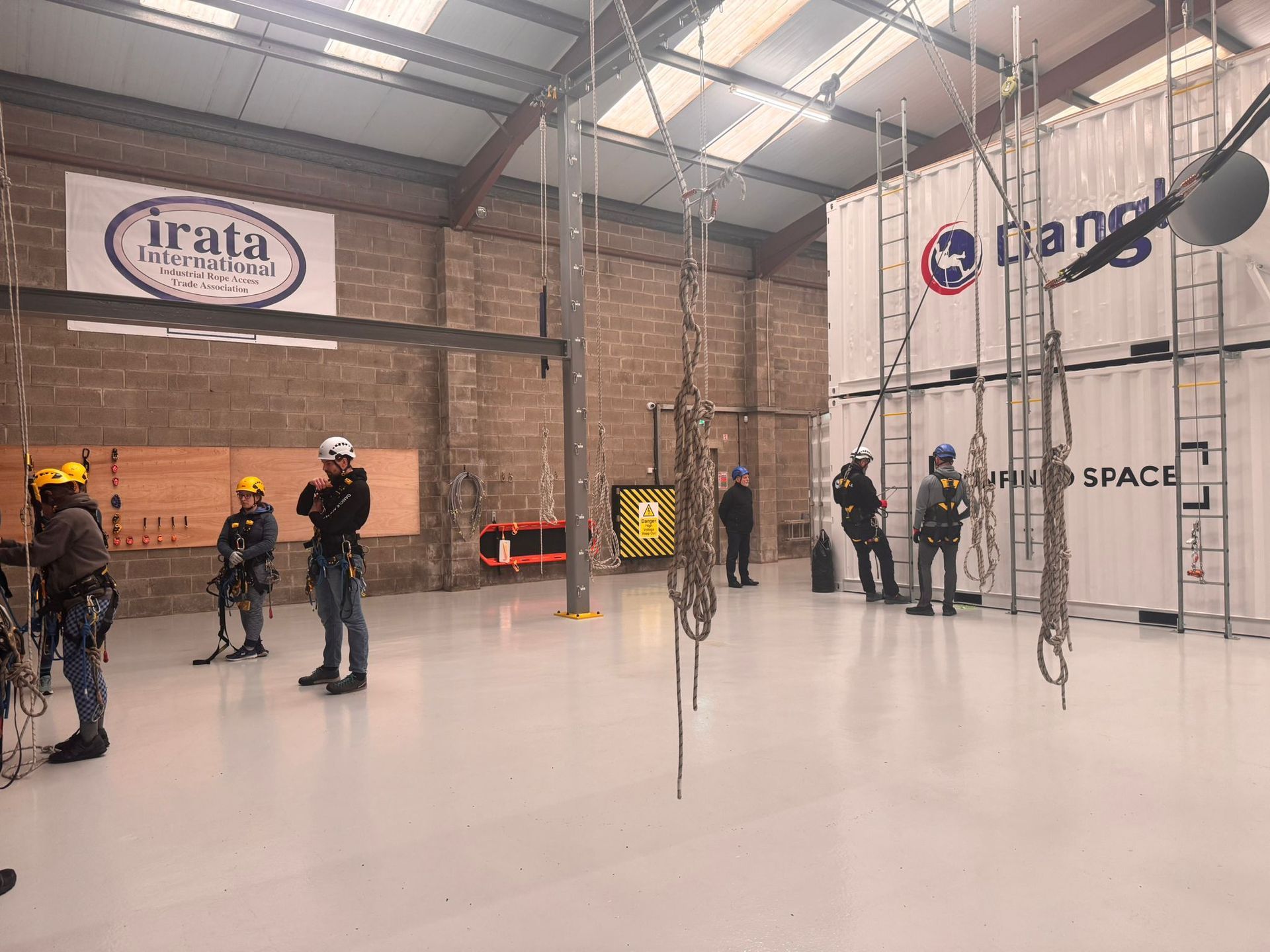
At Dangle Academy in Belfast, Northern Ireland, we deliver professional rope access training designed to prepare technicians for real industrial environments across the UK and beyond.
In this guide, we’ll cover everything you need to know about industrial rope access training, including:
- What rope access is and why it is used
- The IRATA training system
- What to expect during training
- Career opportunities in rope access
- How rope access integrates with specialist industries such as coatings and wind energy
- Why choosing the right training provider matters
What Is Industrial Rope Access and How Does It Work?
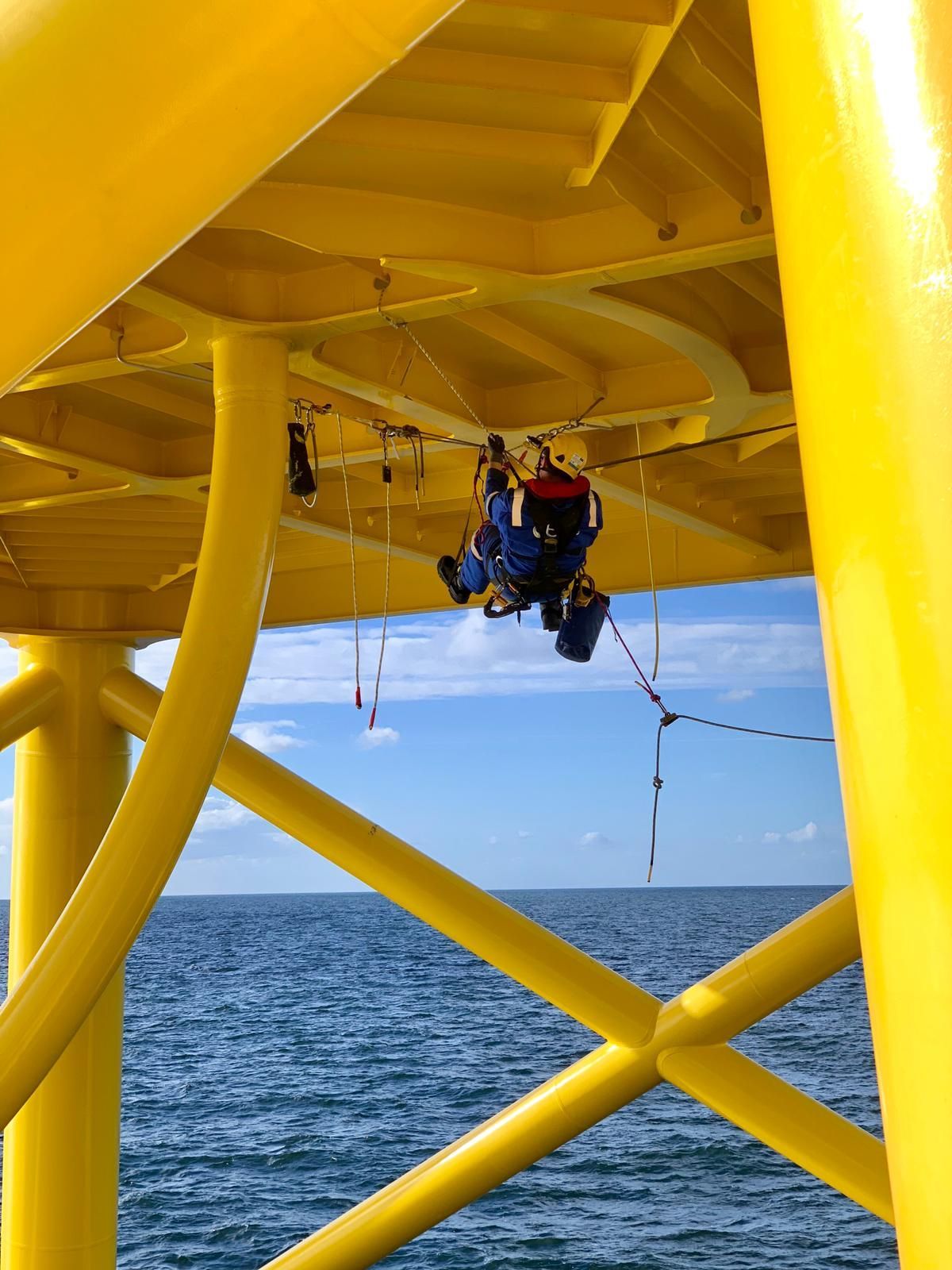
Industrial rope access is a specialised method of working at height using ropes and climbing equipment to safely access difficult locations.
Instead of relying on scaffolding or large access platforms, rope access technicians use controlled rope systems to descend, ascend, and manoeuvre around structures.
This method allows technicians to perform work such as:
- Structural inspections
- Industrial painting and coatings
- Wind turbine maintenance
- Bridge surveys
- Telecommunications tower repairs
- High-rise building maintenance
Rope access has become increasingly popular because it offers several advantages compared to traditional access methods.
Key benefits of rope access
• Reduced setup time
• Lower project costs
• Minimal disruption to operations
• Increased safety through controlled rope systems
• Ability to access extremely difficult locations
These advantages mean rope access is now widely used across construction, infrastructure, offshore energy, telecommunications, and renewable energy industries.
Benefits of Industrial Rope Access Training
Completing Industrial Rope Access Training provides technicians with a globally recognised qualification that allows them to work across construction, renewable energy, offshore industries, and infrastructure inspection projects.
Why Industrial Rope Access Training Is Essential
Working at height is inherently dangerous, which is why professional rope access training is mandatory before technicians can work on industrial projects.
Industrial rope access training teaches technicians how to:
- Safely use rope systems
- Perform controlled ascents and descents
- Navigate complex structures
- Inspect and maintain equipment
- Carry out emergency rescue procedures
Training also ensures technicians understand industry safety standards and working-at-height regulations in the UK.
Without recognised certification, technicians will not be permitted to work on most commercial rope access projects.
The IRATA Rope Access Training System
The global standard for rope access certification is provided by the Industrial Rope Access Trade Association (IRATA).
IRATA qualifications are recognised worldwide and ensure technicians follow strict safety procedures and best practices.
Industrial rope access training follows a three-level certification system.
IRATA Level 1 – Entry Level Rope Access Technician
IRATA Level 1 is the starting point for anyone entering the rope access industry.
This training teaches the core rope access skills required to work safely under supervision.
Technicians learn:
- Rope ascent and descent techniques
- Safe positioning on ropes
- Equipment inspection and use
- Basic rescue procedures
- Workplace safety principles
Many people begin their rope access career by completing an IRATA Level 1 Rope Access Course at Dangle Academy in Belfast.
Level 1 technicians must always work under the supervision of a Level 3 supervisor.
IRATA Level 2 – Advanced Rope Access Technician
IRATA Level 2 builds on the skills learned at Level 1 and introduces more advanced rope access techniques.
Technicians learn:
- Complex rigging systems
- Deviations and re-anchors
- Advanced rescue techniques
- Managing rope systems on site
To progress to Level 2, technicians must have:
- 1,000 hours of rope access work experience
- A minimum of 12 months since Level 1 certification
IRATA Level 3 – Rope Access Supervisor
IRATA Rope Access Level 3 is the highest qualification in the rope access system.
Level 3 technicians are responsible for:
- Supervising rope access teams
- Designing safe rope systems
- Planning rescue procedures
- Managing worksite safety
They play a critical role in ensuring rope access operations are conducted safely and efficiently.
To progress to a Level 3, technicians must have:
- 1,000 hours of Level 2 Rope Access Experiences
- A minimum of 12 months since Level 2 certification]
- Hold a valid First Aid Certificate
What Happens During Industrial Rope Access Training?
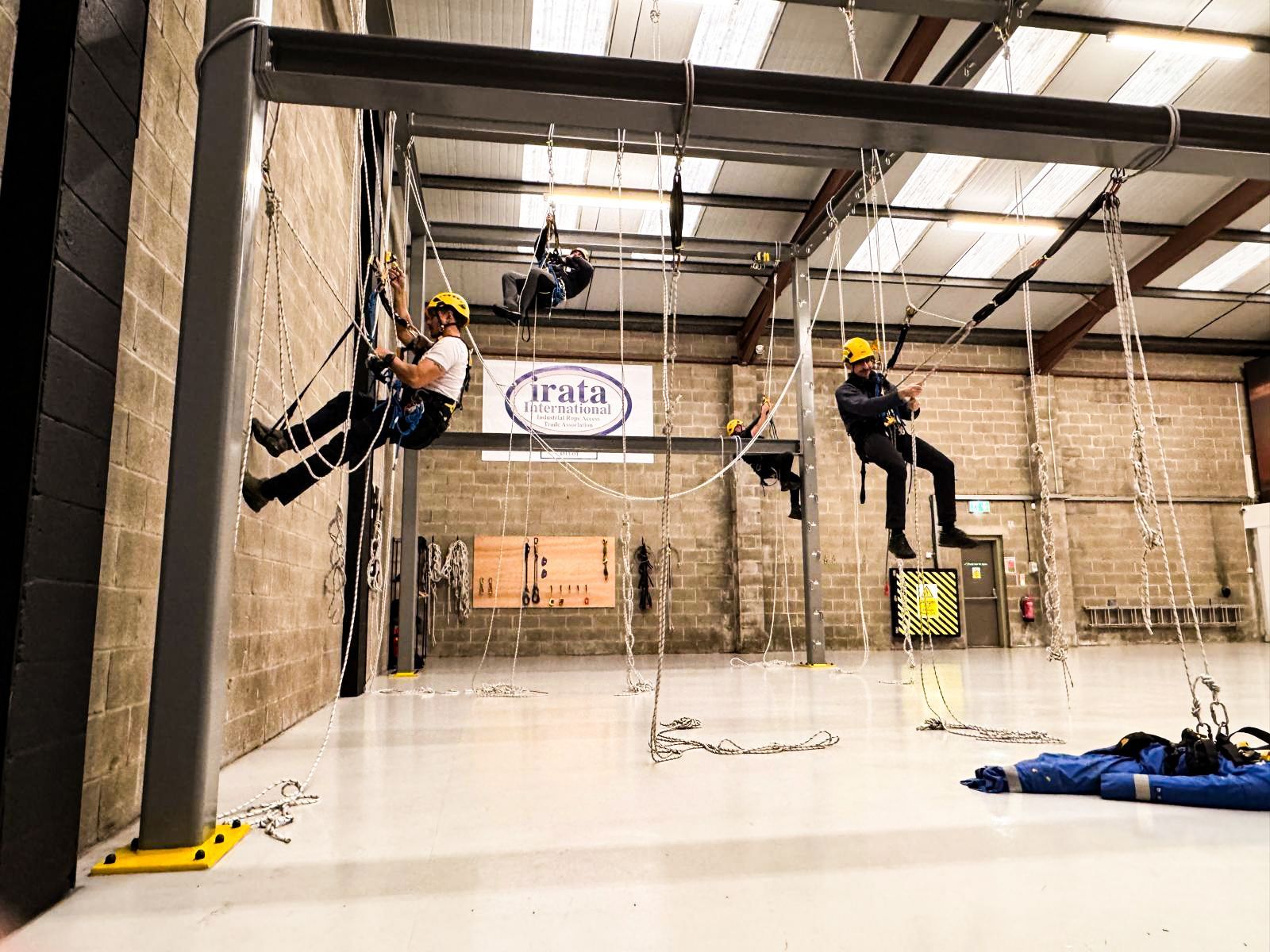
Industrial rope access training is highly practical and hands-on.
Courses normally run over five intensive days, combining practical rope work with safety theory.
Training focuses on developing real-world competence rather than just passing an assessment.
Rope Access Equipment and Systems
Technicians learn how to correctly use and inspect essential rope access equipment including:
- Full body harnesses
- Descenders and ascenders
- Rope grabs
- Carabiners and connectors
- Backup safety systems
Equipment inspection is an essential skill because rope access technicians rely on their equipment for safety every day.
Rope Movement Techniques
One of the most important parts of industrial rope access training is learning how to move efficiently on ropes.
This includes:
- Vertical ascents
- Controlled descents
- Passing knots
- Re-belays
- Horizontal traversing
- Edge transitions
These techniques allow technicians to navigate complex industrial structures safely.
Rope Access Rescue Training
IRATA places a strong emphasis on rescue capability. Technicians must be able to quickly rescue a colleague if an incident occurs while working at height.
Training includes:
- Casualty rescue techniques
- Haul systems
- Lowering systems
- Emergency procedures
Rescue training is a critical reason why rope access has such an excellent safety record worldwide.
Industries That Use Rope Access Technicians
Rope access technicians work across a wide variety of sectors. Because rope access allows safe access to difficult areas, it is often used for specialist inspection and maintenance work.
Wind Energy and Renewable Energy
The wind energy industry is one of the fastest growing employers of rope access technicians.
Technicians are responsible for tasks such as:
- Wind turbine blade inspections
- Lightning protection repairs
- Tower maintenance
- Nacelle inspections
Many technicians combine rope access with renewable energy safety training such as Global Wind Organisation Basic Safety Training (GWO BST) delivered at Dangle Academy.
Infrastructure and Structural Inspection
Bridges, dams, towers, and large buildings often require inspections that are difficult to perform using scaffolding.
Rope access technicians assist engineers with:
- Structural inspections
- Concrete repairs
- Structural surveys
- Drone inspection support
These projects often combine rope access with engineering surveys and drone mapping technology.
Industrial Coatings and Protective Painting
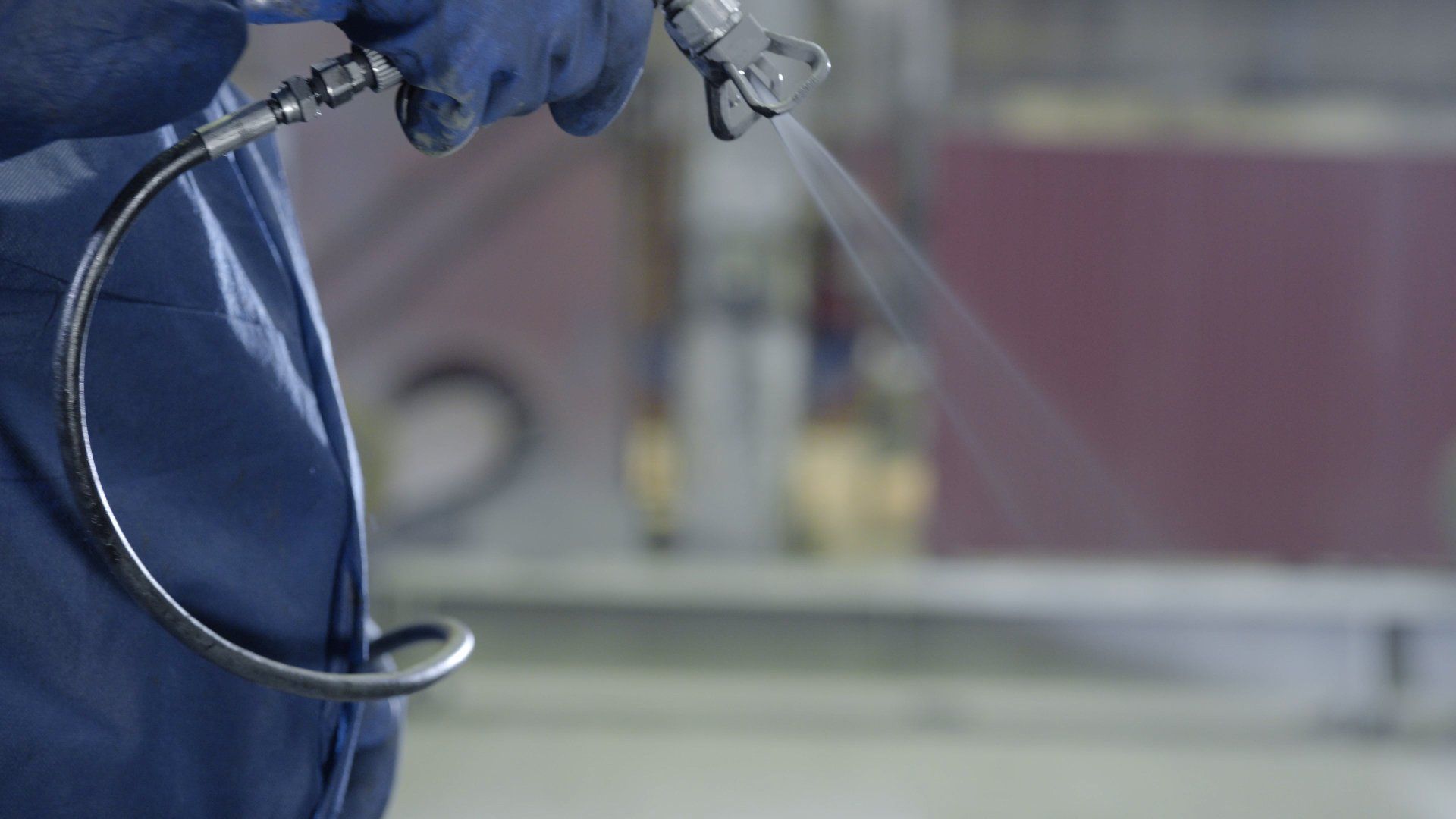
Rope access technicians frequently apply protective coatings to steel structures, storage tanks, and industrial buildings. This includes fire protection coatings such as intumescent paint, which expands during a fire to protect steel structures from heat.
You can learn more about this specialised coating process in our recent article on intumescent painting and fire protection for industrial structures.
Combining rope access with industrial coatings training can significantly increase job opportunities.
Telecommunications and Mast Climbing
Telecommunications infrastructure often requires technicians to climb tall towers and masts.
Rope access technicians assist with:
- Antenna installation
- Cable routing
- Tower inspections
- Maintenance work
This sector often requires additional training such as tower climbing safety.
Why Choose Industrial Rope Access as a Career?
Industrial rope access offers a unique career path with strong earning potential and global travel opportunities. Demand for qualified technicians continues to grow due to expanding infrastructure and renewable energy projects.
Advantages of a rope access career
- High demand for qualified technicians
- Opportunities to travel and work internationally
- Competitive salaries
- Specialist technical career progression
- Work across multiple industries
Many technicians also develop additional specialist skills to increase their earning potential.
These may include:
Why Training Quality Matters
Not all rope access training providers offer the same level of instruction.
High-quality industrial rope access training should include:
- Experienced instructors with industry backgrounds
- Purpose-built training facilities
- Realistic industrial scenarios
- Small group sizes for better instruction
Choosing a reputable training provider ensures technicians are prepared for real site conditions rather than just passing an exam.
Industrial Rope Access Training in Belfast
For candidates based in Northern Ireland or the UK, training locally can provide significant advantages.
Dangle Academy in Belfast provides professional rope access training designed for both beginners and experienced technicians.
Our training centre offers:
- Modern indoor rope access training structures
- Experienced rope access instructors
- Small class sizes for personalised instruction
- Additional specialist safety courses
Students can also expand their skills through additional courses including:
- Working at Height Awareness Training
- Rope Access Taster Courses
- Wind industry safety training
- Industrial coatings training
These complementary courses help technicians build a stronger CV and increase employability within the rope access industry.
Is Industrial Rope Access Training Physically Difficult?
Rope access training is physically active but does not require extreme strength or climbing experience.
Most candidates simply need:
- A reasonable level of fitness
- Comfort working at height
- Good problem-solving skills
- A strong safety mindset
Many successful rope access technicians come from backgrounds such as:
- Construction
- Engineering
- Military
- Maintenance trades
- Outdoor sports
The most important qualities are attention to detail, teamwork, and safety awareness.
Is Rope Access Safe?
Rope access is widely considered one of the safest work-at-height methods in the world.
The IRATA industry has an exceptionally strong safety record due to strict procedures including:
- Dual rope safety systems
- Mandatory rescue capability
- Continuous supervision
- Regular equipment inspection
- Rigorous technician training
These systems ensure rope access technicians operate in a highly controlled and disciplined environment.
The Future of Rope Access in the UK
Demand for rope access technicians continues to grow as industries look for more efficient access methods.
Key drivers of industry growth include:
- Expansion of offshore wind farms
- Increasing infrastructure inspection requirements
- Growth in high-rise buildings
- Greater demand for cost-effective maintenance solutions
With renewable energy expanding rapidly across the UK, rope access technicians will continue to play a vital role in maintaining critical infrastructure.
Start Your Industrial Rope Access Training
Industrial rope access training provides the skills required to start a rewarding career working safely at height.
From wind turbines and telecommunications towers to bridges and high-rise buildings, rope access technicians are essential to maintaining modern infrastructure.
If you are considering a career in rope access, completing anIRATA Rope Access Training Course in Belfast is the first step toward becoming a
certified rope access technician.
At Dangle Academy in Belfast, Northern Ireland, we deliver industry-focused training designed to prepare technicians for real working environments across the UK and internationally.
Why Choose Dangle Academy for Industrial Rope Access Training?
Dangle Academy is Belfast’s only IRATA-accredited rope access training provider, offering both professional rope access services and IRATA Rope Access Training in Belfast for individuals and companies across Northern Ireland. This means individuals and companies across Belfast and Northern Ireland can train to globally recognised IRATA standards without relying on providers from elsewhere in the UK.
Our training centre is backed by a real industrial rope access company actively delivering inspection, access, coatings, and composite (IACC) services. This allows our instructors to teach the practical techniques and safety procedures used on real projects across construction, infrastructure, energy, and industrial maintenance sectors.
We pride ourselves on offering a wide range of professional training and specialist work-at-height services, supporting both private and public sector clients. Our commitment to delivering high-quality rope access training and industrial services has helped establish Dangle as a trusted name within the industry.
With a team of highly skilled and experienced rope access professionals, we are dedicated to delivering training that prepares technicians for real working environments. Our industry-led approach ensures candidates develop the practical skills, safety awareness, and confidence required to succeed as rope access technicians.
Based in Belfast, Northern Ireland, Dangle serves as the centre of our training operations across the island of Ireland. In addition, our Dangle Rope Access office in Scotland allows us to support projects and clients across the wider United Kingdom.
Whether you are
starting a new career in rope access or looking to expand your existing qualifications, our team is here to help. If you would like to learn more about Industrial Rope Access Training at Dangle Academy, please
get in touch with our team
today. We are always happy to answer questions and help you take the first step into the rope access industry.
What is Industrial Rope Access Training?
Industrial Rope Access Training teaches technicians how to safely access structures using specialist rope systems, harnesses, and mechanical devices while working at height. Training covers rope movement techniques, equipment inspection, rescue procedures, and safety standards required for professional rope access work across industries such as construction, renewable energy, and infrastructure inspection.
How long does Industrial Rope Access Training take?
Most Industrial Rope Access Training courses follow the IRATA training structure and run for five days, followed by an independent assessment on the final day. This allows trainees to learn the practical rope techniques, safety procedures, and rescue methods required to work safely at height.
Do I need experience before starting Industrial Rope Access Training?
No previous climbing or rope access experience is required to begin Industrial Rope Access Training. Entry-level IRATA Level 1 courses are designed for beginners and teach the fundamental rope access techniques needed to work safely under supervision.
Is Industrial Rope Access Training physically difficult?
Industrial Rope Access Training is physically active but does not require extreme strength or climbing ability. Most candidates simply need a reasonable level of fitness, good balance, and the confidence to work at height while using specialist rope systems.
What jobs can you get after Industrial Rope Access Training?
After completing Industrial Rope Access Training, technicians can work across multiple industries including wind energy, construction, telecommunications, offshore energy, and infrastructure inspection. Many technicians combine rope access qualifications with additional skills such as industrial coatings, blade repair, or engineering inspections to expand their career opportunities.
How Much Do Rope Access Technicians Earn in the UK?
Salaries for rope access technicians in the UK vary depending on experience, industry, and certification level. Entry-level technicians who have completed Industrial Rope Access Training and hold an IRATA Level 1 qualification typically earn between £30,000 and £40,000 per year.
Experienced technicians with IRATA Level 2 or Level 3 certifications can earn £45,000 to £70,000+, particularly when working in sectors such as offshore energy, wind turbine maintenance, or specialist industrial inspections.
Many rope access technicians also increase their earning potential by combining Industrial Rope Access Training with additional skills such as non-destructive testing (NDT), welding, blade repair, or industrial coatings.
Contact Us
We'd Love a Share...
Recent Blog Posts