GWO Qualification
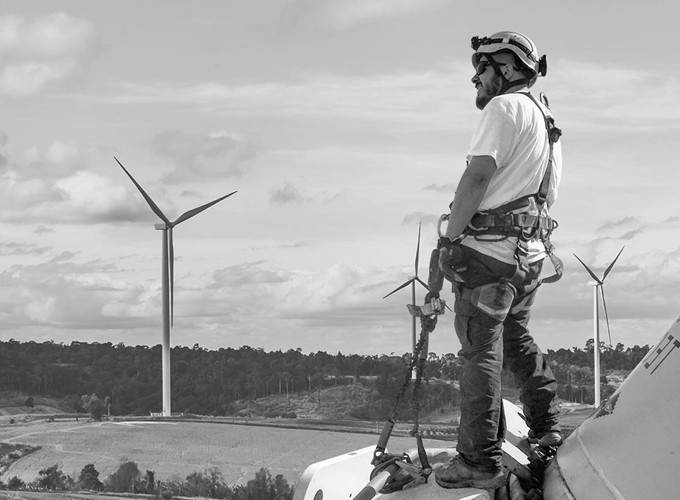
GWO Qualification: What It Is, Why It Matters and How to Get Started.
When people search for "GWO qualification", they are usually trying to answer one important question: what training do I need to work safely in the wind industry?
If you are planning a career in wind energy, moving across from another industrial sector, or looking to make sure your team meets site entry expectations, understanding GWO training is essential. In many wind industry environments, GWO training is the recognised safety standard used to prepare technicians and workers for the hazards they may face on site. GWO training standards are designed for renewable energy technicians working across construction, installation, operations and maintenance phases of the industry.
At Dangle Academy in Belfast, we speak to people every week who want a clearer explanation of what a GWO qualification actually is, whether they need all modules, how long certification lasts, and what to do before booking. This guide breaks it down in plain English.
What is a GWO qualification?
A GWO qualification usually refers to successful completion of one or more courses delivered to the standards set by the Global Wind Organisation (GWO). GWO develops training standards intended to improve safety and competence for people working in the wind and renewable energy sectors. Its standards are created around agreed learning objectives used by the industry.
In practice, when most people talk about getting their GWO qualification, they are often referring to GWO Basic Safety Training (BST). BST is one of the best-known entry routes for workers who need core safety training relevant to wind turbine environments. The official BST standard includes modules such as First Aid, Manual Handling, Fire Awareness, and Working at Heights, with Sea Survival added where the worker needs to operate in an offshore environment.
So while “GWO qualification” is a phrase people commonly use, it is more accurate to think of it as GWO-certified training modules recorded against your training profile, rather than one single universal certificate for every role.
Why is a GWO qualification important?
The wind industry involves a demanding working environment. Technicians may work at height, move equipment manually, respond to emergencies, and operate in challenging weather and site conditions. Because of this, employers and project operators often want workers to arrive with recognised training already in place.
A GWO qualification matters because it helps show that the participant has completed training aligned with the learning objectives expected by the industry. GWO states that its standards are recommended for renewable energy technicians working across the key phases of wind projects.
For the individual worker, that can mean:
- improved employability in the wind sector
- easier access to project requirements
- greater confidence before entering turbine environments
- a clearer route into renewable energy careers
For employers, it can mean:
- a more consistent baseline of safety training
- better workforce readiness
- easier verification of training status through WINDA
- improved confidence when onboarding workers and subcontractors
In short, a GWO qualification is often one of the first major steps into the wind industry.
Who needs a GWO qualification?
Not every person connected to a wind project needs exactly the same training, but GWO qualifications are commonly relevant for:
- wind turbine technicians
- trainees entering the renewables sector
- contractors working on wind sites
- supervisors and site teams
- rope access personnel moving into wind work
- maintenance teams supporting turbine operations
- offshore workers who require sea survival as part of their scope
The most common entry-level requirement is the BST package, which is widely regarded as the standard introduction to the practical safety topics technicians need for work in the wind environment. The official standard sets out those module areas clearly.
What does GWO Basic Safety Training include?
For many learners, the starting point is GWO BST. This training is made up of separate modules covering the core risk areas commonly encountered in the wind industry.
GWO First Aid
The GWO First Aid module is designed to help participants recognise life-threatening situations and provide safe and effective first aid in the wind turbine industry environment until the casualty can be handed over for further care.
GWO Manual Handling
This GWO Manual Handling module focuses on reducing the risk of musculoskeletal injury and teaching participants to apply essential manual handling principles when carrying out physical tasks in the wind industry.
GWO Fire Awareness
A GWO Fire Awareness module forms part of the BST package and addresses awareness and response to fire-related risks in wind turbine environments. It remains one of the core module areas within BST (Basic Safety Training) and BSTR (Basic Safety Training Refresher).
GWO Working at Heights
The GWO Working at Heights module addresses the knowledge, skills and practical behaviours needed to work safely at height in wind turbine settings. It is a critical element of BST because height exposure is such a central part of turbine work.
GWO Sea Survival
Where work is carried out offshore, Sea Survival is added to the package so participants are prepared for offshore-specific emergency scenarios. GWO’s refresher standard states clearly that Sea Survival is required to enable participants to work in the offshore environment.
That combination is why many people refer to GWO BST as the standard GWO qualification package.
Is GWO qualification mandatory?
This is one of the most common questions online.
Strictly speaking, GWO is not a government-issued trade licence in the same way that some regulated professions require statutory certification. However, GWO training is an established industry standard, and in real-world terms it is often required by employers, principal contractors, developers, and site operators before workers can access wind projects or carry out specific duties. GWO describes its standards as agreed learning objectives recommended for renewable energy technicians.
So the practical answer is:
If you want to work in many parts of the wind industry, around the world, a GWO qualification is often expected and may be essential for site access or recruitment.
That is why jobseekers, career changers and employers alike treat it as a core requirement.
How long does a GWO qualification last?
Another key question is validity.
GWO refresher information states that refresher training is intended to refresh, review and build on skills gained during the original BST modules, and GWO has historically operated around a 24-month validity period for these safety modules. Official GWO materials around refresher requirements and previous policy notices reference the 24-month period for training validity.
Although GWO Working at Heights is generally valid for 24 months, some employers and projects in Germany may require annual refresher training to align with German occupational safety expectations.
In practical terms, that means workers should monitor expiry dates carefully and complete refresher training before their records lapse. Letting training expire can delay job start dates, site mobilisation and project access.
For employers, this is why keeping training records current is so important.
What is WINDA and why does it matter?
WINDA is GWO’s global database used to verify the training status of GWO-certified individuals. It allows training records to be linked to a participant profile and supports visibility of training status. GWO states that certified training providers can add training records using the participant’s WINDA ID, and employers can verify status when that ID is shared with them.
Before attending GWO training, learners are often asked to create a WINDA participant profile. Once registered, they receive a WINDA ID. GWO explains that this ID is used by certified training providers to upload training records to the participant’s profile.
This matters because WINDA helps create a traceable training record. For the learner, that means:
- your completed modules can be recorded centrally
- employers may verify your training status more easily
- refresher planning becomes easier to manage
For anyone booking GWO courses, setting up WINDA early is a smart move.
Do you need a GWO-certified training provider?
Yes — if you want training that sits within the official GWO system, it needs to be delivered by a provider certified to deliver GWO standards. GWO states that training providers must be certified by a GWO-approved certification body in order to deliver training to GWO standards and frameworks.
That is an important point for learners comparing providers on price alone. A course might sound similar in marketing language, but if it is not delivered through the proper certified route, it may not meet the same requirement for your employer or project.
So when choosing where to train, always check the provider status, the modules being offered, and whether the training record will be correctly uploaded.
Dangle Academy is proud to be the first and currently only training provider in Northern Ireland and the Republic of Ireland to be successfully audited and aligned to the latest GWO Training Centre Requirements (V20) in March 2026.
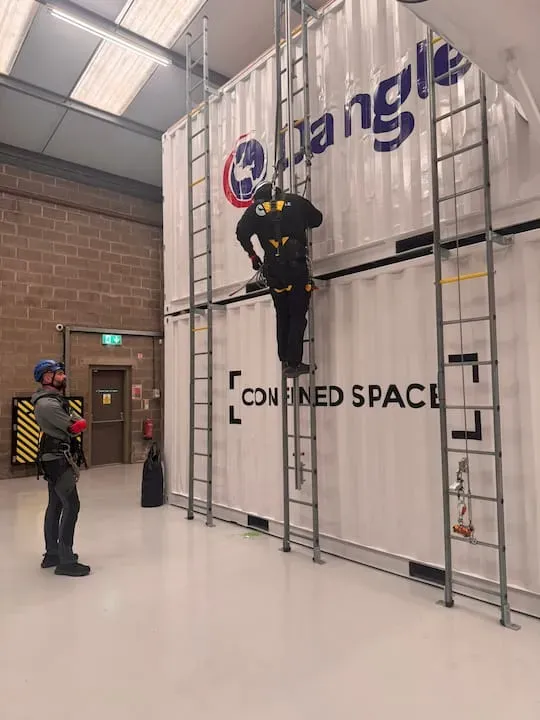
At Dangle Academy, delegates benefit from a Belfast training centre built around high-risk industry training, with practical delivery, strong instructor support and a professional environment designed to prepare learners for real operational settings.
What jobs can a GWO qualification help with?
A GWO qualification can support entry into a range of wind and renewable roles, depending on your wider skills, previous experience and the exact training completed.
Examples include:
- trainee wind turbine technician roles
- onshore wind maintenance support
- offshore support roles where relevant training is in place
- mechanical and electrical contractor roles on wind projects
- blade repair support roles
- rope access workers transitioning into wind scopes
- service and inspection roles around renewable energy assets
If you are coming from an access background, our guide to industrial rope access training explains how rope access skills can complement a move into specialist sectors such as wind energy.
Of course, GWO does not replace trade competence, technical experience or employer-specific induction. It provides an important training foundation, especially in safety-critical areas.
Is GWO enough on its own?
Usually, no.
A GWO qualification is often one major part of your employability profile, but employers may also want:
- relevant trade or technical experience
- medical fitness where applicable
- additional rescue or technical training
- offshore-specific qualifications for offshore projects
- company-specific inductions and procedures
For example, workers may progress beyond BST into other GWO pathways such as Advanced Rescue Training (ART) and Enhanced First Aid (EFA), depending on role requirements. These additional modules can help build competence for technicians working in more demanding wind industry environments.
So it is best to think of GWO Basic Safety Training (BST) as the start of your wind industry training pathway, not the end of it.
GWO qualification vs other safety training
People often compare GWO with general health and safety training from other sectors. While many core principles overlap, GWO is specifically designed around the wind and renewable energy working environment. GWO’s own standards are written for technicians in that sector and reflect hazards and tasks relevant to turbine work.
That sector-specific focus is one reason employers prefer it. General training may still have value, but GWO speaks directly to the wind industry context.
Why train locally in Belfast?
For learners in Belfast, Northern Ireland, and across the wider UK, local access to training can make a genuine difference.
Choosing a provider in Belfast can help with:
- reduced travel and accommodation costs
- easier scheduling for individuals and employers
- better convenience for refresher planning
- a direct route into training without unnecessary logistics
- access to local support before and after the course
For businesses in Northern Ireland building renewable capability, having a training option closer to home also helps develop regional skills and workforce readiness.
At Dangle Academy, that local angle matters. For many delegates, the ideal training provider is not just accredited and professional, but also practical to reach, responsive to questions, and experienced in delivering training to people who want to move into demanding operational environments.
What should you look for in a GWO training provider?
If you are comparing options, look beyond the headline price.
A good provider should offer:
- a clear explanation of which modules are included
- guidance on WINDA registration
- realistic information about who the course suits
- a professional training environment
- practical preparation advice
- clear post-course support on records and next steps
You should also look for a provider that understands the real-world needs of industry. Learners benefit when training is delivered by teams who understand safety, work at height, industrial environments and the expectations of employers. At Dangle Academy, we combine industry-led training with strong delegate feedback and a reputation for professional delivery in Belfast and across Northern Ireland.
How to prepare for your GWO qualification
Before attending your course, it is sensible to:
- confirm which modules you need
- create your WINDA profile if required
- check the joining instructions carefully
- wear or bring any required clothing or PPE as advised, such as safety boots
- make sure you are physically prepared for the practical elements
- ask questions in advance if you are unsure about suitability
A course such as GWO BST is not just classroom theory. At Dangle Academy, GWO BST is delivered with a strong practical focus, typically around 60% practical and 40% classroom-based, helping delegates build practical awareness, safe behaviours and emergency understanding in an industry setting. Arriving prepared will help you get more from the training.
Why Dangle Academy is a strong choice for GWO training in Belfast
If you are searching for GWO trainingin Belfast, you are probably looking for more than a box-ticking exercise. You want training that is relevant, professionally delivered and aligned with the standards employers expect.
At Dangle Academy, the focus is on giving delegates a serious, industry-minded training experience in Belfast, Northern Ireland. For individuals, that means a local route into renewable industry training. For employers, it means access to a Belfast-based training provider that understands the value of safety, practical standards and workforce development.
Whether you are taking your first step into wind, refreshing existing modules, or planning training for a team, choosing the right provider can make the process smoother from day one. Learn more about Dangle Academy.
Final thoughts: is a GWO qualification worth it?
For anyone serious about entering or progressing in the wind sector, the answer is yes.
A GWO qualification helps you build the recognised safety foundation that many employers and projects expect. It supports safer working, clearer training verification through WINDA, and a more credible route into wind industry roles. GWO’s official framework makes clear that its standards are designed for renewable energy technicians and that certified providers play a key role in delivering them properly.
If you are based in Belfast, Northern Ireland, or anywhere in the wider UK, now is a good time to understand what the right GWO pathway looks like for you.
And if you are looking for guidance on the next step, Dangle Academy is well placed to help you start that journey.
Ready to start your GWO qualification in Belfast?
Looking to complete your GWO qualification in Belfast? Dangle Academy delivers professional GWO training in Northern Ireland for individuals, employers and renewable industry teams. Contact us today to discuss upcoming course dates, module options and the right route into wind industry training.
Trusted by delegates across Belfast and Northern Ireland
Our Google reviews highlight why delegates across Belfast, Northern Ireland and beyond choose Dangle Academy for professional wind industry training.

Common FAQ's about GWO qualification
Is GWO qualification good for beginners?
Yes. BST is often the first formal step for people entering the wind industry because it covers the core safety topics relevant to wind work.
Can I work offshore with basic GWO?
Potentially, but offshore work usually requires the right combination of modules and any other employer or project-specific requirements. GWO states that Sea Survival is the additional module needed to enable participants to work in the offshore environment.
Do employers check GWO certificates?
They may verify training through WINDA, which is designed to confirm the training status of GWO-certified individuals.
Do I need GWO BST refresher training?
Yes, if you want to maintain current status for modules that require refreshing. GWO provides a dedicated Basic Safety Training Refresher standard for this purpose.
Contact Us
We'd Love a Share...
Recent Blog Post's