Hiring Rope Access NDT Technicians
Hiring Rope Access NDT Technicians: The 2026 Professional Guide for Asset Owners
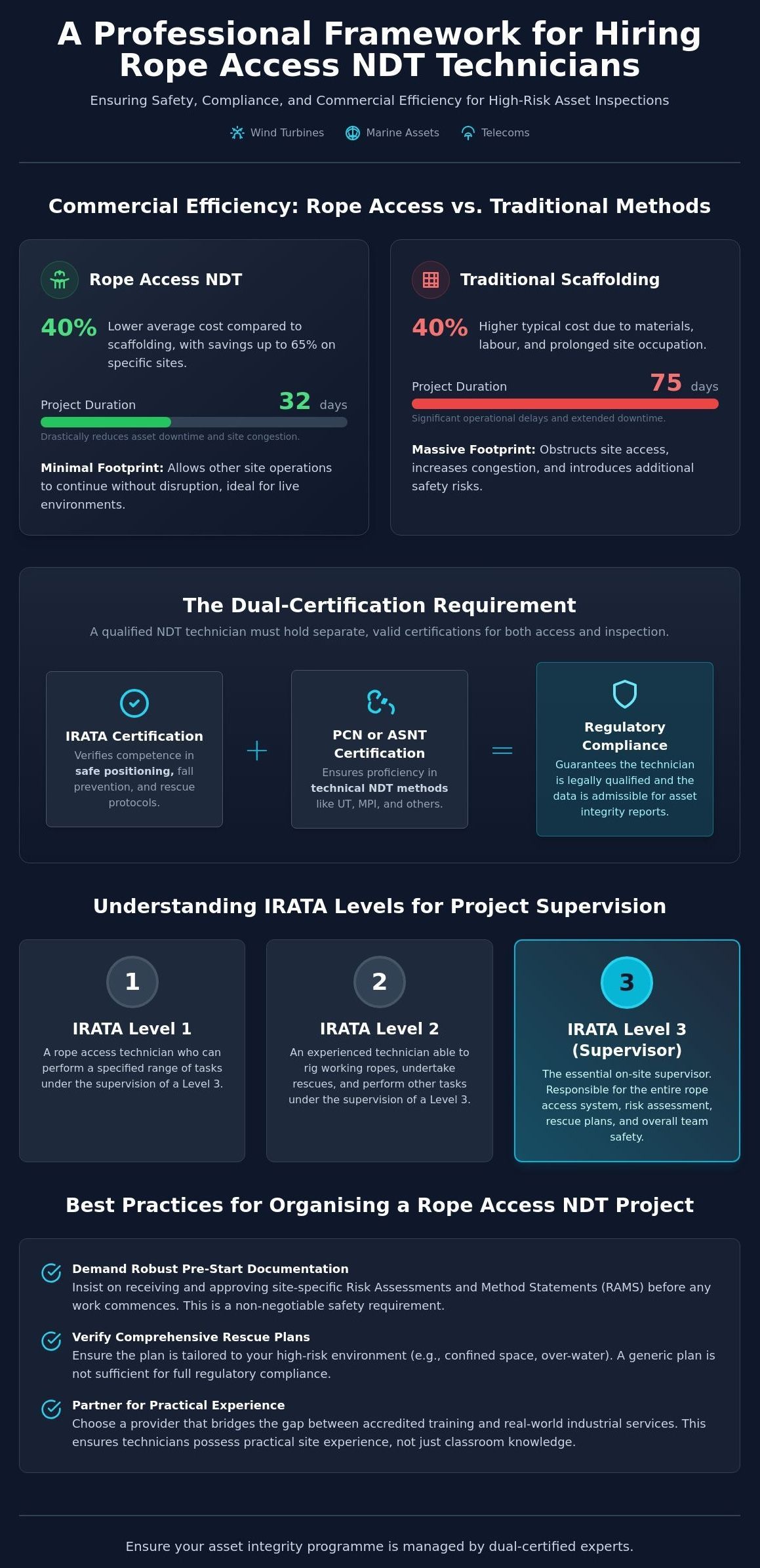
Relying on scaffolding for a simple weld inspection isn't just an operational delay; it's a commercial drain that often costs 40% more than necessary. For asset owners managing wind turbines, telecoms, or marine infrastructure, the challenge isn't just finding a climber, but securing a dual-certified professional who understands asset integrity. Finding qualified rope access NDT technicians for hire requires a methodical approach to verify both IRATA safety standards and PCN technical proficiency simultaneously, ensuring your project doesn't stall due to accreditation gaps.
We understand that whilst safety is your absolute priority, the administrative burden of vetting credentials and managing high-risk site work can feel overwhelming. This 2026 guide provides a professional framework to help you hire and manage specialist teams that guarantee full regulatory compliance across the UK and Ireland. We will examine the essential certifications to look for, including the latest IRATA ICOP updates, and outline how to reduce inspection downtime. You'll also learn how to demand transparent, expert-led reports that provide genuine commercial value rather than just a tick-box exercise.
Key Takeaways
- Understand the significant commercial advantages of rope access over traditional scaffolding, including the potential to reduce asset inspection costs by up to 40%.
- Learn how to effectively vet rope access NDT technicians for hire by verifying dual-certification across IRATA and PCN or ASNT frameworks for safety and technical accuracy.
- Identify the distinct operational roles of IRATA Level 1, 2, and 3 technicians to ensure your project has the correct balance of technical proficiency and safety supervision.
- Ensure full regulatory compliance by implementing robust pre-start documentation, including site-specific RAMS and comprehensive rescue plans tailored to high-risk environments.
- Recognise the value of partnering with a provider that bridges the gap between accredited training and real-world industrial services to ensure technicians possess practical site experience.
Table of Contents
- Why Industrial Asset Owners Hire Rope Access NDT Technicians for High-Risk Inspections
- Essential Accreditations: Vetting IRATA and PCN Certifications for Hire
- Commercial Efficiency: Comparing Rope Access NDT with Traditional Scaffolding Methods
- Best Practices for Organising and Managing a Rope Access NDT Project Safely
- Why Dangle is the Premier Choice for Rope Access NDT Services in the UK and Ireland
Why Industrial Asset Owners Hire Rope Access NDT Technicians for High-Risk Inspections
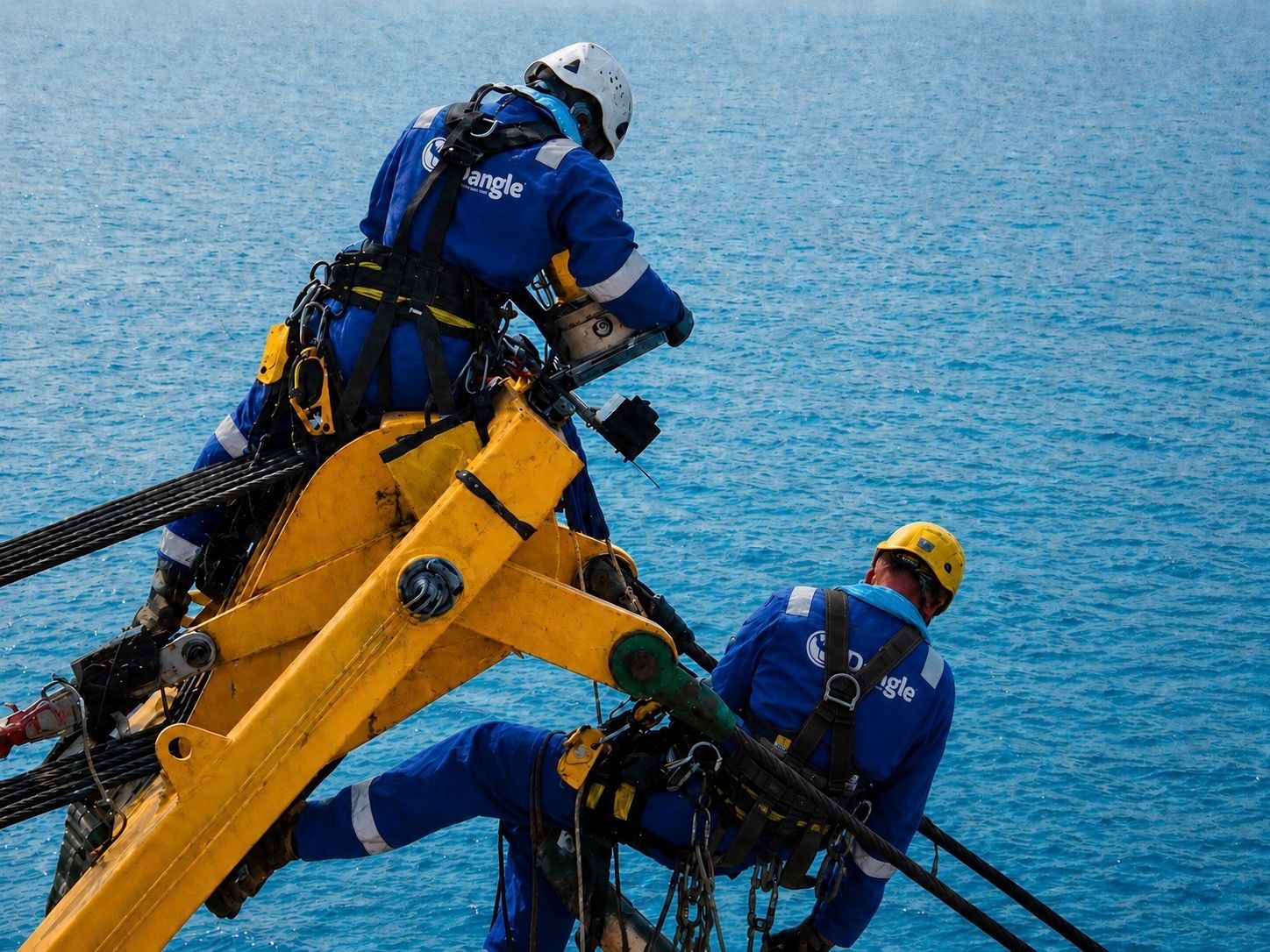
Managing industrial assets in the North Sea or across the UK's onshore wind farms requires more than just visual checks. It demands a sophisticated synergy between technical data and physical reach. This is the intersection where Non-Destructive Testing (NDT) meets advanced positioning techniques. When looking for rope access NDT technicians for hire, asset owners are essentially investing in a high-precision delivery system for structural health monitoring.
By using What is rope access to position a qualified inspector, you eliminate the need for heavy machinery or permanent installations. This safety-first mindset is legally mandated by the Work at Height Regulations 2005, which prioritise methods that minimise risk. Moving from reactive "run-to-fail" models to proactive asset integrity management ensures that minor fatigue cracks don't escalate into catastrophic structural failures.
The Role of NDT in Modern Asset Management
NDT is the cornerstone of industrial safety because it identifies internal flaws, such as corrosion under insulation or stress fractures, without damaging the structural integrity of the asset. Common methods like Ultrasonic Testing (UT) and Magnetic Particle Inspection (MPI) allow technicians to peer into the molecular structure of steel components. In sectors like offshore wind and telecoms, early flaw detection is commercially vital. Identifying a hairline crack during a routine inspection can save hundreds of thousands of pounds in emergency repair costs and unplanned downtime. Our rope access inspection services provide the technical expertise needed to interpret these complex results accurately on-site.
Why Traditional Access Fails in Complex Industrial Environments
Scaffolding is often the default choice, yet it frequently fails in high-risk or over-water locations due to its massive footprint and slow deployment. In over-water environments or tight confined spaces, the logistics of erecting metal towers are often prohibitive and introduce additional safety risks.
Rope access NDT teams offer a significantly smaller operational footprint, allowing site operations to continue whilst inspections are underway. The commercial impact is clear; industry data has demonstrated cost savings of up to 65% on specific sites compared to traditional methods. Deployment speed is equally impressive. A project that might take 75 days with scaffolding can often be completed in just 32 days using rope access techniques. This efficiency reduces site congestion and keeps critical infrastructure online for longer, satisfying both safety consultants and commercial directors.
Essential Accreditations: Vetting IRATA and PCN Certifications for Hire
Vetting rope access NDT technicians for hire is a two-fold process that requires verifying both their method of access and their technical inspection proficiency. It's a common misconception that any qualified climber can perform an NDT inspection. In reality, a technician should hold dual-certification: IRATA for safe positioning and PCN (or ASNT) for the actual testing. Without this specific combination, your inspection data may be legally inadmissible for regulatory compliance in the UK and Ireland.
Asset owners should start by confirming that the service provider adheres to IRATA International's rope access system and is importantly a IRATA member company. This framework ensures that every technician on your site understands the strict safety protocols required to prevent falls and manage rescues. Beyond the ropes, the NDT certification must be issued by a third-party body, such as the British Institute of Non-Destructive Testing (BINDT) under the PCN scheme, to ensure the technician's technical findings are accurate and unbiased.
Understanding IRATA Levels for Project Supervision
Every rope access site must be overseen by an IRATA Level 3 supervisor. This individual is responsible for the safety of the entire team and the implementation of the site-specific rescue plan. Whilst a Level 1 technician focuses on basic tasks and technical assistance under supervision, a IRATA Level 2 technician possesses the technical proficiency required for complex rigging and more advanced rescue manoeuvres. Ensuring your team has the correct ratio of levels is critical for both safety and project momentum. If you are unsure of your requirements, we can help you organise a compliant team structure for your next project.
NDT Certification Standards: PCN vs. ASNT
The PCN (Personnel Certification in Non-Destructive Testing) system is the recognised benchmark in the UK, offering independent, third-party validation of a technician's skills. In contrast, the American ASNT framework is often employer-based, which may not always satisfy the stringent third-party audit requirements of UK North Sea or telecoms assets.
Hiring managers must also demand to see technician logbooks. These documents provide verifiable proof of recent field experience and total hours worked at height. For offshore projects, valid medical certifications like OEUK are non-negotiable. Following the 2026 updates to IRATA Annex O and Annex S, technicians must also be specifically vetted for their ability to work in extreme environmental conditions or over water, ensuring they are physically and technically prepared for the specific realities of your asset.
Commercial Efficiency: Comparing Rope Access NDT with Traditional Scaffolding Methods
In our recent blog post on rope access bridge inspection, we explored the critical importance of safe and reliable access for structural maintenance. At Dangle®, we combine accredited training with specialized technical services to ensure your team is equipped to perform inspections flawlessly, fostering safety and efficiency in high-risk environments across the UK and beyond.
In this blog post we look further into how the financial weight of an industrial inspection isn't merely the day rate of the technician; it's the logistical burden of the access method itself. When asset owners evaluate rope access NDT technicians for hire, they must look beyond the initial quote and analyse the Total Cost of Ownership (TCO). Scaffolding, whilst traditionally viewed as a "stable" platform, carries significant hidden costs in transport, storage, and the requirement for multiple trades to erect and strike the structures. These logistical layers often result in site congestion and extended project timelines that rope access teams simply bypass.
Beyond the balance sheet, the environmental impact of your inspection method is increasingly critical for ESG compliance. A rope access team has a negligible carbon footprint compared to the heavy haulage required for tonnes of scaffolding tube and board. By adhering to IRATA International safety standards, these specialist teams provide a low-impact, high-efficiency solution that protects both your budget and the surrounding environment, particularly on sensitive coastal or offshore sites.
Time-to-Site Comparison and Operational Downtime
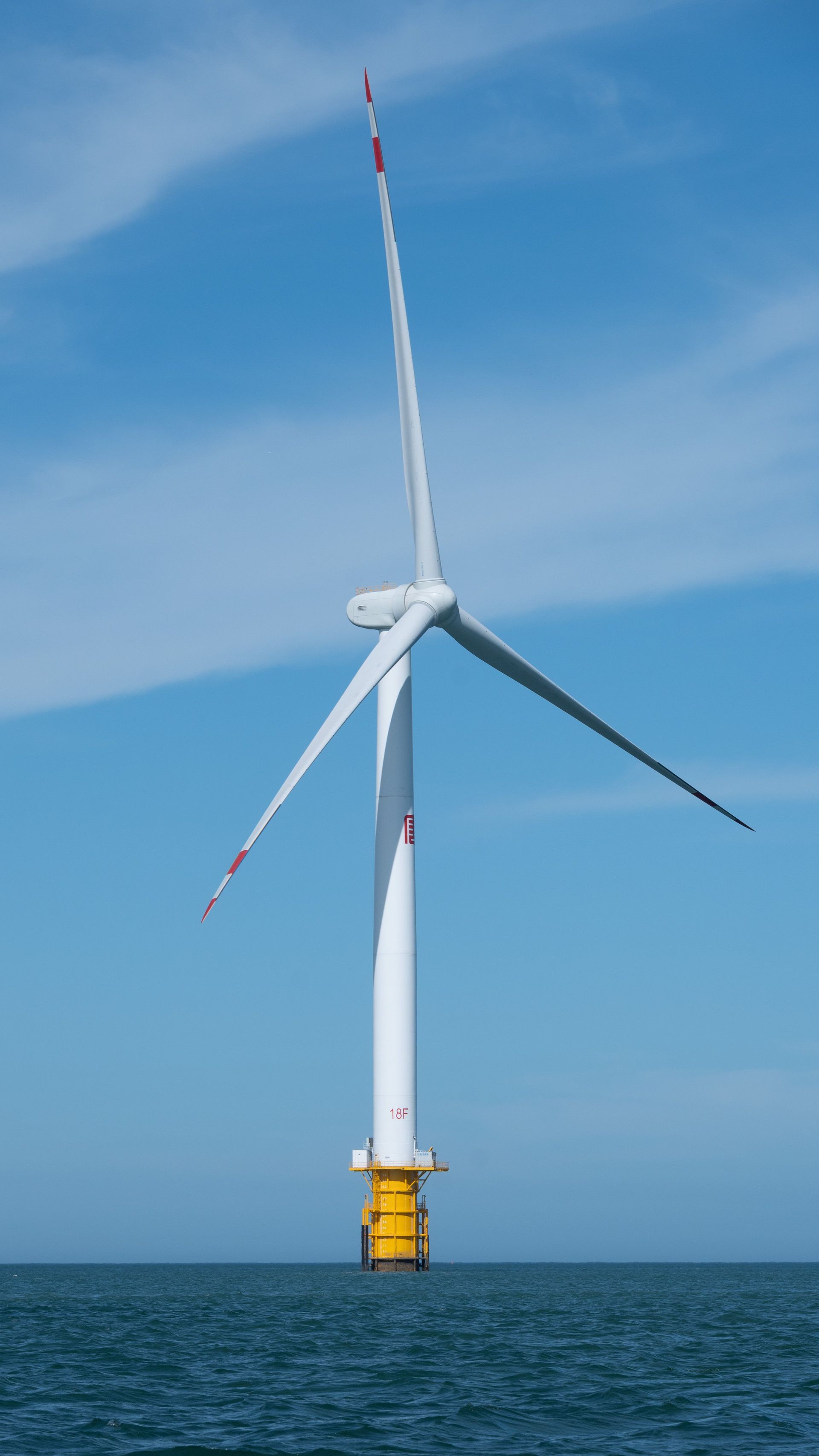
Consider a hypothetical inspection of a wind turbine transition piece. A traditional scaffolding approach might require three days for assembly, two days for inspection, and another two days for dismantling; a ten-day window including logistics. In contrast, an expert rope access team can often complete the same scope in just two days. This rapid mobilisation is vital for emergency "find and fix" missions where every hour of production downtime translates to lost revenue. For assets like refineries or telecoms towers, the ability to get in and out quickly ensures that critical infrastructure remains online with minimal disruption to daily operations.
Risk Mitigation and Secondary Hazards
There's a persistent misconception that working on ropes is inherently more dangerous than using a fixed platform. However, IRATA safety statistics consistently show that rope access is amongst the safest industrial professions, often outperforming traditional construction sectors. Scaffolding introduces secondary hazards such as dropped objects during assembly, the risk of structural collapse, and the danger of unauthorised access to the asset during off-hours.
A key advantage of our rope access inspection services is that the teams are entirely self-sufficient. Every deployment includes a site-specific rescue plan, managed internally by the IRATA Level 3 supervisor. This removes the reliance on local emergency services, who may not have the specialist training to perform a rescue at height or in a confined space. By choosing rope access, you're not just hiring a tester; you're hiring a self-contained safety unit that mitigates risk rather than adding to it.
Best Practices for Organising and Managing a Rope Access NDT Project Safely
Safe project management begins long before a technician clips into their harness. For asset owners, the administrative phase is where compliance is secured or lost. When you select rope access NDT technicians for hire, you must demand a comprehensive Risk Assessment and Method Statement (RAMS) that's tailored to your specific site. Generic documentation is a significant red flag; it suggests a lack of understanding of the unique hazards present on wind turbines or marine assets. A robust RAMS should clearly outline the sequence of work, the specific NDT methods employed, and the control measures used to mitigate environmental risks.
A non-negotiable component of site management is the site-specific rescue plan. Under the Work at Height Regulations 2005, employers can't rely on external emergency services for rescues at height. The IRATA Level 3 supervisor on-site must verify that the team has the equipment and proficiency to execute a rescue immediately. This proactive approach to safety ensures that, should an incident occur, the response is controlled and professional, protecting both the personnel and the asset owner's reputation.
Pre-Mobilisation Checklist for Hiring Managers
Before a team mobilises, conduct a thorough audit of their credentials and equipment. Professional liability insurance must specifically cover high-risk activities and, if applicable, offshore environments. You should also request the LOLER (Lifting Operations and Lifting Equipment Regulations) inspection certificates for all ropes and PPE to ensure they've been checked within the last six months. At our Belfast-based centre, we emphasise that a technician’s training history should reflect practical industrial experience. This real-world exposure, which we prioritise over classroom-only knowledge, ensures that the technicians you hire are prepared for the physical realities of the field. If you need assistance vetting a team, our safety consultancy services provide expert oversight for high-stakes projects.
Post-Inspection Reporting and Asset Integrity Data
When managing rope access NDT technicians for hire, the value of an inspection is only as good as the data delivered. A professional report must include high-resolution photographs, precise flaw sizing, and clear recommendations for remedial action. In 2026, asset owners should expect digital data delivery that integrates seamlessly into existing asset management software. This allows for long-term trend analysis, helping you predict when a component might fail before it becomes a safety risk. We recommend holding a "close-out" meeting immediately after the inspection to discuss any immediate safety concerns. This ensures that critical flaws are addressed before the team leaves the site, maintaining the momentum of your maintenance schedule.
Why Dangle is the Premier Choice for Rope Access NDT Services in the UK and Ireland
Securing reliable rope access NDT technicians for hire involves more than just checking a certificate; it requires confidence in the technician's real-world competency. Dangle occupies a unique position in the industry by operating as both an accredited training provider and a lead contractor for site services. This dual perspective means our technicians are trained by the very experts who manage high-stakes offshore and industrial projects. Based in Belfast, our training centre serves as a strategic hub for IRATA and GWO excellence across Northern Ireland and the wider UK, ensuring every team member is fully conversant with local Health and Safety Executive (HSE) expectations.
Our "Site-Ready" philosophy ensures that technicians possess the practical industrial experience required to hit the ground running. We understand that asset owners cannot afford the time for on-site learning curves. By hiring a team that has been vetted through our own rigorous academy standards, you're securing professionals who understand the physical and technical realities of assets ranging from North Sea platforms to urban telecoms towers.
The Dangle Advantage: Training the Best for Hire
Our 5-day training plus day 6 assessment model for IRATA Level 1 is designed to produce technicians who are truly proficient. Unlike standard courses that may rush the assessment process, we prioritise the practical application of skills in simulated industrial environments. For those operating in the renewables sector, our GWO-certified programmes ensure technicians possess the global safety standards required for wind turbine maintenance. We complement these technical skills with First Aid at Work and advanced rescue training, creating a workforce that is as safe as it is technically capable.
Comprehensive Industrial Solutions: From Inspection to Coating
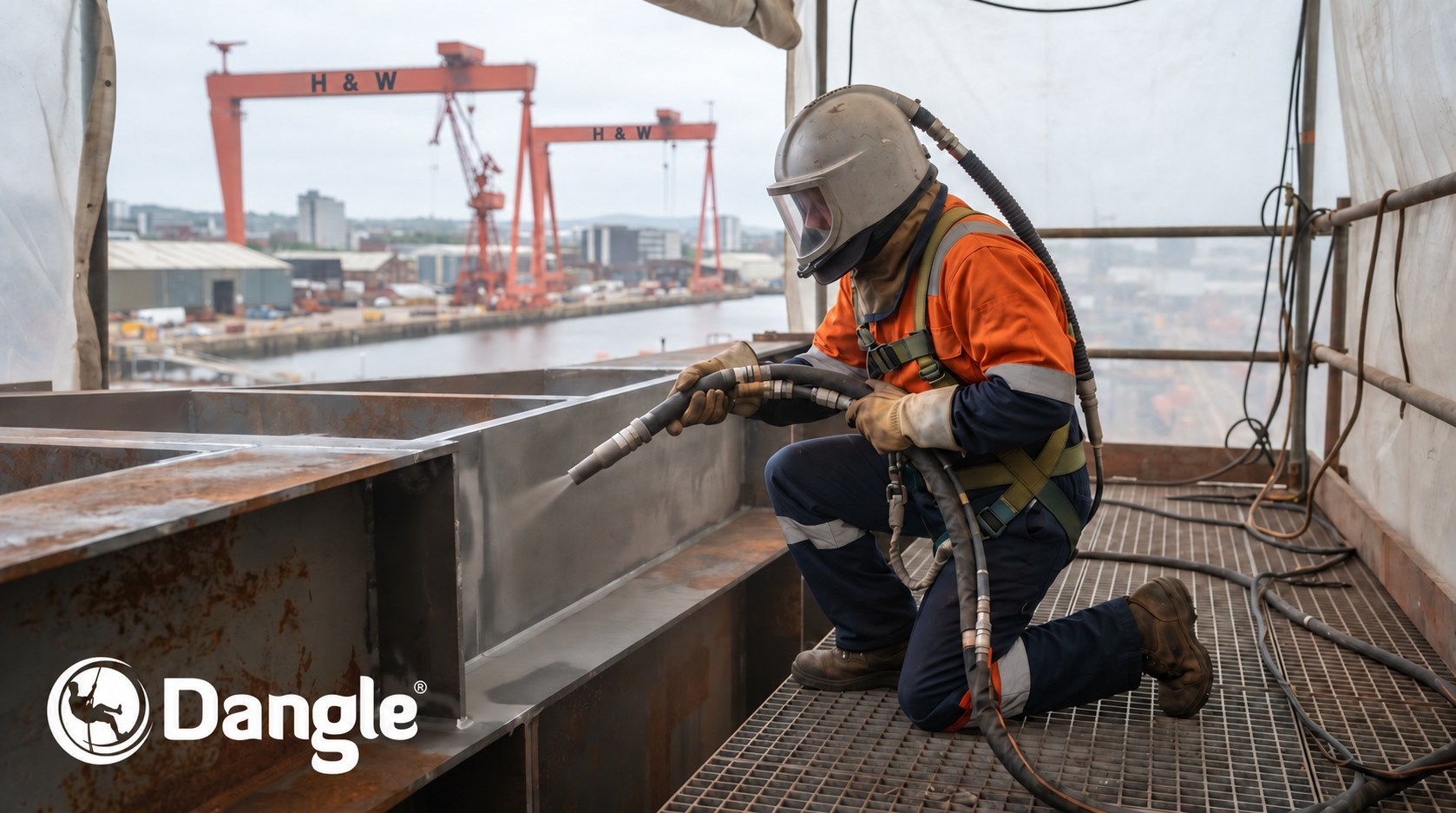
Dangle provides a comprehensive asset integrity solution that extends far beyond the initial inspection. Once our rope access NDT technicians for hire identify structural concerns, our multi-skilled teams can transition into remedial work, including Industrial Painting and protective coating application. This 'find and fix' capability is particularly valuable in confined spaces and marine environments, where managing multiple contractors is logistically difficult and commercially inefficient.
By consolidating your inspection and maintenance needs with a single, accredited partner, you reduce administrative friction and ensure a consistent standard of safety across your entire asset portfolio. Our deep understanding of the UK and Irish regulatory landscapes ensures that every report, rescue plan, and repair meets the highest benchmarks of quality. Contact Dangle today to hire our expert rope access NDT teams and secure the long-term integrity of your industrial assets.
Securing Asset Integrity with Professional Rope Access NDT Teams
Effective asset management requires a disciplined shift from reactive repairs to proactive, data-driven integrity checks. By prioritising dual-certified technicians and site-specific RAMS, you protect your budget and your personnel from the risks of structural failure. Selecting the right rope access NDT technicians for hire ensures your infrastructure remains compliant and operational without the excessive downtime or logistical congestion associated with traditional scaffolding methods.
As an IRATA and GWO accredited training centre, Dangle offers a unique advantage by deploying "Site-Ready" specialists who possess real-world industrial experience. From our Belfast hub, we provide expert-led inspection and maintenance services tailored to the specific needs of the wind, marine, and telecoms sectors across the UK and Ireland. We're committed to upholding international benchmarks whilst delivering local excellence on every deployment.
Enquire about our specialist Rope Access NDT services today to ensure your next inspection is managed with precision. We look forward to partnering with you to secure the long-term health of your industrial assets.
NDT Frequently Asked Questions
What is the difference between IRATA and NDT certifications?
IRATA certification governs the safe method of access, whilst NDT certification, such as PCN, validates the technician's ability to perform technical inspections. Asset owners must ensure rope access NDT technicians for hire hold both to guarantee safety and data integrity. One ensures they can reach the target safely; the other ensures their findings are accurate and legally compliant for your integrity records.
How many rope access technicians are required for a safe NDT team?
A safe rope access NDT team will normally include at least two rope access technicians, with an IRATA Level 3 supervisor responsible for rope access safety, rescue planning and supervision. This ensures that if an incident occurs, there is a competent person on site who can manage the situation and initiate rescue without delay. For offshore work, confined access areas or larger industrial assets, the team is often increased to three or more technicians so that rigging, inspection, testing and rescue cover can be managed safely.
Can NDT be performed on wind turbine blades using rope access?
NDT is frequently performed on wind turbine blades via rope access to identify internal delamination, lightning damage, or manufacturing flaws. Technicians use methods like Ultrasonic Testing or Thermography whilst suspended to provide high-resolution data on the blade's structural health. This proactive approach is a core part of wind turbine maintenance, helping to prevent catastrophic failure and extending the operational life of the asset.
What insurance should I look for when hiring a rope access NDT company?
You should look for comprehensive Public and Employers' Liability insurance that specifically includes endorsements for work at height and offshore activities. Standard policies often exclude high-risk rope access work, so it's vital to verify that the coverage is site-specific. Professional Indemnity insurance is also recommended for NDT work to cover the technical accuracy and professional advice contained within the inspection reports.
How often do rope access technicians need to be re-certified?
IRATA technicians must undergo a formal re-certification assessment every three years to maintain their certification and prove their technical competency. If a technician hasn't performed rope access work for more than six months, they are also required to undergo refresher training. This rigorous cycle ensures that all rope access NDT technicians for hire remain proficient in the latest safety protocols and rescue techniques.
Is rope access NDT suitable for confined space inspections?
Rope access is highly suitable for confined space inspections, such as within storage tanks or vessel internals, where traditional access is often impossible. It allows for rapid entry and exit whilst maintaining a clear line of sight for the safety supervisor. When combined with confined space awareness training, it provides a safe, efficient method for performing technical NDT without the need for complex scaffolding.
What are the most common NDT methods used in rope access?
The most common NDT methods used in rope access include Ultrasonic Testing (UT) for thickness gauging, Magnetic Particle Inspection (MPI), and Eddy Current Testing. These methods are chosen for their portability and accuracy in detecting surface and sub-surface flaws in high-reach areas. Technicians must be PCN certified in each specific method to ensure the results are valid for your long-term asset management strategy.
How do I verify an IRATA technician or company?
You can verify an IRATA company by checking its membership through IRATA International and confirming the company’s member number. Individual rope access technicians should also be able to provide their IRATA ID, certificate and logbook, showing their level, assessment history and recorded hours. For higher-risk NDT or offshore work, these checks should be completed before mobilisation as part of the hiring manager’s due diligence.
Contact Us
We'd Love a Share...
Recent Blog Posts