Rope Access Inspection Services in Belfast
Rope Access Inspection Services in Belfast: A Practical Buyer’s Guide
An inspection can fall short before a technician reaches the workface. If the asset question, access plan and expected report aren’t agreed in advance, difficult-to-reach areas may be inspected without producing clear maintenance priorities. That’s why rope access inspection services Belfast projects need a defined purpose from the outset.
It’s understandable to focus first on reaching the inspection area, particularly when scaffolding or other access equipment could disrupt site operations. But access is only one part of the plan. The inspection scope, work-at-height controls and reporting requirements all affect whether the findings will be useful.
This guide explains how to define an inspection scope around the asset and its condition, plan access and safety considerations, and specify deliverables that help your team decide what to do next. Drawing on Dangle®’s industrial inspection and site-services experience in Belfast, it covers practical considerations for assets across Northern Ireland, including how inspection findings can inform maintenance and coating decisions.
Key Takeaways
- Set a clear inspection question before planning access, so the work focuses on the asset areas and conditions that matter.
- For rope access inspection services Belfast projects, align the access plan, safety controls and reporting requirements with the asset and site conditions.
- Agree what evidence the report should capture and how the findings will support maintenance decisions.
- Prepare asset records, access constraints and inspection priorities before work begins to help coordinate the inspection with site operations.
- Dangle® brings industrial site-services and accredited training experience to practical inspection and maintenance planning.
Table of Contents
- What rope access inspection services in Belfast need to establish first
- How Belfast rope access inspection work is scoped and planned
- How to assess inspection methods, evidence and reporting
- What Belfast project teams should prepare before an inspection
- Plan rope access inspection services in Belfast with Dangle
What rope access inspection services in Belfast need to establish first
A critical inspection point on a marine structure, utility asset or high-level building can remain out of view without a workable access plan. For rope access inspection services Belfast projects, start by defining what needs assessment and what decision the findings should support. Reaching the workface is useful only if the inspection answers the right question.
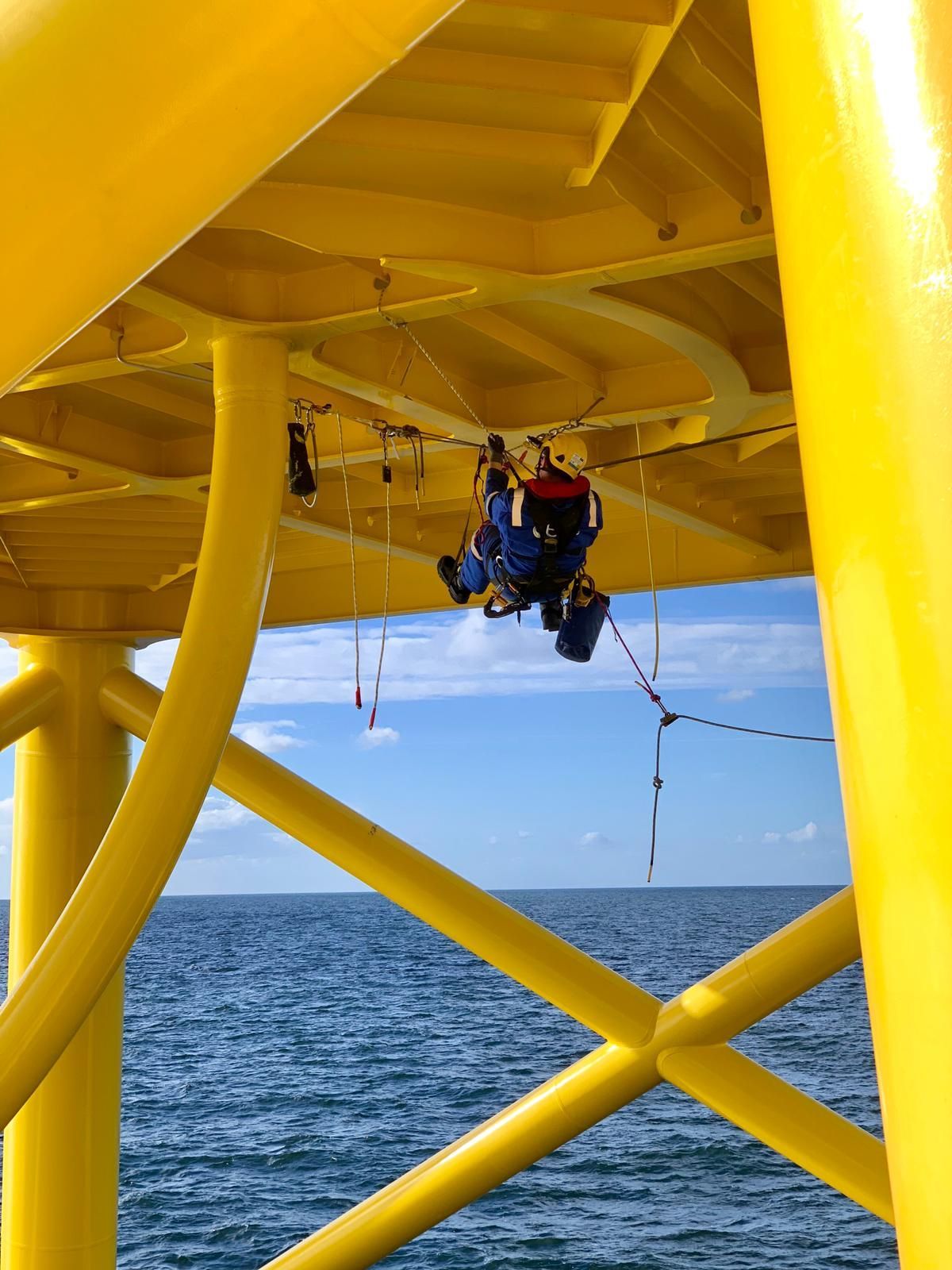
Rope access inspection is inspection work carried out using rope access to reach difficult locations. The access method helps technicians reach the work area, but it doesn’t define the inspection method or outcome. The brief should make those elements clear. For a general overview of the access discipline, see this guide to rope access.
Which assets and access problems can a rope access inspection address?
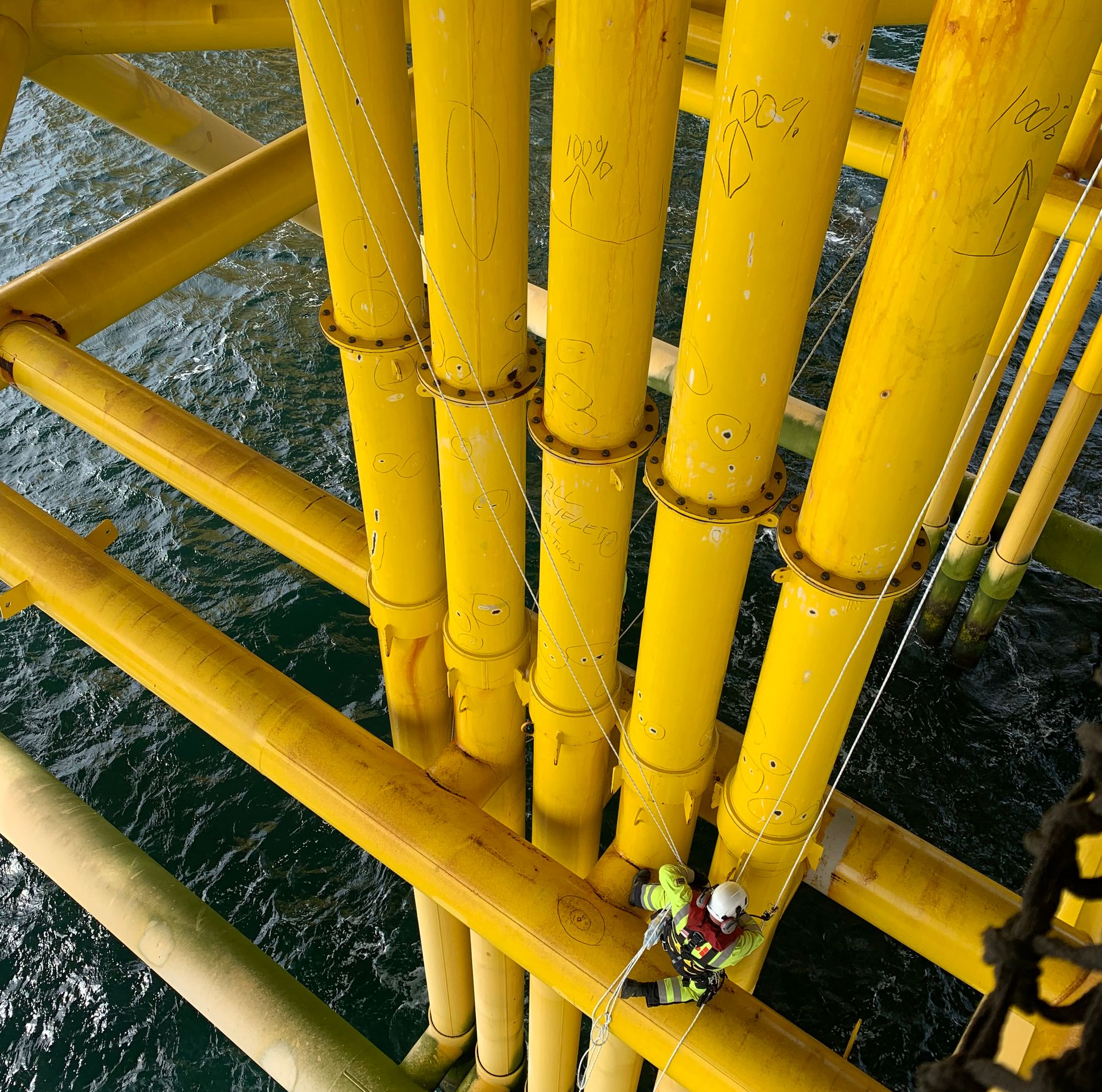
Rope access may suit specific inspection areas on industrial structures, but it isn’t automatically appropriate for every asset or task. Height matters, as do the structure’s geometry, obstructions, available access points and activity around the workface. A pipe rack crowded with services presents different access considerations from an exposed façade or a marine structure on an active site.
The practical question is whether the proposed arrangement can reach the required areas while accounting for site conditions. Keep inspection separate from follow-on maintenance. For example, recording a coating concern is an inspection finding, surface preparation and coating repair are separate work that can be planned once the evidence has been reviewed.
What should the inspection brief answer?
A useful brief gives the inspection team enough context to plan the work and report against the asset owner’s needs. Set out:
- Asset and location: identify the structure and the precise areas to inspect.
- Purpose: explain why the inspection is required and note known concerns.
- Decision: state whether the findings should inform repair planning, condition monitoring or another maintenance decision.
- Site conditions: record access restrictions, operating activity and constraints that could affect the work.
These details help distinguish a targeted assessment of known concerns from a broader condition review. Dangle® provides inspection and industrial access services from Belfast. Read more about Dangle’s industrial services and how they support work at difficult-to-access sites. With the asset question and inspection boundary defined, the next step is to shape the access and work plan around the site.
How Belfast rope access inspection work is scoped and planned
A workable inspection plan links the asset question to the access route, controls and reporting needed to answer it. For rope access inspection services Belfast projects, that sequence must reflect the particular structure and live site conditions. A plan for a sheltered façade won’t automatically suit a marine structure or a busy utility site.
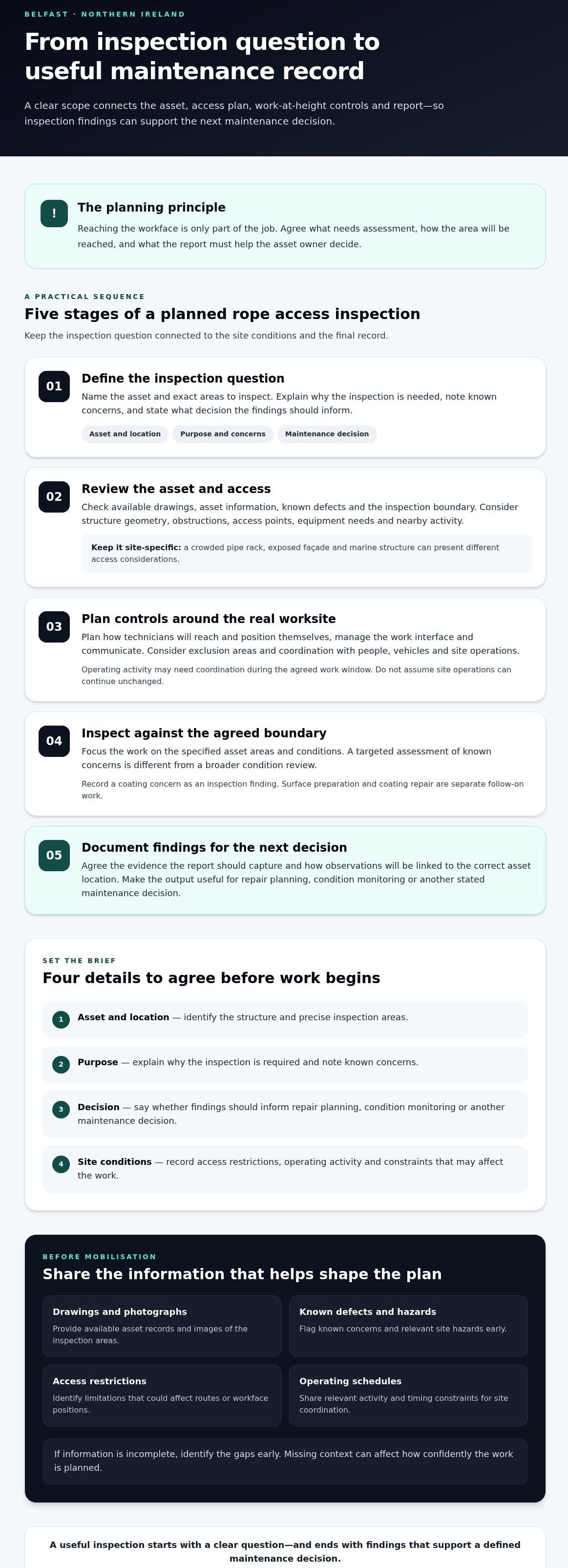
The work generally moves through five stages:
- define the question,
- review access,
- plan controls,
- inspect,
- document findings.
This gives the client and delivery team a shared understanding of what is included, how the inspection will be approached and what information the final record needs to contain.
What happens during a pre-work scope and access review?
Before mobilisation, the team reviews available drawings, asset information, known defects and the inspection boundary. The aim is to identify the precise areas to reach, not just a general elevation or structure. Clear boundaries focus the work and make it easier to relate observations to the correct asset location.
The access review considers possible routes and workface positions alongside obstructions, equipment needs and nearby site activity. You can support this process by sharing current drawings, photographs, access restrictions, known hazards and relevant operating schedules. If information is incomplete, it may affect how confidently the work can be planned, so identify gaps early.
How are safety and operational constraints built into the plan?
Work-at-height planning needs to reflect the task and the actual environment. The team considers how technicians will reach and position themselves at the inspection area, how the work interface will be managed and what communication arrangements are needed. Exclusion areas and coordination with site personnel also matter, particularly where people, vehicles or operations could pass near the work zone.
For example, inspection around an operating structure may require coordination with the site team to manage access and nearby activity during the agreed work window. A clear plan can help avoid unnecessary interference, but it shouldn’t assume operations can continue unchanged. Site conditions and inspection priorities determine the practical arrangement.
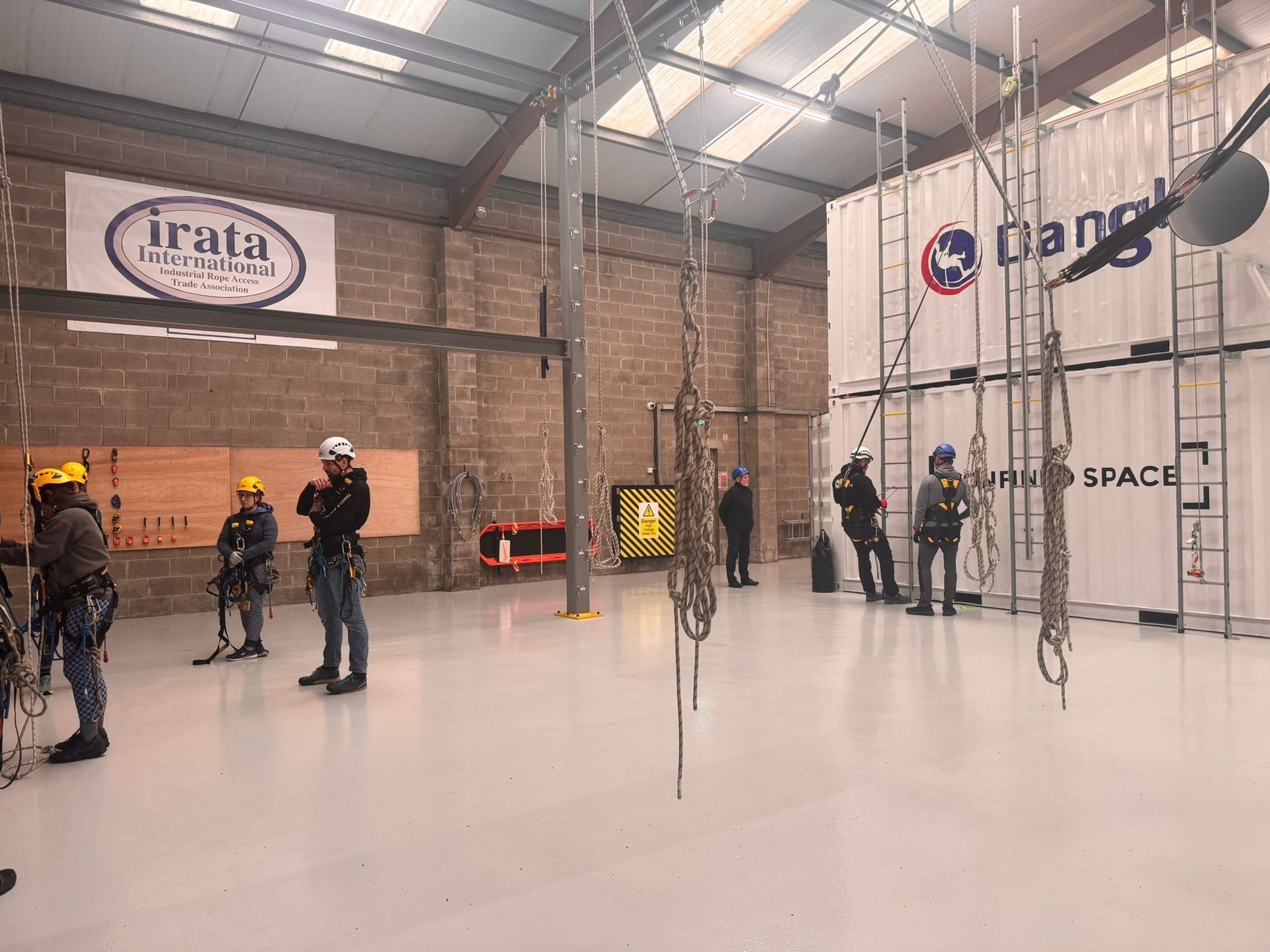
IRATA provides industry information on rope access training and safe working practices through the Industrial Rope Access Trade Association (IRATA). That wider context supports an important planning principle: access arrangements, technician competence and task requirements need to be considered together.
Dangle’s Belfast-based industrial services bring access and inspection requirements into a practical site-planning conversation. Once the scope, access review and controls are aligned, agree what inspection evidence will be recorded and how it will inform maintenance decisions.
How to assess inspection methods, evidence and reporting
An inspection report is useful only if it helps the asset team understand what was examined and what action may be needed. For rope access inspection services Belfast projects, agree the inspection purpose and expected evidence before work starts. Reaching an area is not the same as examining it using a specified method.
When does an inspection brief need a specified examination method?
The asset material, suspected defect and decision required all influence the method. A visual inspection records observable conditions at the inspected areas. A project may also specify a non-destructive testing method, such as ultrasonic testing, to investigate a particular characteristic. These methods have different purposes, so the brief should identify the required examination rather than treating “inspection” as a single, interchangeable task.
Rope access describes how technicians reach the workface. It doesn’t determine the examination method. Keep the access scope and inspection scope distinct, and state any specialist method explicitly when the project requires one.
What evidence should the report provide?
Before work begins, agree how findings will be recorded and linked to the asset. Clear references help an engineer or maintenance planner locate an observation later, compare it with previous records and decide whether further assessment or action is appropriate.
A practical report should identify inspected areas, describe observations clearly and include supporting records where specified. It should also state the limits of the inspection, including areas that were inaccessible or could not be assessed within the agreed scope. This prevents an uninspected area from being mistaken for one with no recorded concern.
| Scope or evidence type | Purpose | Access and evidence to consider | Decision it may inform |
|---|---|---|---|
| Visual observation | Record visible condition at defined locations | Reach to the workface, clear location references and supporting records | Whether to monitor, investigate further or plan maintenance |
| Specified specialist examination | Assess a defined feature or suspected defect using the method named in the brief | Access and evidence requirements depend on the method and asset | The next assessment or maintenance step relevant to the findings |
The table is a scoping aid, not a substitute for selecting a method suited to the asset and inspection objective. Don’t ask a visual record to answer a question it wasn’t designed to resolve. Equally, don’t specify specialist examination without defining the feature being assessed and how the result will be used.
Good reporting connects each observation to a location and a practical decision without overstating what the inspection established. Dangle®’s experience across rope access inspection, maintenance and coatings helps keep findings relevant to asset planning.
What Belfast project teams should prepare before an inspection
Inspection work can lose time before it reaches the asset if drawings are out of date, priority areas aren’t identified or the work window clashes with site activity. For rope access inspection services Belfast projects, preparation helps the access team understand the site and gives the asset team records that support a clear next decision.
Before mobilisation, assemble the information that will shape the scope and day-to-day coordination:
- Asset information: available drawings, inspection history and records of known defects.
- Inspection priorities: mark locations of concern and explain what decisions depend on the findings.
- Access constraints: note restrictions around reaching or working at the relevant areas.
- Site arrangements: share relevant procedures, operating limits, permit arrangements and interfaces with other contractors.
- Work planning: identify site activities that could affect the planned work window or coordination.
For a Belfast industrial site, operating activity and contractor interfaces can shape when and how inspection areas are accessed. Clear information lets the inspection plan account for those conditions rather than rely on assumptions. It also helps align location references and records with the asset information the maintenance team already uses.
How can inspection findings lead to practical maintenance action?
Once the report is available, review its observations against the asset’s maintenance priorities and the original inspection question. Clear location references make it easier to direct attention to specific areas, compare records and decide whether to monitor a finding, plan maintenance or commission further technical assessment.
Keep the evidence and the decision distinct. An observation records what was seen within the agreed scope; it doesn’t automatically establish the full extent or cause of a condition. If the findings raise a question the inspection wasn’t designed to answer, the next step may be further assessment. Plan any repair or coating work in light of the available evidence, rather than assuming what is needed before the inspection.
This distinction gives the site team a practical way to prioritise follow-up while being transparent about what remains unknown. It also helps prevent a brief observation from being treated as a complete condition assessment.
Dangle® provides rope access inspection alongside maintenance and coating services, bringing practical site experience to the link between access, findings and follow-on planning. To discuss an inspection scope for a difficult-access industrial asset, explore Dangle’s industrial services.
Plan rope access inspection services in Belfast with Dangle®
A useful inspection depends on more than reaching the workface. The access plan needs to support the inspection objective, allow relevant observations to be recorded and fit the conditions on site. Dangle® provides rope access inspection from Belfast, bringing industrial site-services experience and accredited training together in a practical, safety-led approach.
That combined perspective helps keep the access arrangement connected to the task. The route and positioning affect which areas can be reached and how inspection evidence can be gathered. If observations later inform maintenance or coating planning, clear locations and records give the asset team a practical basis for considering next steps. Any follow-on work remains subject to the inspection findings and its own scope.
Why combine access planning with inspection experience?
Access planning shapes the technician’s position at the workface and the areas available for assessment. The inspection team works to the agreed boundary and records what it can observe, including any limitations. This matters on industrial assets where obstructions, site activity or the structure’s geometry can influence access.
Dangle®’s work across rope access, inspection, maintenance and coatings provides a grounded view of how inspection findings may connect with later asset decisions. For example, an observed coating concern can be recorded for review and may inform maintenance planning. The inspection should report the evidence, not assume what repair is required before the condition has been assessed.
What is a practical next step for a Belfast site team?
Start a project discussion with the information that will help define a workable scope:
- Asset: location, type and available drawings or records.
- Purpose: why the inspection is needed and what decision the findings should support.
- Priorities: known concerns and the exact areas to assess.
- Site conditions: access constraints, operating activity, permit arrangements and contractor interfaces that may affect the work.
- Reporting needs: how observations should be identified and recorded for the asset team.
This information gives the planning conversation a clear starting point. Dangle® supports rope access inspection services Belfast projects and difficult-access industrial work across the UK, tailoring the scope to the asset and site conditions. Share the available details and inspection priorities to begin defining the work and its intended outputs.
Discuss your rope access inspection requirements with Dangle®.
Turn inspection findings into a clear maintenance plan
A well-scoped rope access inspection starts with a defined asset question, an access plan shaped around site conditions and reporting that helps the team decide what to do next. Clear asset details, priority areas and known access constraints give the work a practical starting point.
For rope access inspection services Belfast projects, Dangle® brings together industrial site experience across rope access, inspection, maintenance and coatings with accredited training expertise. This combination supports a safety-led approach that considers both how technicians reach the workface and how inspection findings may inform maintenance planning.
Share the asset location, inspection purpose, known concerns and relevant site information to begin a project-specific discussion. Discuss your rope access inspection requirements with Dangle® and take the next step towards a clearly planned assessment.
Frequently Asked Questions
What do rope access inspection services include?
They combine rope access to reach difficult locations with inspection work defined by the asset and project scope. The work may involve assessing specified areas, recording observations and providing evidence for the asset team to review. The brief should set out the inspection purpose, locations and reporting needs. Access describes how the workface is reached; it doesn’t, by itself, define the examination method or maintenance action required.
Are rope access inspections suitable for every industrial structure?
No. Suitability depends on the asset, inspection areas and site conditions. Height, structure geometry, obstructions, available access points and nearby operations all affect whether rope access is a practical option. A difficult-to-reach area on a Belfast industrial structure may be suitable, while another task on the same asset may need a different access arrangement. Assess the proposed approach against the specific workface and inspection objective.
How is a rope access inspection planned?
Planning starts by defining the inspection question and exact areas to assess. The team then reviews available asset information, considers access routes and workface positioning, and plans around site conditions and operational interfaces. Once the inspection is completed, observations and agreed supporting evidence are documented. The sequence is project-specific. A marine asset, utility structure and high-level building can each present different access constraints and coordination needs.
What information should I provide before arranging a rope access inspection in Belfast?
Share the asset location and type, available drawings, inspection history, known defects and the areas you want assessed. Explain why the inspection is needed and what decision the findings should support, such as maintenance planning or condition monitoring. Also identify access restrictions, operating conditions, permit arrangements and contractor interfaces. For rope access inspection services Belfast projects, this information helps shape a scope around the asset and its actual site conditions.
Does rope access inspection include non-destructive testing?
Not automatically. Rope access is an access technique, while non-destructive testing is a separate examination method that must be specified according to the asset, suspected defect and inspection objective. A visual inspection records observable conditions; it shouldn’t be presented as a specialist test. If a project requires a particular examination method, define it clearly in the scope and state what evidence and decision the results need to support.
What should a rope access inspection report contain?
A useful report identifies the asset and inspected locations, describes observations clearly and includes supporting records agreed in the scope. It should distinguish what was assessed from areas that were inaccessible or outside the inspection boundary. This makes the evidence easier to trace and helps maintenance teams decide whether to monitor a finding, plan work or seek further assessment. The report should avoid conclusions beyond what the inspection evidence supports.
Can rope access inspection reduce disruption to site operations?
It can help limit the need for larger access arrangements in some difficult-to-reach inspection tasks, but disruption depends on the asset and site conditions. Workface access, exclusion areas, permits and nearby activities may still affect operations or the planned work window. Early coordination with the site team helps identify these interfaces and plan accordingly. Select the access method for the task rather than assuming it suits every inspection.
Contact Us
We'd Love a Share...
Recent Blog Posts