Chester Step Test for Offshore Workers
Chester Step Test for Offshore Workers: The Technician’s Guide
Could a simple height-adjustable stool be the final hurdle standing between you and your next contract? For many technicians, the chester step test for offshore workers represents a significant source of anxiety, often viewed as a technicality that could jeopardise a career. It's understandable to feel uneasy when your professional advancement relies on a heart rate monitor and a steady metronome beat.
We recognise that uncertainty often leads to unnecessary stress during a medical. This guide offers a clear, authoritative look at the test mechanics, covering everything from aerobic capacity requirements to the current OEUK Issue 8.1 guidelines. You'll gain a thorough understanding of what happens during each stage, including how the digital Chester Step Test 2 (CST2) platform evaluates your performance.
By demystifying the process and explaining the VO2 max benchmarks required for Emergency Response Team duties, we aim to help you prepare with precision. We'll outline the physical standards needed to pass and provide the insights required to secure your fitness certificate and return to work with total confidence.
Key Takeaways
- Understand how the assessment aligns with current OEUK and GWO medical standards to ensure your fitness certification meets all mandatory regulatory requirements.
- Learn the technical mechanics of the test, including how variables like step height and heart rate are used to accurately calculate your aerobic capacity.
- Discover why the chester step test for offshore workers is a vital safety benchmark for technicians operating in demanding environments like wind turbines and drilling platforms.
- Identify essential pre-test protocols, including dietary restrictions and physical preparation strategies, to help you approach your medical assessment with confidence.
- Explore how to coordinate your aerobic assessment with a full OEUK medical to streamline your path to offshore deployment and career progression.
Table of Contents
- What is the Chester Step Test for Offshore Workers?
- How the Chester Step Test Works: Stages and Scoring
- Why the Chester Step Test is Essential for Specific Sectors
- How to Prepare and Pass Your Chester Step Test
- Occupational Health and Medical Compliance at Dangle Academy
- What is the Chester Step Test for Offshore Workers?
What is the Chester Step Test for Offshore Workers?
The Chester Step Test is a submaximal aerobic assessment designed to estimate an individual's cardiorespiratory fitness. Unlike more strenuous clinical evaluations, this test provides a reliable prediction of physical endurance without requiring the subject to reach their absolute physical limit. It's essentially a sophisticated, multi-stage modification of the original Harvard step test, refined specifically for modern occupational health settings. For those pursuing a career at sea or on remote energy assets, the chester step test for offshore workers serves as a vital gatekeeper. It ensures that every technician possesses the physical resilience required for high-stakes environments where medical assistance may be hours away. Accuracy is paramount.
The Regulatory Context of Offshore Fitness
The transition from Oil & Gas UK (OGUK) to Offshore Energies UK (OEUK) reflects a broader industry shift toward a diversified energy landscape. Under the current OEUK Medical Guidelines, specifically Issue 8.1, maintaining a high standard of physical fitness is a fundamental regulatory necessity. Similarly, the renewables sector often requires Renewables UK (RUK) medicals, which frequently incorporate the Chester Step Test to validate a worker's suitability for the unique challenges of wind turbine environments. By providing a standardised, objective measure of fitness for duty, the test removes any ambiguity from medical assessments. It ensures that safety standards remain consistent across the UK Continental Shelf, regardless of the specific platform or vessel.
Aerobic Capacity and Safety-Critical Roles
In the event of an emergency evacuation or a technical failure, an offshore worker's cardiorespiratory health becomes a critical safety component. High levels of aerobic capacity are essential for navigating steep ladders, working in heavy personal protective equipment for extended periods, and performing rescues in confined spaces. The primary metric used to quantify this fitness is VO2 Max. VO2 Max is the maximum rate of oxygen consumption measured during incremental exercise. Maintaining an adequate VO2 Max ensures that technicians can perform their duties under duress without succumbing to premature fatigue. This is why the chester step test for offshore workers is prioritised for safety-critical roles, including:
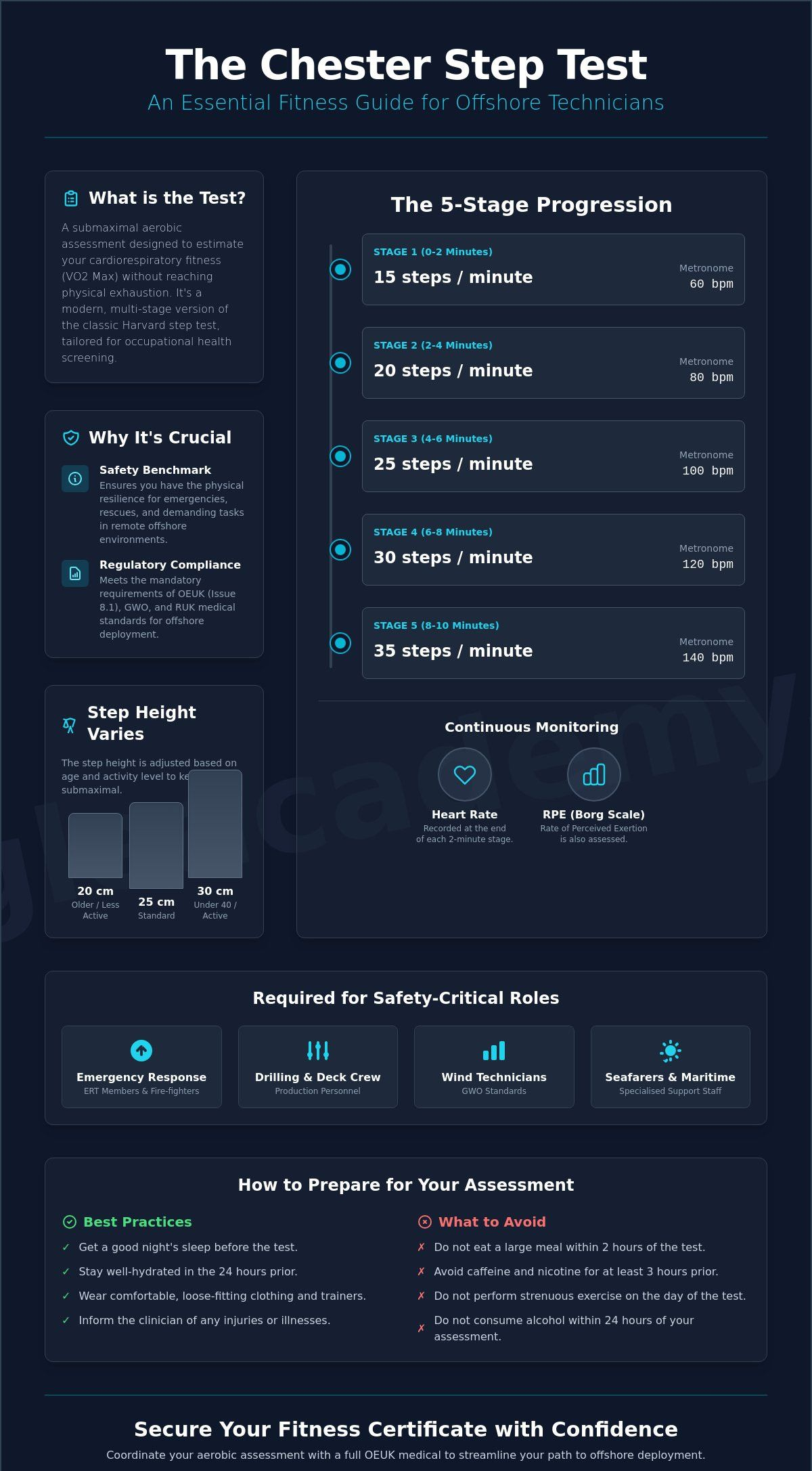
- Emergency Response Team (ERT) members and fire-fighters
- Offshore drilling, deck crew, and production personnel
- Wind Turbine Technicians operating under GWO standards
- Seafarers and specialised maritime support staff
The assessment provides a clear benchmark, allowing employers to verify that their workforce is physically capable of meeting the arduous demands of the offshore environment. This methodical approach to health screening underpins the industry's commitment to zero-harm operations.
How the Chester Step Test Works: Stages and Scoring
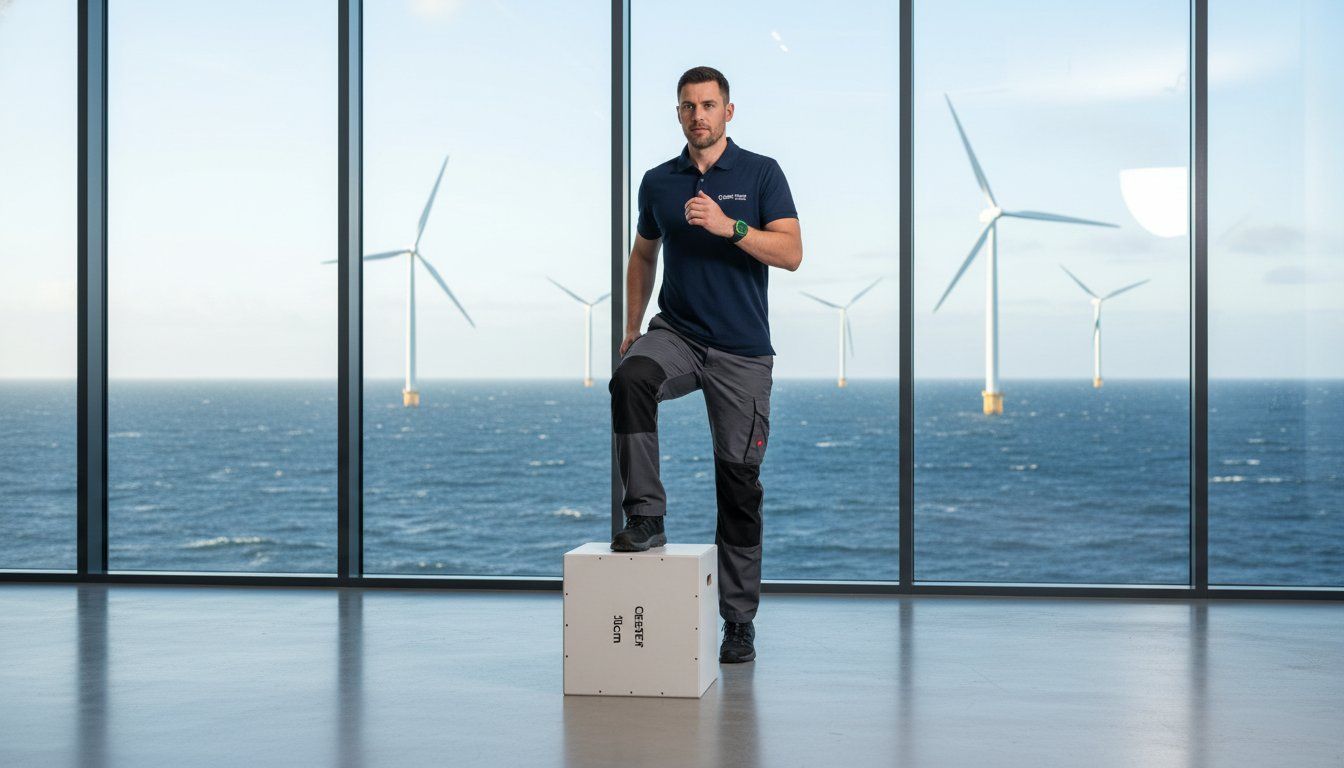
The physical environment for the test is intentionally sparse to ensure focus and safety. It requires a sturdy step, a heart rate monitor, a metronome, and a Borg Scale to measure exertion. Accuracy matters. Step heights are not universal; they are selected based on the candidate’s age and self-reported physical activity levels. Generally, a 30cm step is utilised for active individuals under 40, whilst a 25cm or 20cm step is chosen for older candidates or those with lower activity levels. This ensures the chester step test for offshore workers remains a submaximal assessment rather than an exhaustive sprint.
Monitoring is continuous throughout the procedure. Success in the chester step test for offshore workers depends on maintaining a steady rhythm and managing your breathing. The clinician records your heart rate and your Rate of Perceived Exertion (RPE) at the end of each two-minute block. This dual-monitoring approach provides a comprehensive view of how your cardiovascular system handles incremental stress. Utilizing the Chester Step Test for workplace safety ensures that every technician is measured against a validated, industry-recognised benchmark.
The Five Stages of the Assessment
The Chester Step assessment follows a structured five-stage progression. It begins at a modest pace of 15 steps per minute, which is synchronised to a metronome set at 60 beats per minute. Every two minutes, the pace increases by five steps per minute. By the final stage, you will be stepping at a rate of 35 steps per minute (140 BPM). The test concludes when you reach the fifth stage, or more commonly, when your heart rate reaches 80% of its predicted maximum. This controlled rise allows the clinician to observe your heart's reaction to increasing workloads without pushing you to total exhaustion.
Data Interpretation and the VO2 Max Calculation
Once the data is collected, the results are plotted. Modern clinics use the Chester Step Test 2 (CST2) software to draw a "line of best fit" through your heart rate data points. This digital approach often incorporates the Tanaka formula for more accurate heart rate estimates in candidates over 40. The software extends this line to your predicted maximum heart rate to calculate your VO2 max. For most standard roles under OEUK guidelines, a minimum aerobic capacity of 33.8 mL/kg/min is expected. However, for those in Emergency Response Teams (ERT), the requirement is more stringent. A minimum VO2 max of 35 mL/kg/min is the standard for ERT roles to ensure physical capability during a crisis. Understanding these metrics is essential for anyone preparing for their occupational health screening.
Why the Chester Step Test is Essential for Specific Sectors
The chester step test for offshore workers isn't merely a clinical formality; it represents a fundamental safety requirement for those operating in high-risk environments. In the Oil & Gas sector, personnel frequently navigate complex, multi-level structures whilst carrying heavy tools or wearing restrictive PPE. Maritime workers face the added challenge of maintaining stability on vessels during adverse sea states, which places a continuous demand on the cardiovascular system. Scientific research confirms that The Chester Step Test Is a Reproducible Tool for assessing these physical capabilities, ensuring that every individual on a platform or vessel possesses the stamina to perform their role safely. It's a vital benchmark for ensuring operational integrity.
For Emergency Response Teams (ERT), the stakes are even higher. These individuals must be capable of assisting others during a crisis, often involving manual handling or casualty extraction in high-temperature environments. A failure in aerobic capacity during such a scenario isn't just a personal risk; it's a risk to the entire crew. Robust cardiovascular health is the foundation of any successful rescue operation, providing the endurance required to sustain effort until the objective is achieved.
Demands of Wind Turbine Maintenance
Wind turbine technicians face a unique physical challenge: the vertical climb. Many offshore assets require technicians to ascend internal ladders that can reach heights of 100 metres or more. This sustained aerobic effort requires a specific level of cardiorespiratory endurance that the chester step test for offshore workers is uniquely designed to measure. Transitioning from GWO training to active deployment requires more than just technical knowledge; it requires the physical resilience to reach the nacelle without reaching total exhaustion. The test mirrors the steady-state exertion of these long climbs, providing a reliable indicator of whether a technician can arrive at their workstation fit to perform precision maintenance tasks safely.
Rope Access and Industrial Maintenance
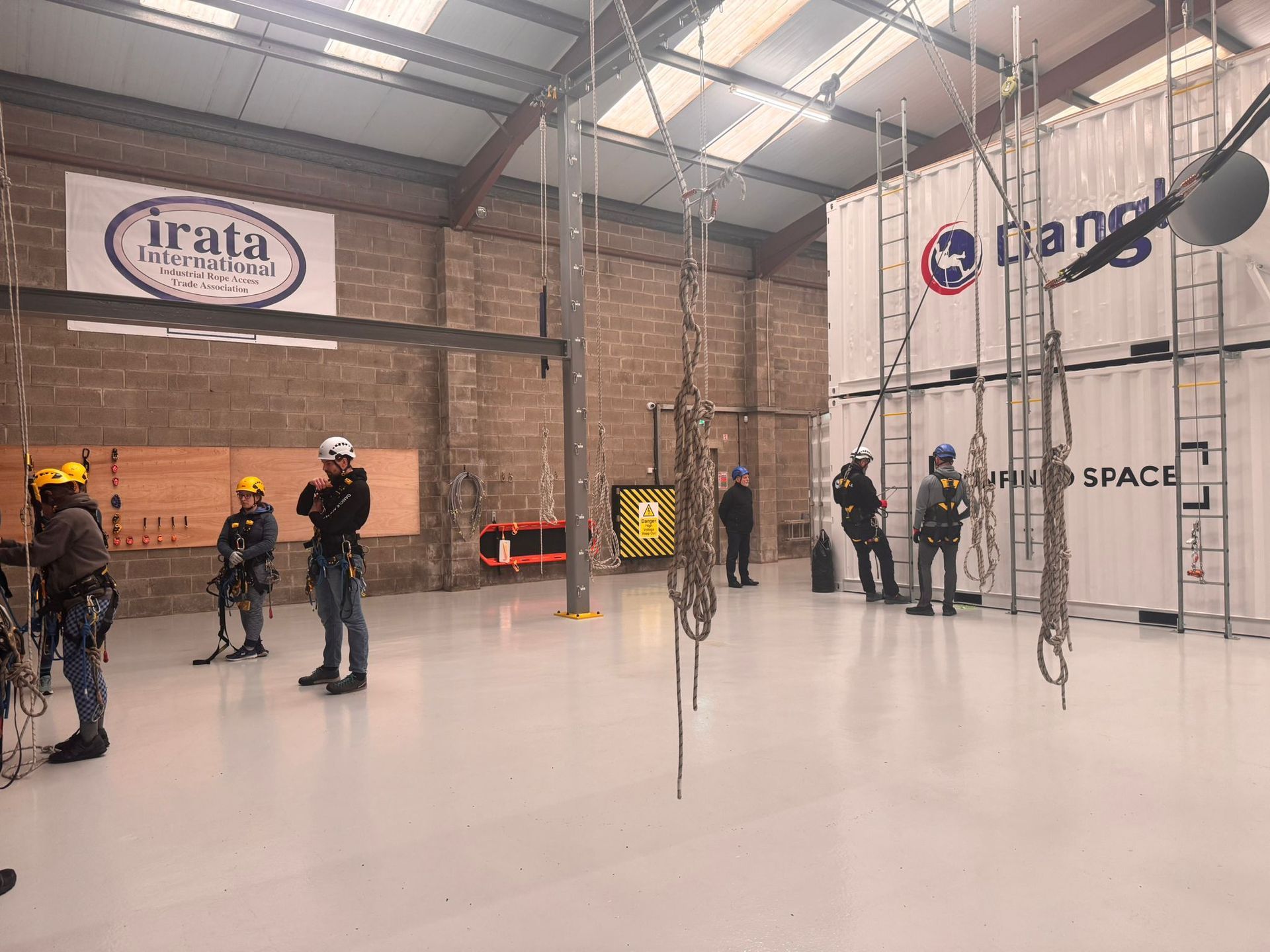
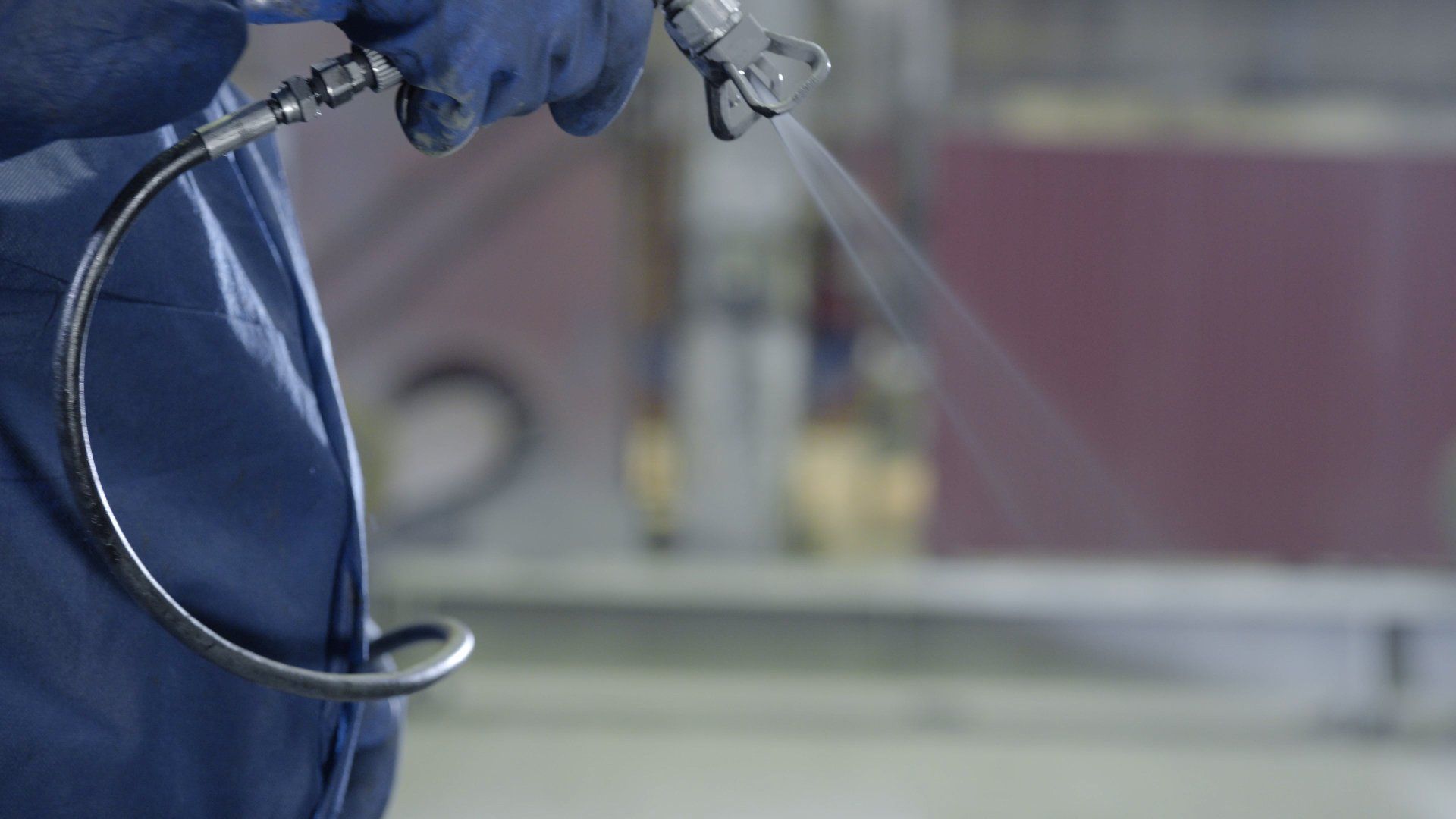
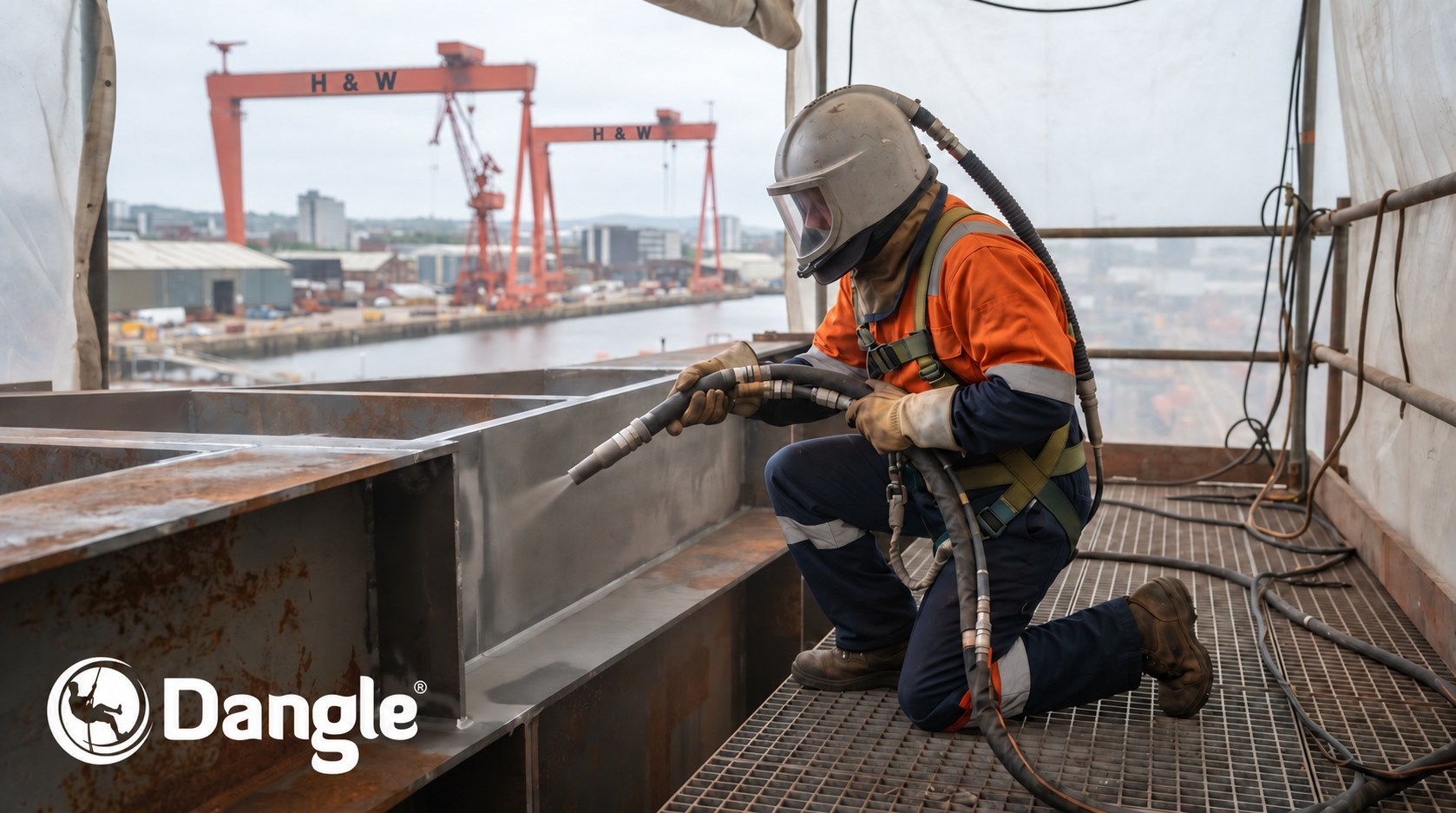
Rope access technicians often underestimate the metabolic cost of operating whilst suspended. Positioning your body and using heavy equipment like industrial sprayers or inspection tools whilst on ropes requires significant core stability and cardiovascular efficiency. When fatigue sets in, focus slips, and precision decreases, which is when safety incidents are most likely to occur. Robust cardiovascular health is also a primary defence against heat stress, particularly when working in confined spaces or during industrial painting operations in humid conditions. By validating a technician's VO2 max, the assessment ensures they can maintain high levels of safety and productivity throughout their shift, even under the most demanding physical circumstances.
How to Prepare and Pass Your Chester Step Test
Success in the assessment requires more than general athleticism. It demands a methodical approach to cardiovascular conditioning and strict adherence to pre-test protocols. Many candidates fail not through a lack of fitness, but because they neglected the preparation required for the specific mechanics of the chester step test for offshore workers. Whilst general physical activity is beneficial, the nature of this submaximal test means that targeted conditioning can significantly improve your results by lowering your heart rate at each incremental stage.
Training for Aerobic Efficiency
Cardiovascular efficiency is best developed through "Zone 2" training. This involves performing steady-state exercise, such as cycling or brisk walking, at an intensity where you can still maintain a conversation. This training builds a robust aerobic base, allowing your heart to pump more blood with each beat and keeping your heart rate lower during the stages of the assessment. Practice runs are also highly recommended. Using a 25cm step at home will help you familiarise yourself with the physical movement and the balance required. You should practice stepping to a metronome app at 60, 80, and 100 BPM to internalise the cadence required for each stage.
On the Day: Maximising Your Success
Your behaviour in the 24 hours leading up to the assessment is critical. You must avoid caffeine, nicotine, and heavy exercise for at least 24 hours before your appointment. Caffeine is a stimulant that can artificially inflate your heart rate, whilst nicotine acts as a vasoconstrictor; both can lead to a premature termination of the test if your heart rate reaches the 80% threshold too quickly. Ensure you are well-hydrated and consume a light meal approximately two to three hours before the test to provide sufficient energy without causing discomfort.
Clothing choices also play a role in your performance. Opt for breathable, lightweight fabrics and footwear with a flat, stable sole and good grip. Avoid heavy work boots or restrictive clothing that might hinder your range of motion. During the assessment, maintain open communication with your examiner. If you have recently recovered from a minor illness or have a nagging injury, informing them allows for a more accurate interpretation of your data. If you are ready to book your assessment, you can schedule your Chester Step Testing as part of a comprehensive medical package.
Common pitfalls often involve losing the rhythm of the metronome. If you fall out of sync, your movements become erratic, causing unnecessary spikes in exertion as you try to catch up. Focus on a fixed point on the wall and let the beat guide your pace. This mental discipline, combined with physical readiness, is the surest way to secure your fitness certificate and return to work with confidence.
Occupational Health and Medical Compliance at Dangle Academy
At Dangle Academy, we view safety as a continuous commitment rather than a one-off certification. Our holistic approach to technician welfare focuses on long-term career longevity and operational excellence. By providing the chester step test for offshore workers within a wider ecosystem of professional training, we ensure that every individual is physically prepared for the realities of the job. This integration bridges the gap between classroom knowledge and the physical rigours of offshore deployment, positioning our candidates as some of the most reliable and vetted professionals in the industry.
We act as a dedicated partner for both individual contractors and large-scale energy firms. Ensuring your workforce is compliant and ready for high-risk environments requires more than a simple tick-box exercise. It demands a sophisticated understanding of the regulatory landscape and a commitment to maintaining international benchmarks. Our facilities are designed to support this progression, providing a seamless path from initial training to final medical clearance.
Comprehensive Health Screening Services
A successful medical assessment involves more than just a step test. Our Occupational Health Screening covers a broad spectrum of vital metrics, including general health surveillance and drug and alcohol testing. For corporate clients, this thoroughness provides a robust audit trail, ensuring full compliance with insurance requirements and industry regulations. The convenience of booking these medicals alongside IRATA or GWO courses allows technicians to manage their certifications efficiently, reducing downtime and administrative burden. Maintaining this level of scrutiny is essential for personnel working in high-risk environments where physical competence is the primary line of defence.
Next Steps for Your Offshore Career
Securing your offshore ticket is a significant milestone, but maintaining it requires diligence. OEUK medicals and the associated fitness assessments are typically valid for two years, though specific roles or health conditions may require more frequent reviews. Regular re-certification ensures that you remain at peak operational readiness throughout your career. If you are ready to move forward, you can Book your Offshore Medical and Chester Step Test with Dangle Academy today. Our team is here to support your transition from training to active deployment, ensuring you meet every benchmark of excellence required by the modern energy sector.
Advance Your Career with Physical Certainty
Navigating the physical requirements of the energy sector requires a proactive approach to health and compliance. By understanding the incremental stages of the assessment and implementing targeted cardiovascular training, you can transform a potential hurdle into a routine validation of your fitness. The chester step test for offshore workers serves as a critical safeguard, ensuring that every technician possesses the aerobic resilience to handle the arduous demands of the UK Continental Shelf.
Dangle Academy provides a streamlined path to compliance through our accredited OEUK and GWO health screening services. Our expert examiners understand the industrial reality of offshore work, offering professional assessments at locations with national UK coverage. You don't need to leave your certification to chance when working with a partner that values precision and safety. Secure your offshore future - book your medical and fitness assessment today. Your commitment to physical excellence is the foundation of a safe and successful career at sea.
Chester Step Test Frequently Asked Questions
What is a passing score for the Chester Step Test?
A passing score is determined by the specific requirements of your offshore role and the sector in which you operate. For standard personnel under OEUK guidelines, the benchmark is typically 33.8 mL/kg/min; however, Emergency Response Team (ERT) members must achieve a minimum VO2 max of 35 mL/kg/min. These figures ensure you have the cardiorespiratory reserve to perform safety-critical tasks during an incident.
Can I fail my offshore medical if I do not pass the step test?
Yes, failing to meet the required aerobic threshold can impact your medical certification. If you don't achieve the necessary score for an ERT role, you may be issued a certificate that restricts you from those specific duties. For general roles, a significantly low score might require further clinical investigation or a period of physical conditioning before a full certificate is granted.
What should I do if I am nervous about my heart rate during the test?
Inform your examiner if you feel anxious, as "white coat syndrome" can naturally elevate your heart rate before you even begin stepping. Focus on deep, rhythmic breathing and synchronise your movements strictly with the metronome to maintain efficiency. Practical familiarity with the chester step test for offshore workers through home practice often reduces anxiety and helps keep your heart rate stable during the actual assessment.
How long is the Chester Step Test certificate valid for?
The validity of the test results typically aligns with your OEUK medical certificate, which is standardly valid for two years. Some operators or specific safety-critical roles, such as offshore fire-fighters, may require more frequent annual testing to ensure sustained physical readiness. Always check with your employer or the specific asset operator for their internal requirements.
Are there any medical conditions that prevent me from taking the test?
Certain cardiovascular or musculoskeletal conditions may preclude you from the test until they are managed or resolved. Uncontrolled high blood pressure, recent heart surgery, or severe joint problems are common contraindications. The clinician will conduct a pre-test health screening to ensure it is safe for you to proceed with the assessment without risk to your health.
What is the difference between a Chester Step Test and a Harvard Step Test?
The primary difference lies in intensity and structure. The Harvard Step Test is a maximal effort test performed at a fixed, high intensity, whilst the Chester Step Test is a submaximal, multi-stage assessment that gradually increases in pace. This makes the chester step test for offshore workers a safer and more appropriate tool for occupational health screening and fitness monitoring.
Do I need a Chester Step Test for a GWO medical?
It is frequently utilised as part of the "Fit to Climb" criteria within GWO medical assessments for the renewables sector. Whilst not every GWO medical requires it, technicians working on offshore wind turbines must often prove their aerobic capacity to handle long vertical ladder climbs. It provides an objective, standardised measure of your ability to work safely at height.
Can I take the Chester Step Test if I have a minor injury?
Participation depends on the nature of the injury and the clinician’s professional judgement during the pre-test screening. If a minor injury affects your gait, balance, or ability to step repeatedly for ten minutes, it is generally advisable to postpone the test. Performing the assessment whilst injured can lead to inaccurate heart rate data or exacerbate the physical condition.
Contact Us
We'd Love a Share...
Recent Blog Posts