Industrial Rope Access Services

The most expensive part of your maintenance project isn't the repair itself; it's the weeks of downtime spent waiting for scaffolding to be built and dismantled. By the time a traditional access rig is finally signed off for use, an agile team of technicians could have already completed their inspection and demobilised from the site. For asset managers across the country, the reliance on heavy infrastructure often leads to spiralling costs that eat into operational margins. Selecting the right industrial rope access services UK providers is no longer just about reaching a height; it's about integrating technical proficiency with strict regulatory compliance to protect your most critical infrastructure.
You're likely all too familiar with the logistical headache of coordinating separate painters, inspectors, and safety supervisors for a single high-risk project. We understand that managing safety risks in confined spaces or at extreme heights requires more than just equipment; it demands a disciplined, multi-disciplined approach. This comprehensive guide for 2026 provides the definitive roadmap for deploying professional rope access solutions that adhere to the latest IRATA International Code of Practice and LOLER standards. We'll examine how to reduce project timelines by partnering with technicians who carry dual certifications in coatings and inspection, ensuring your assets remain compliant and operational without the traditional overheads.
Key Takeaways
- Understand how industrial rope access has evolved from basic climbing techniques into a highly regulated engineering discipline essential for maintaining the UK's critical infrastructure.
- Identify high-value applications for industrial rope access services UK within the renewable energy and offshore sectors, focusing on turbine blade repair and corrosion protection.
- Learn to evaluate the total cost of asset maintenance by comparing the rapid mobilisation and minimal logistical footprint of rope access against traditional scaffolding.
- Gain clarity on the legal framework governing work at height, including the Work at Height Regulations 2005 and the specific requirements of LOLER and PUWER.
- Discover the operational benefits of partnering with an integrated service provider that combines field expertise with an accredited training academy for superior safety and proficiency.
Table of Contents
- What are Industrial Rope Access Services in the UK?
- Key Industrial Sectors and Applications Across the UK
- The Business Case: Rope Access vs Scaffolding and MEWPs
- UK Regulations and Accreditation: Ensuring Compliance
- Partnering with Dangle for National Rope Access Solutions
What are Industrial Rope Access Services in the UK?
Industrial rope access is a sophisticated engineering method used to reach difficult locations without the need for traditional scaffolding or heavy machinery. Whilst it's often confused with simple commercial abseiling, the two disciplines are worlds apart. Professional industrial rope access services UK providers operate within a strictly regulated framework designed to manage high-risk tasks on complex structures like wind turbines, offshore platforms, and industrial chimneys. This method provides a safe, versatile, and highly efficient alternative for inspection, maintenance, and repair work where access is restricted.
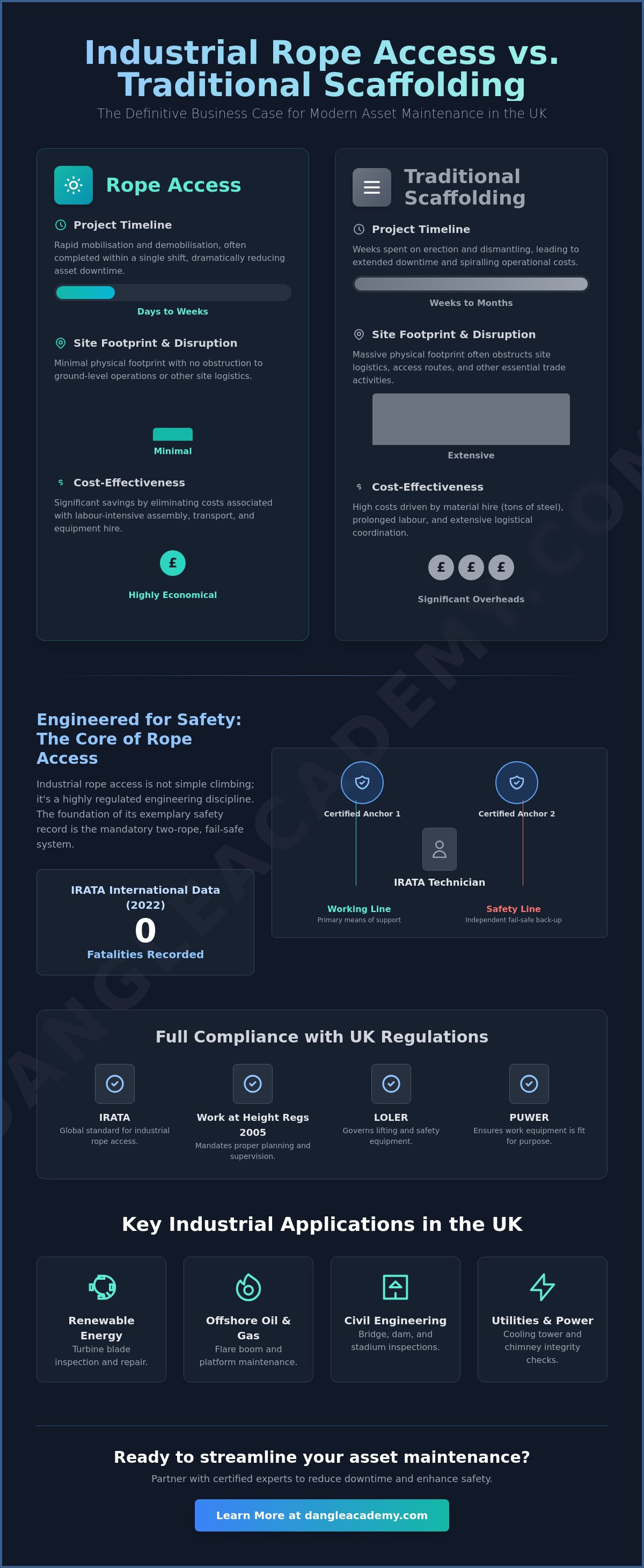
The trade's evolution is rooted in the North Sea oil and gas industry of the 1980s. What began as an adaptation of caving and climbing methods has transformed into a globally recognised industrial trade. Modern rope access techniques are governed by the Industrial Rope Access Trade Association (IRATA), which was established in the UK to ensure the highest safety standards. Today, the UK remains a global leader in this sector, largely because of the stringent Work at Height Regulations 2005. These regulations mandate that work is properly planned, supervised, and carried out by competent persons, ensuring that the UK maintains an exemplary safety record, such as the zero fatalities recorded by IRATA member companies during rope access activities in 2022.
The Core Components of a Professional Service
A legitimate industrial service is built on a foundation of redundancy and technical proficiency. Every technician operates using a two-rope system: a primary working line and an independent back-up safety line. Each line is secured to separate, certified anchor points. Should the primary line fail, the fail-safe backup device on the safety line immediately arrests any fall. The equipment used, including specialised harnesses and descenders, must meet rigorous British Standards such as BS EN 12841. Beyond the ropes, the value of the service lies in the multi-disciplined nature of the crew. These aren't just climbers; they're qualified inspectors and industrial painters who bring their trade expertise to the most inaccessible parts of an asset.
Why Industrial Sectors are Moving Away from Scaffolding
The shift toward industrial rope access services UK is driven by the need for operational efficiency. Traditional scaffolding requires a massive physical footprint and significant time to erect and dismantle, often obstructing site logistics and other trades. In contrast, rope access teams can mobilise and demobilise in a fraction of the time, often within a single shift. This rapid response significantly reduces asset downtime, which is critical for sectors like power generation where every hour of inactivity is costly. By eliminating the need for tons of steel and weeks of labour-intensive assembly, businesses achieve substantial savings whilst maintaining full compliance with LOLER and PUWER standards.
Key Industrial Sectors and Applications Across the UK
The application of industrial rope access services UK extends far beyond simple maintenance; it's a critical component in the lifecycle of the nation's heavy infrastructure. Whilst many associate rope work with urban building maintenance, the true value of the discipline lies in its ability to support the energy, utility, and civil engineering sectors. These industries operate under the strict requirements of the Work at Height Regulations 2005, which demand that every task is meticulously planned and executed by competent professionals. From the inspection of offshore flare booms to the stabilisation of Victorian-era dam walls, rope access provides a level of agility that traditional methods cannot match.
In the utilities and power generation sectors, technicians are frequently deployed to manage the structural integrity of cooling towers and industrial chimneys. These assets often present unique challenges, such as internal confined spaces or extreme thermal environments. Similarly, civil engineering projects utilise rope access for comprehensive bridge surveys and the installation of rock fall protection on steep embankments. By removing the need for massive scaffolding installations, project managers can conduct essential safety inspections whilst keeping transport networks and public services operational. This versatility is why the industrial end-user segment now accounts for over 65% of the total rope access market revenue.
Renewable Energy and Wind Turbine Services
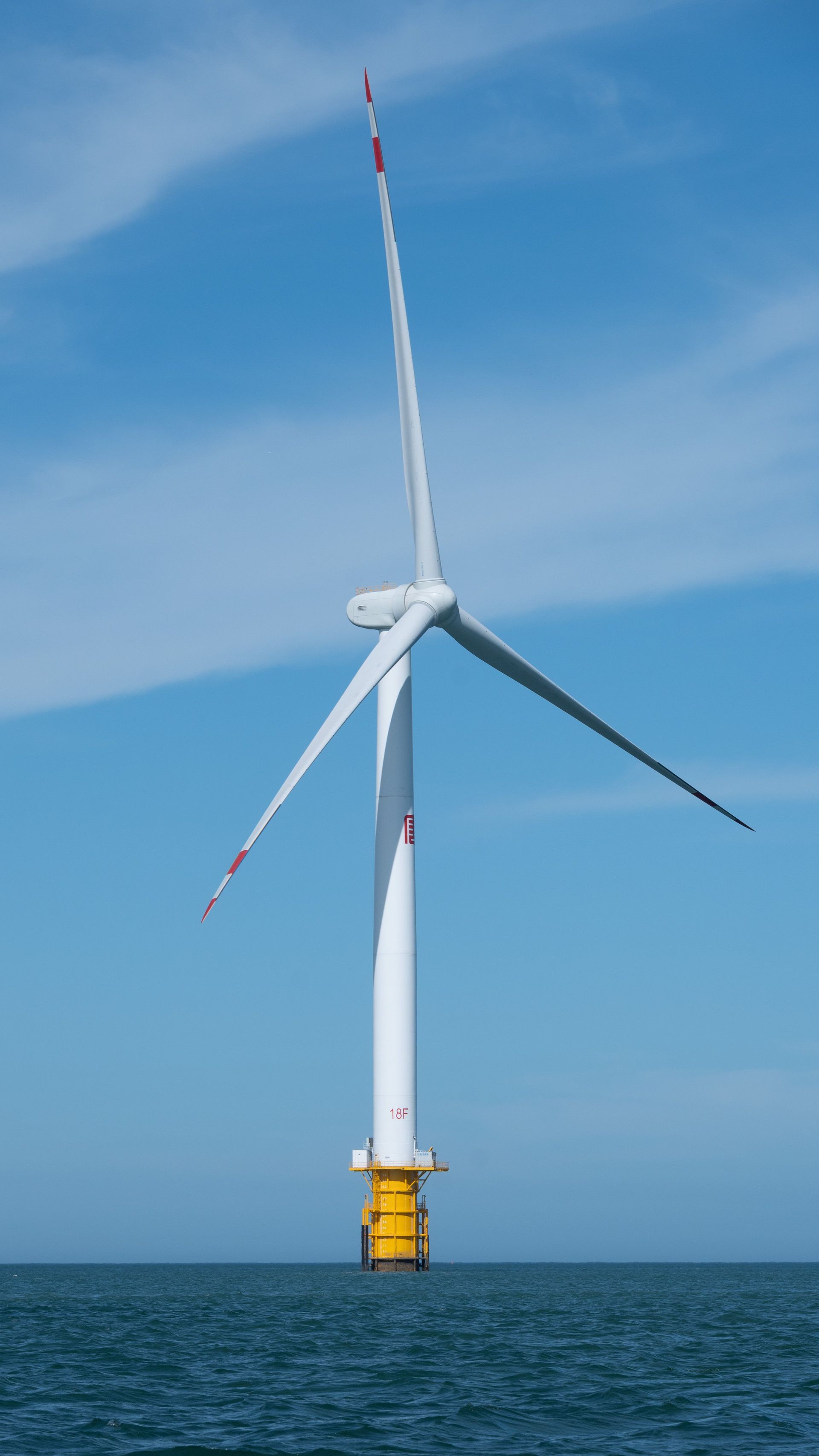
The renewable energy sector has become the most significant growth area for the industry. Inspection of wind turbine blades now represents approximately 40% of the renewable energy rope access workload. Technicians must be GWO-certified to operate safely in these environments, providing essential wind turbine blade repair and tower maintenance. Advanced composite techniques are used to address structural issues like laminate debonding or lightning damage. Additionally, applying leading-edge protection (LEP) is a vital service that improves turbine efficiency by preventing the aerodynamic degradation caused by rain and salt erosion. For companies looking to upskill their workforce for these specific environments, seeking professional GWO training and safety consultancy ensures that all operations meet international safety benchmarks.
Industrial Coatings and Corrosion Management
Corrosion is a constant threat to the structural integrity of UK industrial assets, particularly in maritime and offshore environments. Rope access teams provide a comprehensive solution for corrosion management, combining surface preparation with specialised industrial painting in hard-to-reach areas. Before any coating is applied, technicians often perform Non-Destructive Testing (NDT) to identify thinning metal or hidden structural flaws. This integrated approach is especially effective for vessel and tank inspections within confined spaces. By deploying a single team of multi-disciplined technicians to handle both the inspection and the subsequent repair, operators significantly reduce the logistical complexity and cost of asset preservation.
The Business Case: Rope Access vs Scaffolding and MEWPs
For asset managers, the decision between traditional access methods and industrial rope access services UK often comes down to a comprehensive evaluation of the total cost of access. Whilst a scaffolding quote might appear competitive on paper, it rarely accounts for the hidden expenses of prolonged hire periods, heavy transport logistics, and extensive labour hours required for assembly. Mobile Elevating Work Platforms (MEWPs) also carry significant limitations, such as ground pressure restrictions and the need for clear exclusion zones. Rope access bypasses these hurdles by utilising the existing structure for support, which drastically reduces the physical footprint and avoids obstructing other essential trades on a busy industrial site.
This efficiency creates what safety professionals call the 'Safety Paradox'. Traditional logic suggests that a solid platform like a scaffold is inherently safer, yet the data often proves otherwise. A scaffold requires dozens of people to spend thousands of hours working at height just to build the platform itself, which increases the cumulative risk of a fall. By contrast, a small, elite team of rope technicians reduces the total man-hours at risk. This streamlined approach also offers a lower environmental impact; with no need for heavy steel transport or fuel-intensive machinery, the carbon footprint of your maintenance project is significantly diminished.
Efficiency and Project Timelines
The most immediate benefit of industrial rope access services UK is the speed of mobilisation. On a national utility asset, for example, erecting a full scaffold for a structural survey could take several weeks. A rope access team can often rig their systems and begin the inspection within hours of arriving on site. This eliminates the 'dead time' associated with waiting for scaffold handovers or independent inspections. Because the equipment is portable and can be removed at the end of each shift, it ensures that sensitive areas remain secure and accessible for other operational requirements throughout the project duration.
Risk Management and Safety Statistics
The safety record of the industry is underpinned by the rigorous standards set by IRATA International. Every team is legally required to include a Level 3 Safety Supervisor who manages site-specific risks and ensures that rescue plans are robust and actionable. Unlike other trades that rely on external emergency services, rope access teams are entirely self-sufficient. They're trained to perform immediate peer-to-peer rescues, which is a critical requirement under the Work at Height Regulations. This level of proficiency is reflected in global safety data, including the zero fatalities recorded during rope access activities in 2022, making it one of the statistically safest ways to manage high-risk industrial assets.
UK Regulations and Accreditation: Ensuring Compliance
Operating within the high-risk environments of the British energy and infrastructure sectors carries a significant legal burden for asset owners. Compliance is not merely a box-ticking exercise; it's a statutory requirement under the Work at Height Regulations 2005. These regulations place a clear duty on employers to ensure that all work is properly planned, supervised, and carried out by competent persons. When procuring industrial rope access services UK, you must verify that your provider understands the interplay between these regulations and the technical requirements of LOLER (Lifting Operations and Lifting Equipment Regulations) and PUWER (Provision and Use of Work Equipment Regulations). These frameworks mandate that all lifting equipment, including the ropes and anchors used for access, are fit for purpose and subject to rigorous, documented inspections.
The complexity increases when projects move offshore or into the renewable energy sector. Here, the integration of IRATA standards with Global Wind Organisation (GWO) requirements becomes essential. Whilst IRATA provides the technical framework for the access itself, GWO standards ensure that technicians are prepared for the specific environmental hazards of wind turbines. This dual-accreditation approach is what separates a professional industrial provider from a general height-safety contractor. Ensuring your partner holds the correct corporate memberships provides an audit trail that protects your business from the legal ramifications of a safety breach.
The IRATA Framework Explained
The IRATA training and certification scheme is the only globally recognised standard that requires independent third-party assessment for every technician. Qualifications are divided into three distinct levels. A Level 1 technician is a proficient operative capable of performing a range of tasks under supervision; whilst a Level 2 is an experienced lead hand capable of complex rigging and rescues. Crucially, every site must be overseen by a Level 3 Supervisor who holds the ultimate responsibility for the safety of the team and the implementation of the rescue plan. When vetting a provider of industrial rope access services UK, it's vital to request the company's IRATA membership certificate rather than just individual technician cards. Only member companies are subject to regular, independent audits of their quality management systems and safety records.
Safety Consultancy and Risk Assessment
Effective risk management begins long before a technician clips into a line. It requires the development of robust Method Statements and Risk Assessments (RAMS) that are tailored to the specific hazards of the site, whether that involves confined space entry or working over water. Safety consultancy plays a pivotal role here, helping managers navigate the logistical requirements of offshore energy work, including the necessity for OEUK medicals and drug and alcohol testing. This meticulous planning ensures that every operative on your site meets the required fitness and proficiency standards. For organisations seeking to align their internal protocols with these national benchmarks, engaging with professional safety consultancy services provides the necessary expertise to manage high-risk industrial planning with confidence.
Partnering with Dangle for National Rope Access Solutions
Choosing a partner for industrial rope access services UK requires a balance between technical proficiency and a demonstrated commitment to safety standards. Dangle occupies a unique position in the market by operating as both a high-tier service provider and an accredited training academy. This dual focus ensures that the technicians deployed to your assets aren't only working to industry benchmarks but are often the very individuals setting them. Our national reach across the UK and Ireland allows us to support the country's transition to renewable energy by providing local expertise backed by international standards.
Our integrated approach allows asset managers to consolidate their supply chain. Instead of managing multiple contractors, you gain access to a single partner capable of delivering everything from drone inspection services to complex wind turbine blade repair. This integration is vital for large-scale infrastructure projects where logistical simplicity directly correlates with project success. By maintaining a workforce that's deeply embedded in the latest safety protocols, we ensure that every deployment is executed with meticulous precision and full regulatory compliance.
The Dangle Advantage: Training Meets Execution
The strength of our service lies in the calibre of our people. Because we're an IRATA and GWO accredited centre, our technicians undergo continuous professional development that exceeds basic requirements. Our teams often hold a suite of certifications including IRATA rope access, GWO Working at Height, and EUSR MATS Telecoms Training. This multi-disciplined capability means a single team can perform NDT testing, apply industrial coatings, and manage emergency rescue planning. We embrace innovation by combining traditional rope skills with drone surveys to provide comprehensive data on asset health without unnecessary risk to personnel.
Starting Your Project with Dangle
Every project begins with a disciplined consultation process designed to identify the most efficient access strategy for your specific asset. We move from initial site surveys and risk assessments to the development of bespoke maintenance programmes that align with your asset's lifecycle. Whether you require a one-off inspection or a long-term corrosion management contract, our focus remains on reducing downtime and ensuring safety. You can contact Dangle today for a national industrial rope access consultation to discuss your upcoming project requirements and secure a partner dedicated to excellence.
Securing the Future of Your High-Risk Assets
Managing the integrity of industrial infrastructure requires a disciplined approach that balances operational speed with uncompromising safety. We've explored how industrial rope access services UK provide a versatile alternative to traditional scaffolding, significantly reducing project timelines whilst maintaining full compliance with the Work at Height Regulations 2005. By choosing a partner that integrates technical expertise with accredited safety training, you ensure that your assets are protected by technicians who understand the physical and regulatory realities of the industry.
Dangle stands as a reliable partner for national UK and Ireland service coverage. As an IRATA and GWO Accredited Provider, we specialise in wind turbine and high-risk asset maintenance, delivering solutions that range from composite repairs to detailed structural inspections. Our focus on quality and legitimacy ensures your projects are completed safely and efficiently. If you're ready to optimise your maintenance schedule and reduce site downtime, it's time to consult with experts who prioritise your project's success. Request an Industrial Rope Access Project Quote today and take the first step towards a more secure, efficient operational future.
Frequently Asked Questions
Is industrial rope access legal for all types of work at height in the UK?
Industrial rope access is entirely legal under the Work at Height Regulations 2005, provided a thorough risk assessment confirms it's the safest and most appropriate method for the task. The regulations mandate a hierarchy of control that prioritises collective protection; however, rope access is recognised as a highly controlled and safe system for complex industrial environments. It's often the preferred choice when traditional scaffolding is impractical or introduces greater cumulative risk during its assembly.
How do I verify the qualifications of a rope access technician?
You can verify a technician's proficiency by checking their IRATA identification card, which displays their current level and unique certification number. All industrial rope access services UK professionals must undergo independent assessment every three years to maintain their status. For corporate assurance, you should also verify that the employer is a registered IRATA member company through the association's official online directory to ensure they meet international safety benchmarks.
What is the maximum height a rope access team can operate at?
There's no fixed regulatory limit on height, as rope access systems are adaptable to the world's tallest structures. Operations are instead limited by the weight of the ropes, the strength of the anchors, and environmental factors like wind speed at elevation. In the UK, this allows for the maintenance of assets ranging from 100-metre wind turbines to the tallest industrial chimneys, flare booms, and offshore platforms.
Can rope access be used for heavy maintenance tasks like welding or grit blasting?
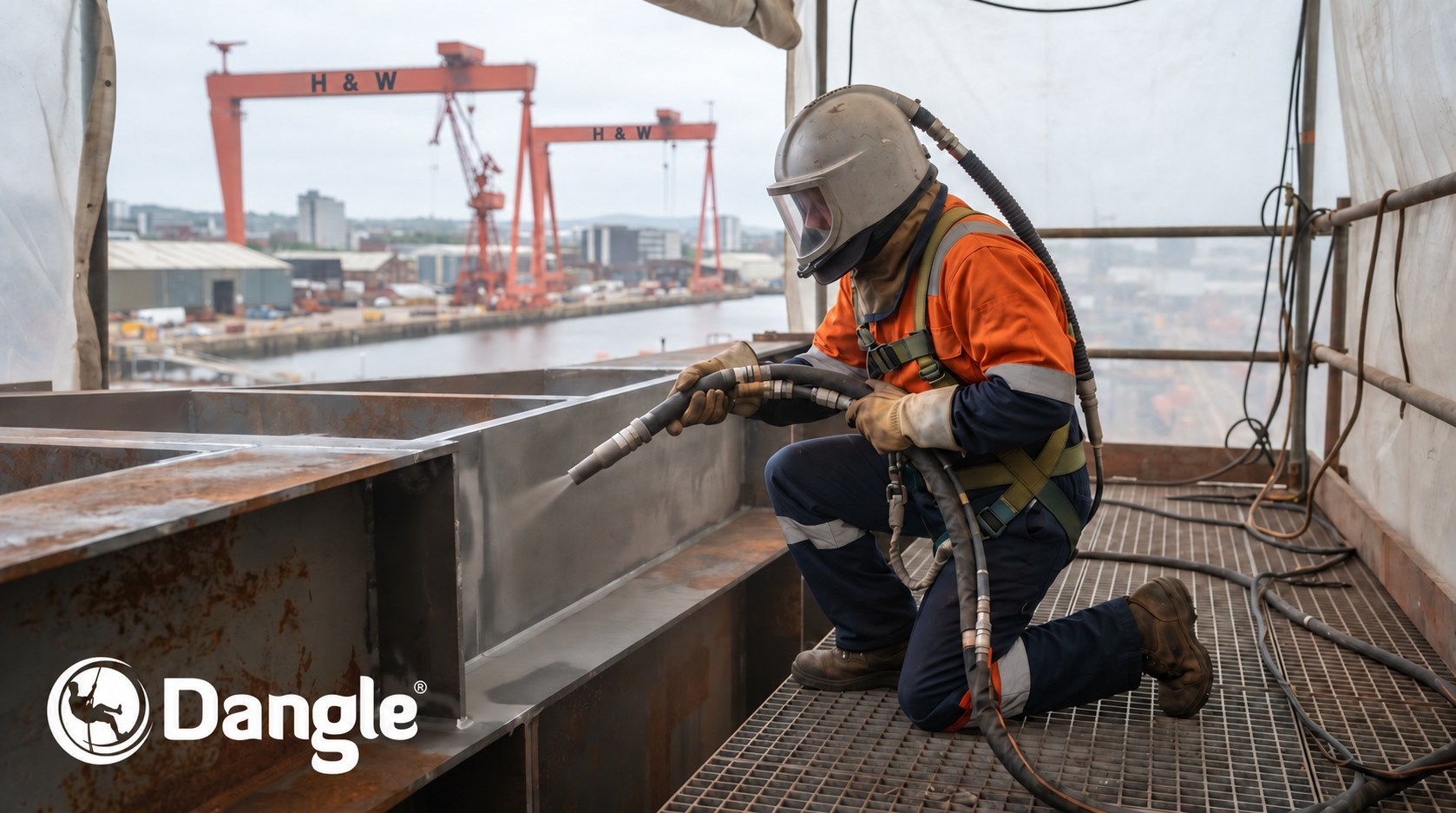
Rope access is frequently utilised for heavy-duty tasks such as coded welding, grit blasting, and ultra-high-pressure water jetting. Technicians use specialised protective sleeves for their ropes and fire-resistant PPE to ensure the access system isn't compromised by the work. Integrating these industrial trades with rope access allows for complex repairs to be completed without the logistical burden and downtime associated with heavy platforms.
What happens if a technician needs to be rescued whilst on the ropes?
Every deployment includes a site-specific rescue plan that's managed by a qualified Level 3 Supervisor. Teams are trained in peer-to-peer rescue techniques, meaning they don't rely on external emergency services to retrieve a technician in distress. This self-sufficiency is a core requirement of IRATA standards and ensures a rapid, professional response in the event of an incident, which is essential for high-risk industrial environments.
How does weather affect industrial rope access operations in the UK?
Weather conditions are a primary safety consideration, with wind speeds typically capped at 25 to 30 knots for safe operations. Rain or high humidity may also pause specific tasks like industrial painting or composite blade repair to ensure the integrity of the coatings. Supervisors monitor local forecasts and use on-site anemometers to decide when it's safe to continue work or when to demobilise the team from the asset.
Do I need to provide any equipment for the rope access team?
Dangle is an IRATA member compnay, so you can expect us to supply all necessary specialist equipment, including ropes, harnesses, and fail-safe backup devices. As the asset owner, you're responsible for providing safe access to the site and information regarding any existing certified anchor points, if you have them. If permanent anchors aren't available, the team can often install temporary rigging or use structural beams as part of their engineered access solution.
How much does a typical industrial rope access project cost?
Project costs vary based on the number of technicians required, the duration of the task, and the technical complexity of the work. Whilst industrial rope access services UK providers don't offer flat rates, the method is almost always more cost-effective than scaffolding for short-to-medium-term projects. The primary savings are found in reduced labour hours and the total elimination of expensive equipment rental and heavy transport fees.
Contact Us
We'd Love a Share...
Recent Blog Posts