
Wind Turbine Maintenance
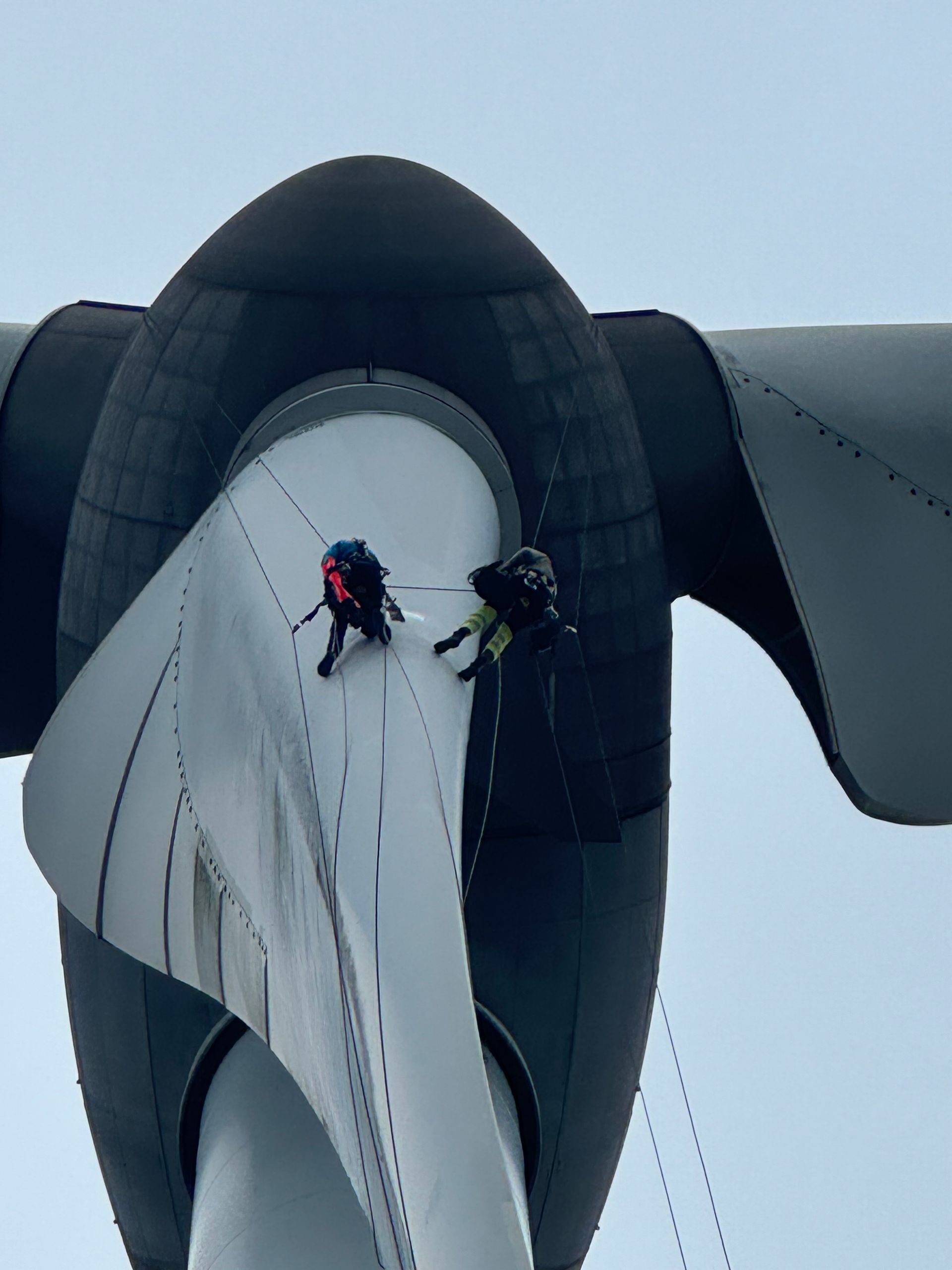
Wind Turbine Maintenance: Keeping Turbines at Peak Performance
Wind turbine maintenance is essential for protecting performance, safety and long-term asset value. Turbines operate in harsh conditions and are exposed to constant mechanical stress, weather, corrosion and component wear, so regular maintenance is critical to reduce downtime and avoid major failures.
A strong wind turbine maintenance programme combines routine servicing, inspections, condition monitoring and targeted repairs. At Dangle, we support wind turbine inspection, maintenance and access requirements using specialist rope access services, UAV surveys and high-level maintenance capability across onshore and offshore environments.
At a glance: wind turbine maintenance includes mechanical, electrical, structural, blade and control-system checks. High-performing O&M programmes combine preventive servicing with predictive or condition-based monitoring to reduce unplanned downtime and protect major components. Most operators follow OEM schedules while adapting frequency to site conditions, turbine age and performance trends.
Why Wind Turbine Maintenance Matters
Wind turbines are exposed to weather, vibration, fatigue loading and continuous operation throughout the year. Proper maintenance helps operators protect reliability, maximise output and reduce the likelihood of unplanned outages.
Regular wind turbine maintenance helps with:
- improving turbine performance and energy yield
- identifying issues before they become major failures
- extending the service life of key components
- protecting safety during operation and maintenance
- reducing lifecycle costs through planned intervention
Well-maintained turbines generate more consistently, remain safer to operate and are easier to manage over the long term.
What Wind Turbine Maintenance Includes
Effective wind turbine maintenance combines inspection, servicing, condition monitoring and repair planning. The exact scope depends on turbine model, age, environment and operational history, but core focus areas usually include blades, tower, drivetrain, electrical systems, braking systems and lightning protection.
Routine Wind Turbine Inspections
Regular inspections are the foundation of effective wind turbine maintenance. By carrying out visual and diagnostic inspections at planned intervals, operators can identify early signs of wear or damage before they lead to more serious faults.
Key areas to inspect include:
WTG Blades
Inspect for cracks, erosion, impact damage, lightning strike defects and leading edge wear. Even relatively small defects can affect aerodynamic performance and grow over time.
WTG Tower
Check for corrosion, coating breakdown, structural defects and access-system issues. Tower condition is important for both safety and long-term asset integrity.
Electrical Systems
Inspect for overheating, damaged cabling, loose connections, moisture ingress and signs of wear in electrical cabinets and control systems.
Gearbox and Drive Train
Check for oil leaks, abnormal wear, alignment concerns, vibration issues and signs of overheating or contamination.
Braking System
Inspect the braking system to ensure the turbine can stop safely when required during shutdown, emergency response or maintenance.
Lightning Protection System
Inspect receptors, conductors and associated protection components to reduce the risk of blade or system damage following lightning strike events.
Inspection Methods and Tools
Wind turbine inspections may involve:
- UAV surveys for high-resolution blade and exterior imagery
- thermal imaging to detect hotspots in electrical or mechanical systems
- ultrasonic or other NDT methods to identify hidden defects
- endoscopes for internal inspection of confined or hard-to-reach components
Wind Turbine Maintenance Schedule
Most operators combine OEM guidance with site-led planning. As a general non-OEM guide, routine visual checks and SCADA review may be frequent, while torque checks, lubrication, blade inspections and major inspections are completed on planned cycles.
Maintenance frequency should always be adjusted based on:
- turbine age
- site conditions
- environmental exposure
- operational history
- component condition
- monitoring and performance trends
A structured annual major inspection is often used to confirm the condition of blades, drivetrain, yaw and pitch systems, electrical cabinets, tower integrity and associated safety systems.
Wind Turbine Maintenance Costs
Wind turbine O&M costs are influenced by access method, turbine age, site remoteness, component condition and the balance between planned and unplanned work. Offshore logistics, weather windows and corrosion exposure usually increase complexity and cost compared with onshore operations.
Key cost drivers include:
- access method and mobilisation requirements
- turbine age and component condition
- planned servicing versus reactive repairs
- offshore logistics and weather limitations
- blade condition, LEP condition and corrosion exposure
- major component class, such as gearbox, generator or drivetrain
Early detection through UAV surveys, oil analysis, vibration monitoring and wind turbine LEP planning can help reduce lifecycle spend and minimise major failures.
Onshore vs Offshore Wind Turbine Maintenance
The principles of turbine maintenance are similar across all assets, but onshore and offshore environments create different operational priorities.
Onshore maintenance is usually more accessible and flexible. Road access, shorter response times and simpler logistics often make it easier to complete routine servicing and planned interventions.
Offshore maintenance is more dependent on vessel access, safe transfer conditions and narrow weather windows. Salt-laden air, humidity and exposure also accelerate corrosion and material degradation. Because access delays can be costly, offshore strategies often rely more heavily on predictive maintenance, remote monitoring and campaign-style planning.
A blended approach that combines scheduled servicing with data-led inspections is often the most effective way to protect both onshore and offshore turbine performance. For operators looking for broader
renewables maintenance support, this approach also improves planning across related wind energy assets.
Lubrication and Oil Changes
Regular lubrication is essential for reducing friction, heat and wear in moving turbine components. Gearboxes, bearings, yaw systems and pitch systems all depend on correct lubrication to perform reliably.
Key lubrication points include:
- gearbox
- pitch system
- yaw system
- bearings and associated moving assemblies
Using the correct lubricant and following the required change intervals is critical to protecting mechanical components and reducing premature failure.
Monitoring and Diagnostic Systems
Modern wind turbine maintenance is increasingly data-led. Many turbines now use monitoring systems that track performance indicators in real time and help identify faults before they become critical.
Common indicators include:
- rotor speed
- vibration levels
- wind speed
- power output
- temperature trends
- ice build-up where relevant
Condition monitoring supports predictive maintenance by helping operators respond to developing issues before they create major downtime or safety risk.
Wind Turbine Blade Maintenance and Repair
Blades are exposed constantly to weather, erosion, dirt, debris and impact risk. Regular blade maintenance is essential for protecting both performance and long-term asset condition.
Typical blade maintenance tasks include:
- visual inspections
- leading edge assessment
- erosion and crack identification
- cleaning
- minor repair planning
- follow-up inspection after severe weather or strike events
Many operators now use
UAV surveys first, followed by
wind turbine blade repair only where close-up intervention is required.
Wind Turbine Cleaning and Dirt Removal
Routine wind turbine cleaning is often overlooked, but debris build-up can affect performance and condition over time. Blades, cooling systems and certain electrical areas may all require periodic cleaning depending on site exposure.
Common tasks include:
- blade surface cleaning where performance is affected
- cooling system cleaning
- removal of dirt or debris around sensitive components
- inspection of contamination risks during routine servicing
Testing and Calibration
Wind turbines rely on control systems that need periodic testing and calibration to ensure proper operation.
Areas commonly tested include:
- pitch control
- yaw control
- brake systems
- sensor accuracy
- control response and alignment
Accurate control systems are essential for both energy capture and safe operation.
Troubleshooting Common Wind Turbine Issues
Even with regular maintenance, faults can still occur. A structured troubleshooting approach helps identify the issue quickly and reduce downtime.
Common issues include:
- electrical faults
- gearbox or drivetrain problems
- bearing wear
- blade damage
- brake or control-system issues
- unexplained performance decline
The combination of inspection, diagnostic data and specialist access methods is often the fastest route to understanding the problem and planning the right repair strategy.
Wind Turbine Safety Training
Maintaining wind turbines requires specialised knowledge and skills that are essential for the safe and efficient operation of these complex machines. Technicians must undergo extensive training through an approved Global Wind Organisation (GWO) training centre for work at height, first aid and other courses specific to their job, which often involves rigorous safety protocols and the use of specialised equipment. In addition to mastering the technical aspects of handling heavy industry machinery, they must also be prepared to respond swiftly and effectively to potential emergencies, ensuring both their safety and the reliability of the turbines.
Therefore, ensuring that your team is properly trained and fully equipped with the necessary tools and knowledge is crucial to maintaining a high level of performance and safety in wind turbine operations. With the right preparation, your technicians can help maximise the efficiency and longevity of these vital renewable energy sources.
Wind Turbine Maintenance Checklist (Printable)
WTG ID: ________ Site: ________ Date: ________ Tech(s): ________
Weather OK: ☐ PTW/RAMS: ☐ LOTO: ☐ Rescue plan & kit confirmed: ☐
Safety & Access
☐ PPE / harness / lanyards checked
☐ Anchor points / ladders / platforms OK
☐ Lift (if fitted) operational
☐ Emergency comms / first aid / fire extinguisher OK
Tower & Foundation
☐ Tower interior condition OK (corrosion, damage, water ingress)
☐ Cable routes secure, no abrasion/overheating signs
☐ Base flange/bolts visual check
☐ Grout/drainage condition OK
Nacelle – General
☐ Housekeeping OK; guards in place
☐ Visual leak check (oil/grease/hydraulics)
☐ Unusual noise/vibration noted
Drivetrain & Mechanical
☐ Main bearing/shaft visual + temp/vibration trend review
☐ Gearbox oil level OK (if fitted)
☐ Filters/magnetic plugs checked (if due)
☐ Oil sample taken (if due)
☐ Generator cooling/temps OK
☐ Brake system functional check
Yaw & Pitch
☐ Yaw drives/bearing visual check
☐ Yaw brake function OK
☐ Pitch system function OK
☐ Backup power/accumulators OK (if fitted)
Electrical & Controls
☐ Panels/switchgear visual check (heat/arcing/corrosion)
☐ Terminations secure; earthing/bonding OK
☐ Sensors OK (temp/vibration/wind)
☐ SCADA alarms reviewed and actioned
Blades & Hub
☐ Blade external inspection complete
☐ Leading edge condition assessed
☐ Cracks/chips/delamination checked
☐ Root/hub area checked for leaks/corrosion
☐ Lightning Protection System: receptors intact; indicators/continuity checked (if due)
Condition Monitoring (if fitted)
☐ Vibration/temperature trends reviewed
☐ Thermography / NDT / drone follow-up scheduled if flagged
Close-Out
☐ Findings logged + photos taken
☐ Parts/actions required listed
☐ Tools accounted for; waste removed
☐ LOTO removed per procedure; turbine handed back
Notes/Actions:
Why Operators Outsource Wind Turbine Maintenance
Many wind farm owners and operators choose to outsource maintenance because specialist providers can deliver experience, access capability, inspection technology and flexible resourcing without the overhead of maintaining a full in-house team.
Outsourcing can help with:
- access to experienced turbine maintenance personnel
- reduced downtime through faster diagnosis and response
- safer high-level access for inspections and repairs
- access to UAV surveys, thermography and NDT support
- scalable servicing plans for different turbine fleets
- better reporting and maintenance documentation
At Dangle, we support wind turbine maintenance through
rope access services, specialist inspection methods and practical high-level maintenance capability suited to challenging environments.
Why Choose Dangle for Wind Turbine Maintenance Support?
Dangle supports wind turbine inspection, maintenance access and repair planning through a combination of rope access services, UAV surveys and practical high-level maintenance capability. We help operators and asset owners inspect turbines safely, plan maintenance efficiently and respond to defects before they lead to costly downtime.
From blade condition checks and access support to inspection-led maintenance planning, our team works across challenging onshore and offshore environments where safe access, efficient delivery and technical competence matter.
If you need wind turbine maintenance support, specialist access for blade inspections or help planning high-level turbine maintenance works,
contact Dangle to discuss your project.
What is included in wind turbine maintenance?
Wind turbine maintenance usually includes inspections of blades, towers, drivetrain components, electrical systems, braking systems, control systems and lightning protection. It may also involve lubrication, cleaning, calibration, condition monitoring and targeted repairs where defects are found.
How often should wind turbines be maintained?
Most wind turbines are maintained on a planned schedule alongside continuous condition monitoring. As a general guide, operators typically carry out routine inspections and servicing every 6 to 12 months, with more frequent checks driven by site conditions, turbine age and performance data. Additional inspections are often recommended after extreme weather, lightning events or unusual SCADA alarms.
What are the most common wind turbine failures?
Common wind turbine issues include blade damage, gearbox wear, bearing faults, electrical failures, brake system problems, control-system faults and performance decline caused by misalignment or component deterioration. Early detection is important because small defects can quickly develop into more serious failures.
What is the difference between preventive and predictive maintenance?
Preventive maintenance is carried out at planned intervals to reduce the likelihood of failure, even if no obvious problem is present. Predictive maintenance uses monitoring data such as vibration, temperature, oil condition and performance trends to identify developing faults and intervene before a breakdown occurs.
How does offshore wind turbine maintenance differ from onshore?
Offshore wind turbine maintenance is shaped by vessel access, safe transfer conditions, narrow weather windows and a more corrosive operating environment. Onshore maintenance is usually easier to mobilise and more flexible, while offshore work relies more heavily on planning, remote monitoring and efficient campaign-style intervention.
When should wind turbine operators outsource maintenance?
Operators often outsource maintenance when specialist access, inspection capability, rope access support, UAV surveys or flexible technical resource is required. It can also make sense where in-house teams are limited, turbine fleets are geographically spread, or reducing downtime and improving inspection quality are priorities.
We'd Love a Share...
Recent Blog Post's