First Aid at Work Training
More Than a Certificate: Why First Aid at Work Training Builds Real Confidence
When an emergency happens, it rarely comes with warning. It does not wait for the right person to be nearby, or for someone with medical experience to step forward. More often, it happens in everyday situations that begin like any other.
A child choking at the dinner table, someone collapsing in a shop, or a colleague taken ill during a routine task on site are all situations where there is no time to prepare. In those moments, the question becomes immediate: would you know what to do?
This is where First Aid at Work training becomes more than a workplace requirement. It becomes something you can rely on in a real emergency.
First Aid at Work Training: More Than a Workplace Requirement
For many people, First Aid at Work training begins as a practical necessity. It may be required for a job, part of a workplace safety plan, or needed to meet compliance responsibilities. In Northern Ireland, employers should assess their first aid needs in line with HSENI first aid at work guidance. But once the training is complete, the value often feels much bigger than the certificate itself.
Most people do not leave talking about regulations. They leave feeling more prepared, more aware, and more confident in their ability to respond if something unexpected happens.
That shift matters. While the qualification may sit on paper, the knowledge stays with you. It becomes something you carry into work, daily life and situations where someone may need help before emergency services arrive.
From Hesitation to Action
One of the biggest barriers in an emergency is not a lack of willingness to help. It is uncertainty.
People often recognise that something is wrong, but hesitate because they are unsure what to do first. There is also a natural fear of making the situation worse. Without training, even capable people can freeze at the exact moment when action is needed.
First Aid at Work training helps remove that uncertainty. It gives people a clear, structured way to respond. They learn how to assess what is happening, stay calm and take practical action with purpose. Through guided scenarios and hands-on practice, hesitation is replaced with confidence.
That is one of the real benefits of training. It is not just about knowing the theory. It is about feeling ready to act when it matters.
Why Early Action Matters
The importance of first aid becomes much clearer when you look at how emergencies unfold in real life. In many cases, the first few minutes shape the outcome.
Across the UK, around 30,000 out-of-hospital cardiac arrests occur each year. Survival rates remain low not because help is unavailable, but because there is often a delay before professional assistance arrives. In those early moments, the actions of the person already there can make a real difference.
According to the Resuscitation Council UK, the first few minutes after a cardiac arrest are critical, and early CPR and defibrillation can make a major difference to survival.
- Survival chances decrease by around 7 to 10 per cent for every minute without intervention
- Bystander CPR can double or even triple survival rates
- Early use of an AED can significantly improve outcomes in the first few minutes
- Around 80 per cent of cardiac arrests happen at home rather than in controlled work environments
These figures highlight a simple reality. The first responder is often not a medical professional. It is a family member, a colleague, or a member of the public who happens to be nearby.
That is exactly why First Aid at Work training matters. It gives people the knowledge and confidence to act before emergency services arrive.
AED Awareness and Real-World Preparedness
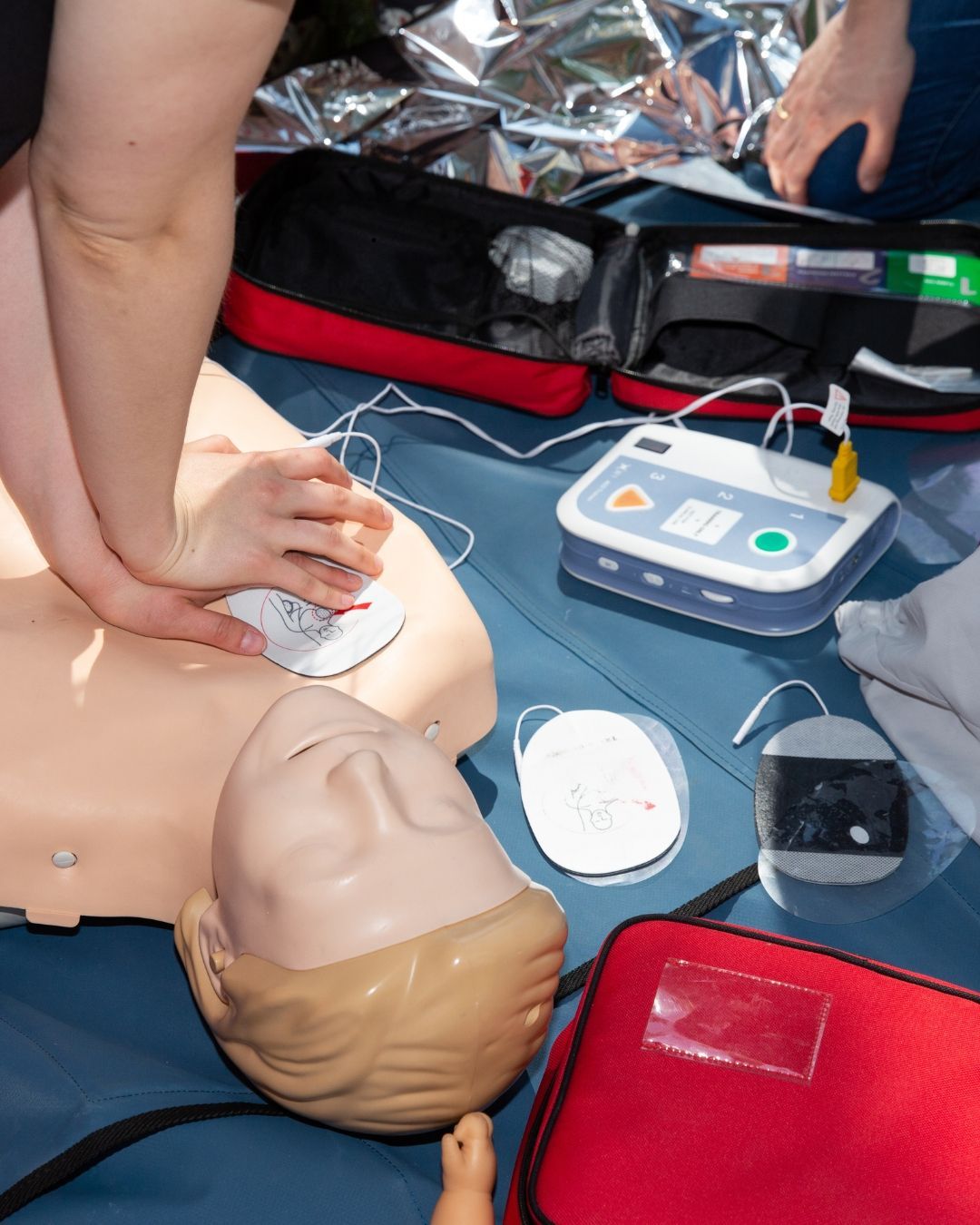
Automated External Defibrillators, or AEDs, are designed to be used by members of the public. They provide clear instructions and are built to support people with no medical background. Even so, many people still hesitate to use them in a real emergency.
The problem is rarely the equipment itself. It is confidence.
This is why AED awareness forms an important part of First Aid at Work training. People are shown what the equipment does, how to respond, and why acting quickly matters.
At Dangle Academy, our Belfast training centre is equipped with a public-access AED registered on The Circuit, the UK’s national defibrillator network. That means it is available not only within our training environment, but also to members of the public who may be directed to it by emergency services.
Most Emergencies Happen Outside the Workplace
Although First Aid at Work training is often taken for workplace reasons, many of the situations where first aid is needed happen elsewhere.
Cardiac arrests, choking incidents, falls and sudden illnesses often take place at home or in public spaces. These are not controlled environments, and there is rarely a trained professional immediately available. The first person on scene is often a parent, partner, colleague, friend or passerby.
According to the British Heart Foundation, most cardiac arrests happen at home, which is one reason first aid skills are so valuable beyond the workplace.
That is why the value of training extends well beyond the workplace. The skills learned do not stay on site or within working hours. They carry into everyday life, where calm and informed action can make a meaningful difference.
What to Expect from First Aid at Work Training
For those considering taking the course, First Aid at Work training is designed to be practical, accessible and immediately useful. It combines classroom-based learning with hands-on scenarios so that people can build confidence through guided practice.
Training typically covers:
- recognising and responding to emergencies
- CPR and the use of AEDs
- managing injuries such as bleeding, burns and fractures
- assessing, monitoring and supporting a casualty
On completion, participants receive recognised certification, typically valid for three years in line with workplace health and safety requirements. Many people choose to refresh their training sooner to maintain confidence and stay familiar with best practice.
No previous experience is required. Whether attending to meet workplace requirements or for personal development, the course is designed to support learners at all levels.
You can also explore our wider health and safety training courses at Dangle Academy.
Why Choose Dangle Academy for First Aid at Work Training?
Dangle Academy delivers First Aid at Work training in Belfast for individuals and organisations across Northern Ireland. Alongside this course, we also provide a wider range of training courses in Belfast designed to support safer working practices across multiple industries.
Our training is grounded in real working environments across construction, infrastructure, energy and industrial maintenance. As part of a wider business that also delivers rope access and specialist industrial services, we give learners practical context for the kinds of situations where first aid may be needed.
If you are exploring other industry-recognised training routes, you can also read our guide to GWO qualification.
All training is delivered in a supportive, hands-on environment at our Belfast training centre, helping candidates leave with both recognised certification and the confidence to use what they have learned.
If you are looking for First Aid at Work training in Belfast, Dangle Academy can help you take the next step.
First Aid FAQs
What is First Aid at Work training?
First Aid at Work training is a practical course that teaches people how to respond to common workplace and everyday emergencies. It usually covers CPR, AED use, choking, bleeding, burns, fractures and how to assess and monitor a casualty.
Who should take a First Aid at Work course?
First Aid at Work training is suitable for workplace first aiders, supervisors, team leaders and anyone responsible for helping manage health and safety at work. It is also valuable for people who want more confidence in dealing with emergencies outside the workplace.
How long does First Aid at Work training take?
A full First Aid at Work course is typically delivered over three days. Shorter emergency first aid courses are also available, depending on the level of training required and the needs of the workplace.
How long is a First Aid at Work certificate valid for?
First Aid at Work certificate is usually valid for three years. Many people choose to refresh their training before it expires so they can stay confident and up to date with best practice.
Does First Aid at Work training cover CPR and AED use?
Yes. First Aid at Work training normally includes CPR and the safe use of an Automated External Defibrillator (AED), helping people respond more confidently in a cardiac emergency.Describe the item or answer the question so that site visitors who are interested get more information. You can emphasize this text with bullets, italics or bold, and add links.
Do I need any previous experience to take First Aid at Work training?
No previous experience is needed. First Aid at Work training is designed to be accessible for beginners, with practical guidance and hands-on learning to help build confidence step by step.
Where can I book First Aid at Work training in Belfast?
If you are looking to book First Aid at Work training in Belfast, Dangle Academy provides practical, hands-on training for individuals and organisations across Northern Ireland.
Contact Us
We'd Love a Share...
Recent Blog Posts