Wind Turbine Cleaning
Wind Turbine Cleaning: Protecting Performance, Safety and Long-Term Asset Value
Wind energy assets are designed to operate reliably in some of the most challenging environments in the UK and Ireland. Exposed to constant wind loading, airborne contaminants, moisture and temperature fluctuations, wind turbines require carefully planned maintenance strategies to protect performance, safety and long-term value. Within this context, wind turbine cleaning plays a far more significant role than is often assumed for appearance, it can be safety critical.
For asset owners, wind farm managers, and wind farm companies, wind turbine cleaning is not a cosmetic exercise. It is a preventative maintenance activity that supports energy yield, Annual Energy Performance (AEP), enables effective inspection, reduces degradation and contributes directly to lifecycle cost control. When planned and delivered correctly, cleaning becomes an integral part of a wider maintenance and inspection regime rather than an isolated task.
This article explores why wind turbine cleaning matters, the operational and safety challenges involved, and how specialist access methods, training and competence underpin effective delivery across modern wind farms.
Why Wind Turbine Cleaning Matters to Asset Owners
Wind turbines are precision-engineered assets designed to operate efficiently over decades. However, their exposed nature means surface contamination and build-up is unavoidable. Over time, this contamination can begin to affect both performance and structural condition.
From an asset management perspective, wind turbine cleaning contributes to:
- Maintaining aerodynamic efficiency by reducing surface fouling on blades
- Supporting consistent energy production and yield
- Enabling early identification of defects during visual inspection
- Slowing the progression of corrosion and coating degradation
- Reducing the likelihood of unplanned downtime
Blade contamination in particular can impact airflow and lift characteristics, while tower and nacelle surfaces are subject to ongoing exposure from moisture, salt, insects and industrial pollution. Without periodic intervention, these factors can accelerate wear and compromise the wind turbine protective coatings.
For wind farm managers balancing availability targets, maintenance budgets and safety obligations, wind turbine cleaning is best viewed as a proactive measure that supports informed decision-making rather than a reactive response to visible deterioration.
Common Contaminants Affecting Wind Turbines
The contaminants affecting turbines vary depending on location, turbine height and environmental conditions, but several recurring issues are seen across both onshore and offshore assets.
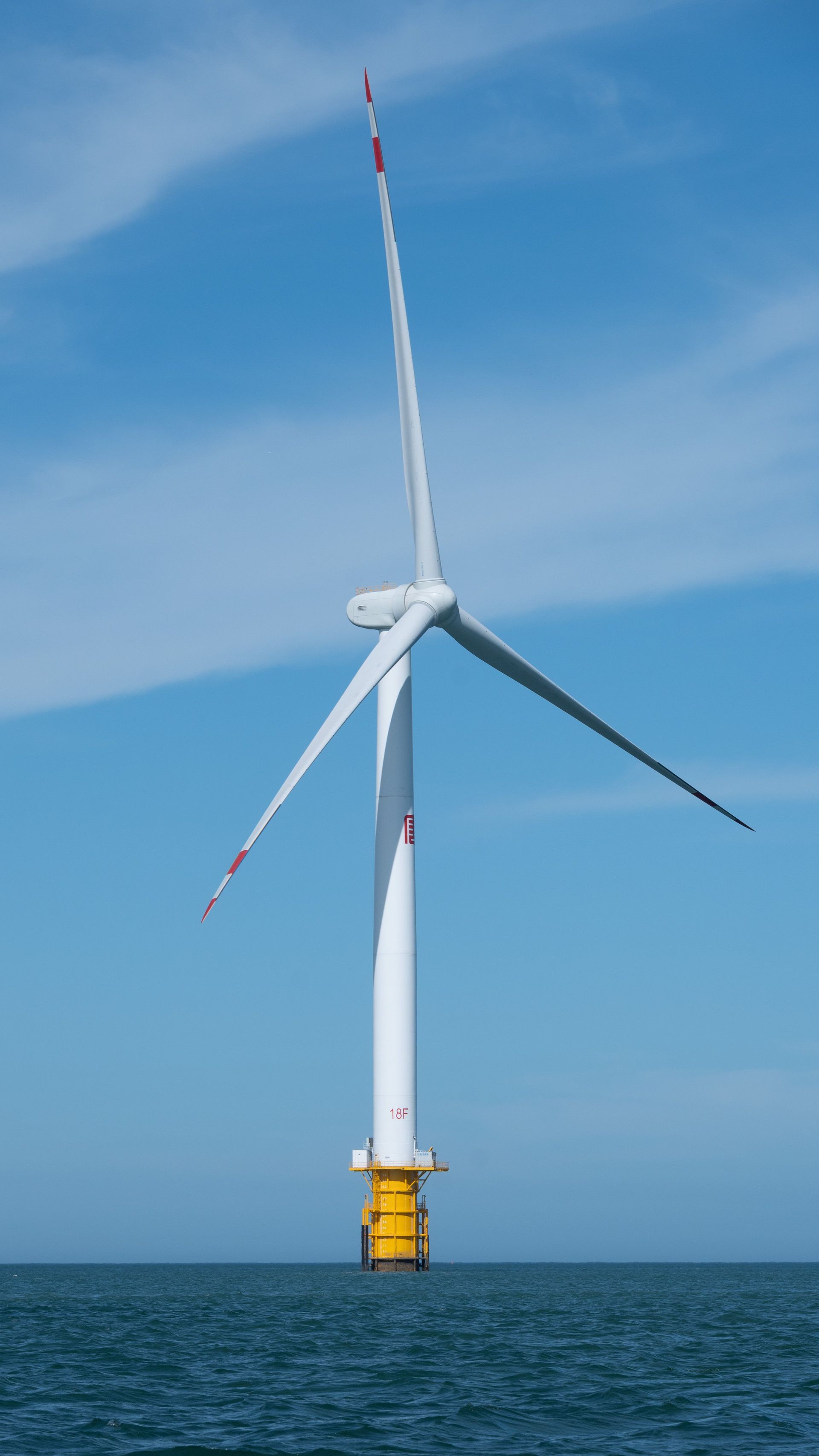
WTG Blade leading edges commonly accumulate insects, pollen, salt residues and airborne particulates. This build-up increases surface roughness, reducing aerodynamic efficiency and masking early signs of erosion or mechanical damage. Even small changes in surface condition can have a cumulative effect when replicated across an entire wind farm.
Towers and nacelles are similarly exposed to environmental stressors. Moisture retention, algae growth and atmospheric pollutants can all contribute to coating breakdown and corrosion initiation, particularly at joints, interfaces and areas of poor drainage.
In offshore and coastal environments, salt deposition presents an additional challenge. Salt accelerates corrosion processes and can compromise protective systems more rapidly if not managed within a structured maintenance plan. In these settings, wind turbine cleaning supports both surface protection and accurate condition assessment.
Access and Operational Constraints on Wind Farms
Wind turbines present access challenges that differ significantly from those encountered in the built environment or traditional industrial settings. Height, geometry and exposure all influence how maintenance tasks are planned and executed.
Turbines are tall, slender structures with complex blade profiles and limited attachment points. Ground conditions may restrict vehicle access, while environmental sensitivity often limits the use of heavy plant. Weather windows must be carefully managed, with wind speed, precipitation and visibility all influencing safe working limits.
Operational planning adds further complexity. Turbine shutdowns must be coordinated to minimise production losses, and maintenance activities often need to be integrated with inspections, repairs or planned outages. Within this context, wind turbine cleaning must be delivered efficiently, safely and with minimal disruption to operations.
While alternative access methods may be considered in other sectors, wind turbine maintenance relies on solutions specifically suited to tall, exposed structures with minimal ground footprint. For a wider discussion on access strategies used beyond wind energy, asset owners may find it useful to refer to Dangle Academy’s previous article on rope access vs scaffolding.
Rope Access for Wind Turbine Cleaning Operations
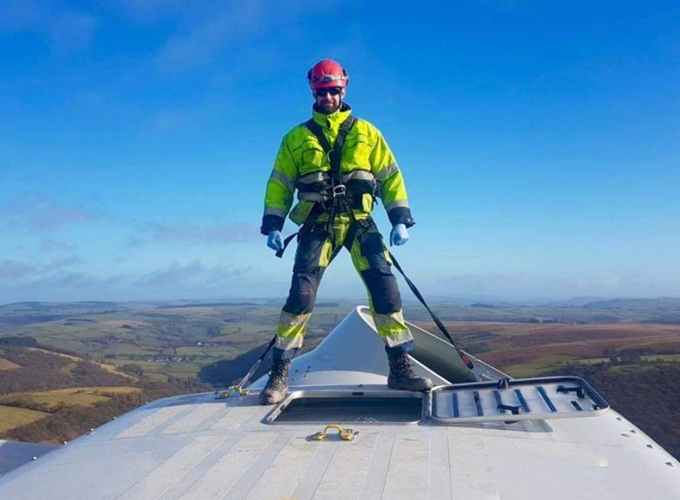
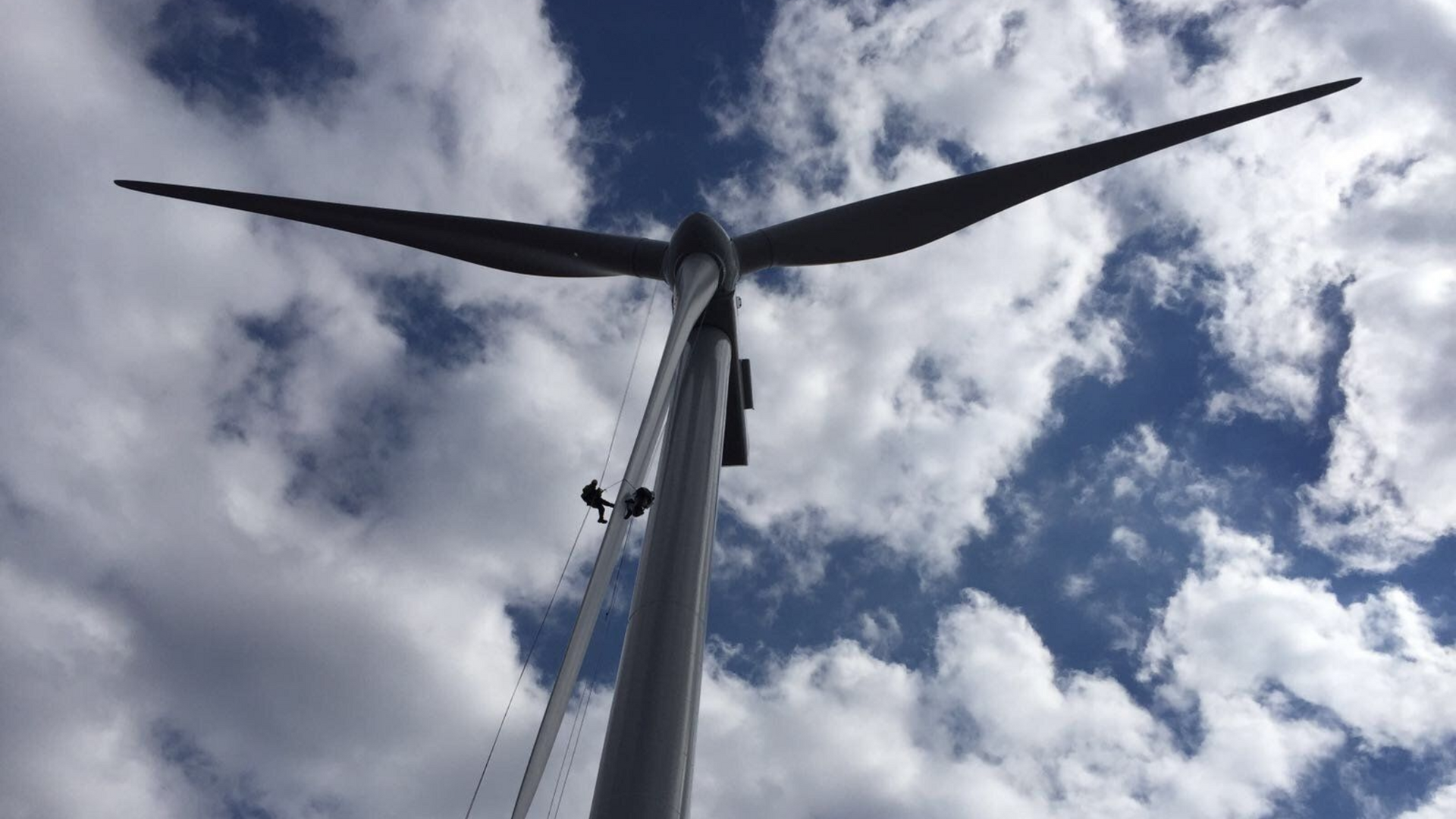
Rope access has become the established access method for wind turbine cleaning due to its adaptability, efficiency and suitability for turbine geometry. Unlike fixed access systems or heavy temporary structures, rope access allows rope access technicians to reach complex surfaces quickly while maintaining a minimal site footprint. Internationally, this approach is governed by the standards set by IRATA International, which define training, assessment and operational requirements for rope access technicians.
From an operational standpoint, rope access supports rapid mobilisation and demobilisation, reducing downtime and enabling cleaning activities to be integrated seamlessly with inspection or minor maintenance tasks. This flexibility is particularly valuable where turbines are geographically dispersed or located in remote areas.
Rope access also aligns well with the environmental objectives of renewable energy operators. Reduced ground disturbance, minimal material use and lower transport requirements contribute to a smaller environmental footprint compared to more intrusive access solutions.
Crucially, rope access is not simply a means of reaching the work area. When delivered by competent, well-trained technicians, it becomes a controlled system of work that prioritises safety, efficiency and repeatability across the turbine lifecycle. Visit our FAQ's page on rope access if you'd like to find answers to commonly asked questions on rope access techniques.
Safety, Compliance and Risk Management
Working at height in wind environments introduces a distinct risk profile that must be carefully managed. Wind turbine cleaning involves exposure to falls from height, dropped objects, changing weather conditions and complex rescue considerations. For asset owners, assurance that these risks are being properly controlled is essential.
In the UK and Northern Ireland, working at height in wind environments is governed by established legal frameworks requiring work to be properly planned and supervised — as described in UK working at height guidance published by the Health and Safety Executive.
Effective wind turbine cleaning operations rely on:
- Robust risk assessments and task-specific method statements
- Clear rescue planning appropriate to turbine height and configuration
- Ongoing weather monitoring and operational decision-making
- Defined stop-work criteria and supervisory oversight
Given the variable nature of wind farm environments, these controls must be supported by continual, site-specific judgement during live operations. Changing wind speeds, visibility and turbine status mean that risks cannot be fully mitigated through pre-planned documentation alone. Competent teams are expected to reassess conditions as work progresses and adapt or suspend activities where necessary, ensuring operations remain within safe limits at all times.
This approach reflects mature safety management practice within wind energy operations and is fundamental to the safe delivery of wind turbine cleaning activities.
Decision-Making and Contractor Assurance for Asset Owners
For asset owners and wind farm managers, the effectiveness of wind turbine cleaning is determined as much by governance and decision-making as by the physical task itself. Clear contractor assurance processes play a critical role in ensuring work is delivered safely, predictably and within operational limits.
Key considerations include how contractors plan and control work in live environments, how turbine status and weather limits are managed, and how authority is exercised on site. Asset owners should expect clear lines of responsibility, competent supervision and defined decision-making processes that prioritise safety over programme pressure.
Assurance extends beyond documentation. While risk assessments and method statements are essential, they must be supported by practical competence, realistic rescue planning and the ability to adapt to changing conditions without compromising safety.
In wind energy operations, this governance-led approach provides confidence that wind turbine cleaning activities are being managed in a way that protects personnel, assets and operational continuity.
Wind Turbine Cleaning Services and Training Capability
The effective delivery of wind turbine cleaning depends on both operational capability and a strong training foundation. Service providers must demonstrate not only technical proficiency but also an understanding of wind farm operations, safety expectations and regulatory requirements.
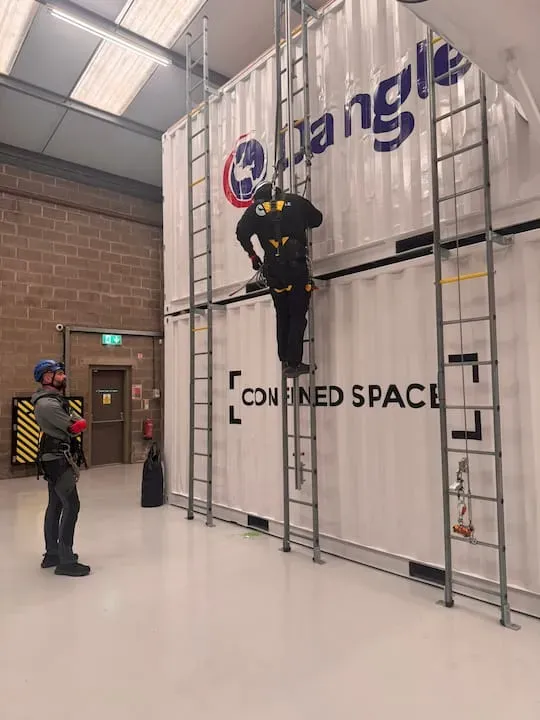
Dangle supports wind energy operations through both service delivery and industrial training, using structured, standards-led methods to help teams work safely on wind turbines. Our training pathway includes GWO safety training(Global Wind Organisation standards), alongside practical competence for working at height and in live wind environments. This sits within our wider renewables capability and is aligned with the day-to-day operational demands of the wind sector.
For asset owners and wind farm managers, this dual capability provides assurance that cleaning activities are underpinned by recognised training standards, consistent safety systems and an understanding of long-term asset protection objectives.
Environmental Considerations in Wind Turbine Cleaning
Environmental responsibility is central to renewable energy operations, and wind turbine cleaning must be planned in line with sustainability objectives and site-specific environmental controls. In planning environmental controls for cleaning activities, it is important to align with established baseline considerations for offshore wind, outlined in the UK Offshore Energy Strategic Environmental Assessment (OESEA4) Environmental Report.
Key considerations include water usage, runoff management and the selection of cleaning agents compatible with turbine coatings and surrounding habitats. Rope access supports these objectives by reducing the need for ground-based infrastructure and minimising site disturbance.
By integrating environmental controls into planning and delivery, wind turbine cleaning can be carried out in a way that protects both turbine assets and the surrounding environment.
Integrating Wind Turbine Cleaning Into Long-Term Maintenance Planning
The greatest value from wind turbine cleaning is achieved when it forms part of a structured maintenance strategy rather than a reactive intervention. Planned wind turbine maintenance improves inspection accuracy and supports informed decisions around maintenance interventions, including coating repair and surface protection, helping to extend asset life and reduce unplanned downtime. Asset-owners increasingly consider lifecycle extension and strategic maintenance planning in wind farm operations, reflected in industry perspectives on wind farm life cycle considerations from RenewableUK.
For asset owners, this integrated approach improves forecasting, supports lifecycle budgeting and minimises operational disruption. Cleaning activities can be coordinated alongside inspections, minor repairs or coating maintenance, maximising the value of each access event.
Over the operational life of a wind farm, this approach to wind turbine cleaning contributes to asset longevity, performance stability and improved return on investment.
FAQ'S
How often should wind turbine cleaning be carried out?
The frequency of wind turbine cleaning depends on site conditions, turbine location and exposure. Offshore and coastal turbines typically require more regular cleaning due to salt deposition, while onshore assets are often cleaned in line with inspection or planned maintenance schedules.
Is wind turbine cleaning a cosmetic task or a maintenance activity?
Wind turbine cleaning is a maintenance activity. It supports aerodynamic performance, coating protection and accurate inspection, helping asset owners identify defects early and manage long-term asset condition.
What should asset owners look for in a wind turbine cleaning contractor?
Asset owners should look for clear planning, competent supervision, realistic rescue capability and evidence of appropriate training and assessment. Effective wind turbine cleaning relies on governance and decision-making, not just access equipment.
Can wind turbine cleaning identify issues beyond surface contamination?
Yes. Wind turbine cleaning improves visibility of blade surfaces, towers and nacelles, allowing early signs of erosion, coating failure or corrosion to be identified during routine inspection activities.
Is wind turbine cleaning suitable for both onshore and offshore wind farms?
Wind turbine cleaning is suitable for both onshore and offshore assets, although frequency, planning and environmental controls may vary depending on exposure, location and operational conditions.
Why Choose Dangle
Here at Dangle, we pride ourselves on offering a wide range of professional and comprehensive inspection, access, coatings, and composite (IACC) industrial services and training courses to cater to the needs of both the private and public sectors. Our dedication to providing high-quality work at height solutions and training has helped us establish a strong reputation in the industry.
With a team of highly skilled and experienced professionals, we are committed to delivering exceptional results that not only meet but exceed our clients' expectations. Our on-site working at height services are designed to minimise maintenance costs in the long and short-term, allowing our clients to save on valuable resources.
Located in Belfast, Northern Ireland, our headquarters serve as the centre of our operations across Northern Ireland and Ireland. However still ensuring that we can extend our services to a wider clientele across the United Kingdom. No matter where you are located, our team is always ready to assist you with your industrial maintenance or training needs.
If you would like to learn more about how our dedicated team can help you, we encourage you to get in touch with us today. Our friendly and professional staff are always available to provide you with the information and support you require.
Contact Us
We'd Love a Share...
Recent Blog Post's