Rope Access vs Scaffolding
Rope Access vs Scaffolding: Sustainability, Scale, and Modern Access Planning
The way access is planned for inspection, maintenance, and repair at height is changing. Environmental responsibility, reduced disruption, and long-term asset management are now central considerations alongside safety and compliance. Within this context, discussions around rope access vs scaffolding have moved beyond simple cost or speed comparisons and into wider questions of sustainability, scalability, and responsible working practices.
For asset owners, facilities managers, and principal contractors, the choice of access method has a measurable impact on carbon footprint, site logistics, programme duration, and material use. Rope access and scaffolding are both established, regulated systems with clearly defined roles. However, their environmental and operational impacts differ significantly depending on how, where, and at what scale they are deployed.
This article examines rope access vs scaffolding through a sustainability lens, focusing on how modern access planning increasingly blends methods to reduce environmental impact while maintaining safety, competence, and compliance.
Sustainability and the Changing Context of Rope Access vs Scaffolding
Sustainability is no longer an abstract ambition within construction, infrastructure, and building maintenance. Public-sector procurement frameworks, infrastructure investment strategies, and ESG reporting requirements increasingly expect organisations to demonstrate tangible reductions in environmental impact.
Temporary works are now recognised as a significant contributor to project-level environmental footprints. Access systems influence how much material is transported, how long a site remains active, and how often work must be revisited. As a result, rope access vs scaffolding is frequently evaluated not only on technical suitability, but on broader environmental performance.
Guidance from the Health and Safety Executive supports proportionate, risk-based planning when working at height, reinforcing the principle that duty-holders should consider safer and more efficient alternatives where reasonably practicable. Increasingly, environmental impact forms part of that wider risk-based decision-making process.
Understanding the Core Differences in Rope Access vs Scaffolding
Scaffolding provides a fixed, collective means of access and remains essential where prolonged access, multiple trades, or heavy materials are involved. Its strength lies in its versatility, but it is also inherently material-intensive and requires significant logistical input.
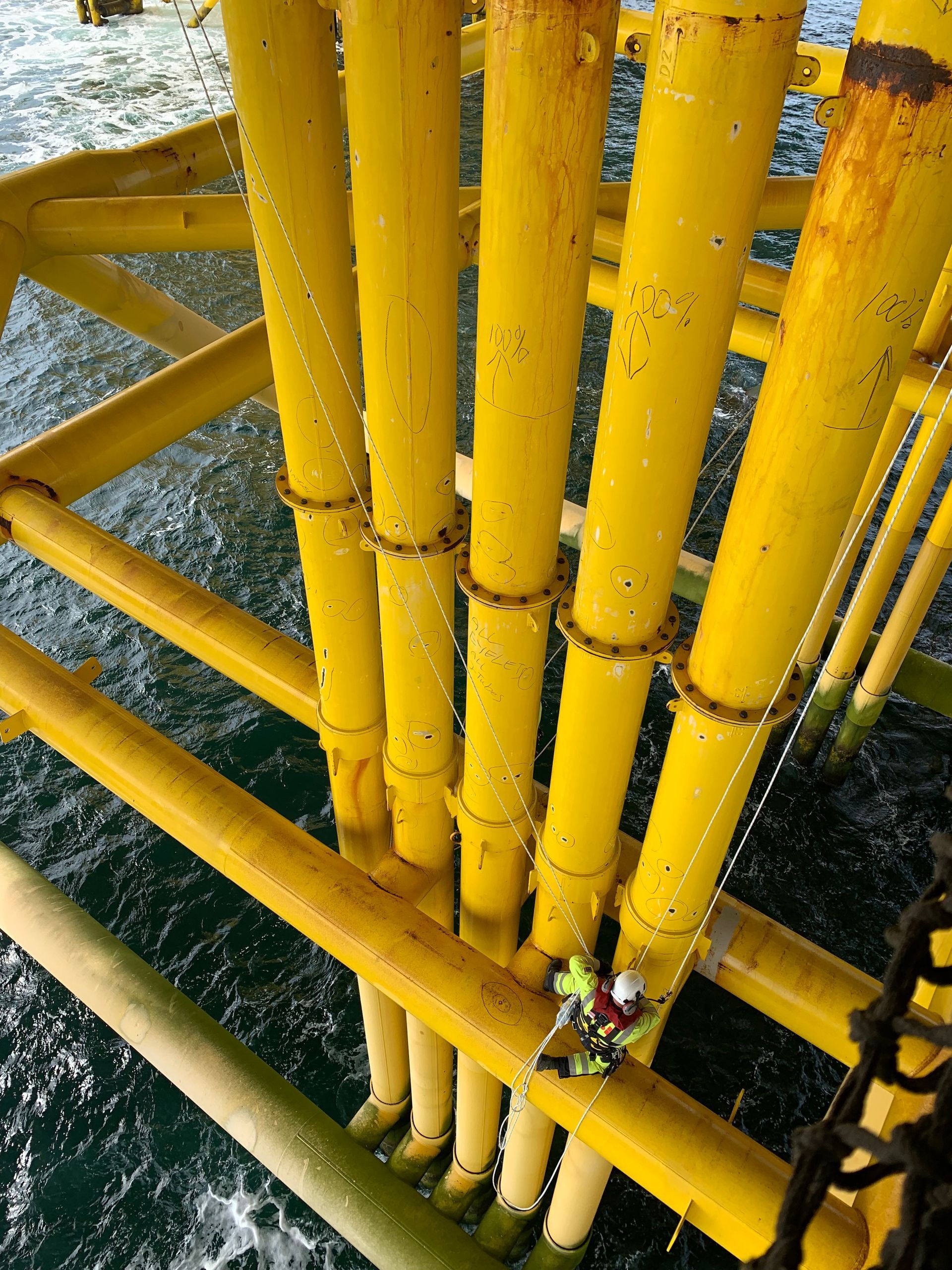
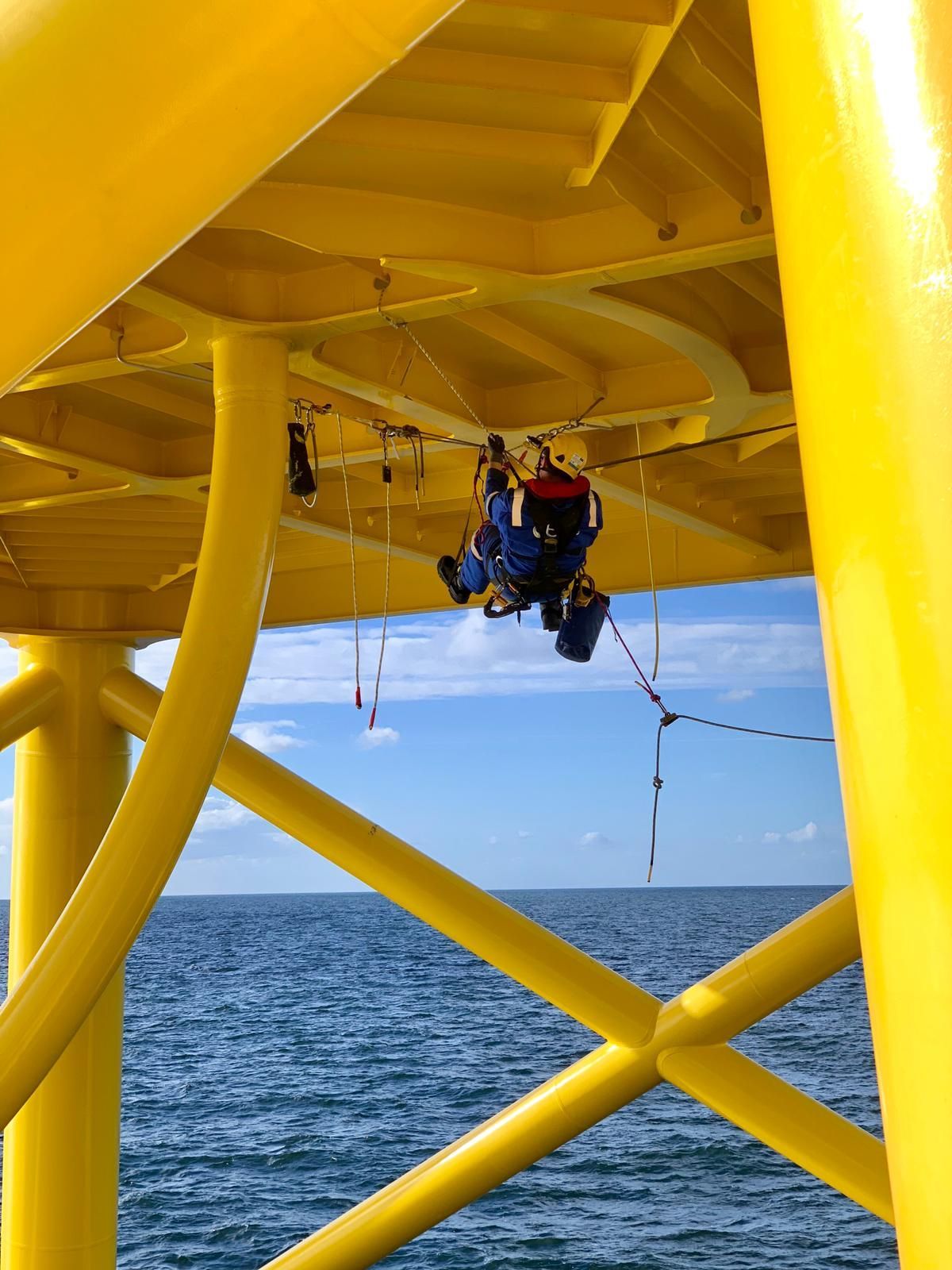
Rope access uses trained technicians working directly from the structure using ropes, anchors, and personal protective equipment. It is lightweight, highly mobile, and commonly used for inspections, surveys, and targeted maintenance.
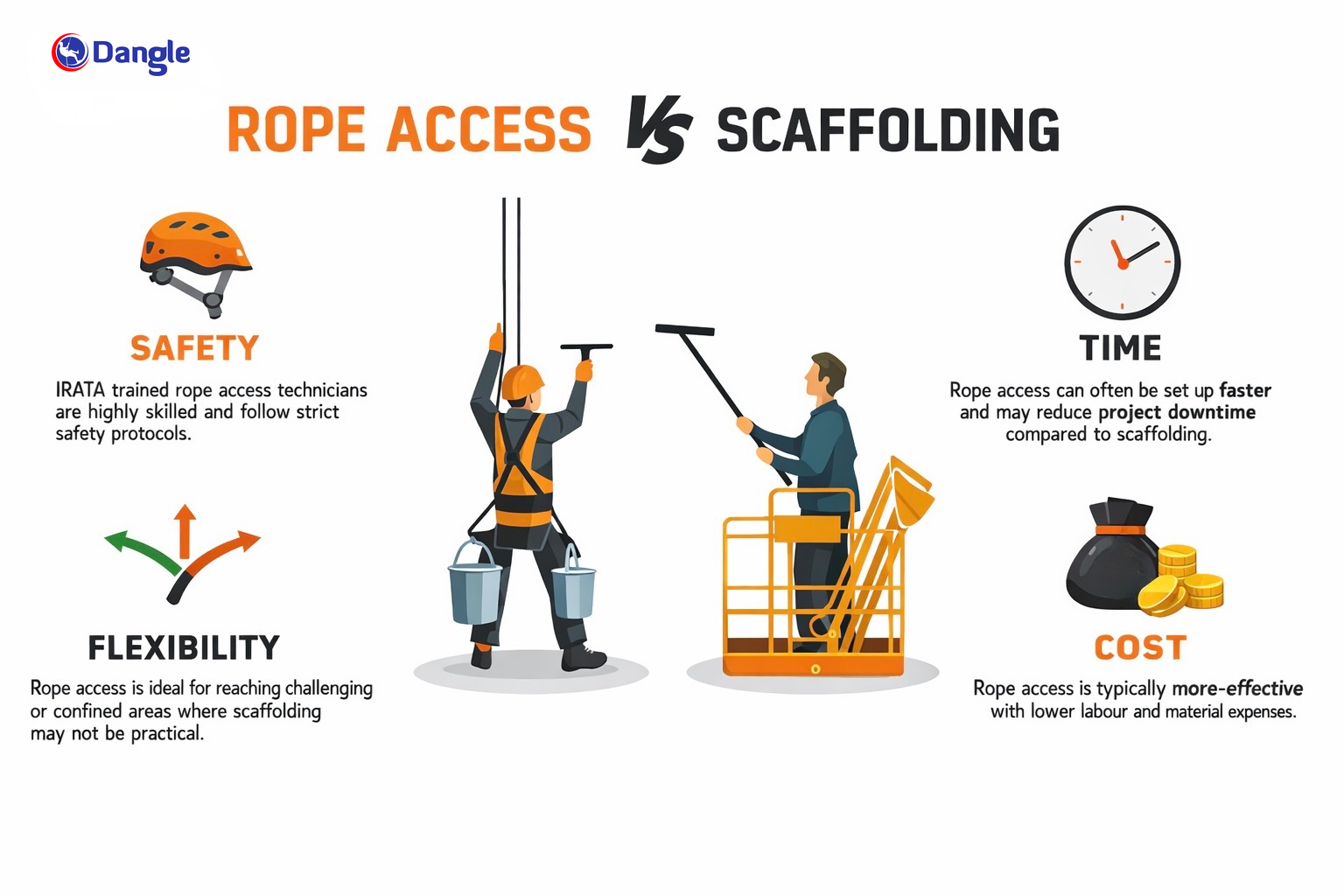
When comparing rope access vs scaffolding, sustainability outcomes are shaped less by the access systems themselves and more by how much temporary infrastructure is required, how long it remains in place, and how frequently it must be adapted.
Carbon Emissions and Transport Impact in Rope Access vs Scaffolding
Transport is one of the clearest environmental differentiators in rope access vs scaffolding. Scaffolding typically involves multiple deliveries of components, vehicle movements for erection and dismantling, and ongoing logistical support throughout the programme. Each of these activities contributes to fuel consumption and associated carbon emissions.
Rope access operations generally require fewer vehicles and lighter loads. Small teams can mobilise quickly with minimal equipment, reducing transport demand. Across repeat maintenance programmes or geographically dispersed assets — such as railway infrastructure spread along entire corridors or public-sector building estates managed across multiple locations — this reduction in vehicle movements can deliver measurable carbon savings.
Material Efficiency and Waste Reduction in Rope Access vs Scaffolding
Material consumption is a key consideration when assessing rope access vs scaffolding. Scaffolding relies on significant volumes of temporary materials, much of which may only be installed for short periods. While systems are reusable, waste is still generated through packaging, damaged components, and redesigns.
Rope access requires very limited temporary infrastructure. Equipment is reused across multiple projects under strict inspection regimes, and existing structures are often used for anchorage where appropriate. This approach reduces both direct waste and the upstream environmental impact associated with manufacturing and transportation.
Guidance from organisations such as the British Standards Institution and Construction Industry Research and Information Association (CIRIA) increasingly emphasises material efficiency and waste minimisation within construction and maintenance activities.
Environmental Control, Hazardous Substances, and Responsible Planning
Sustainable access planning extends beyond access systems alone. The methods used to apply coatings, carry out repairs, or complete remedial works also influence environmental and health outcomes.
When evaluating rope access vs scaffolding, early access decisions can shape how substances such as paints, solvents, and resins are used and controlled on site. Rope access paint inspections are often used to define scope accurately, reducing unnecessary surface preparation, over-application of materials, and repeat works. This targeted approach supports both waste reduction and improved environmental control.
Effective sustainability also depends on robust management of hazardous substances, including assessment of exposure routes, ventilation requirements, spill control, and disposal arrangements. For a detailed breakdown of how hazardous substances are assessed and managed on industrial and maintenance sites, see our most recent blog post on COSHH assessments for paints, solvents, and resins.
Site Disruption and Sensitive Environments: Rope Access vs Scaffolding
Environmental responsibility also includes the impact of works on surrounding environments, occupants, and the wider public. In many settings, access arrangements must be planned not only around the task itself, but around how people use and interact with the space on a daily basis.
Scaffolding can restrict access routes, require extended exclusion zones, and introduce additional noise and visual intrusion during erection, alteration, and dismantling. Where scaffolding remains in place for prolonged periods, it can affect building users, neighbouring properties, and public spaces, particularly in urban or operational environments.
Rope access typically has a much smaller physical footprint. By working directly from the structure, technicians minimise ground-level disruption and reduce the need for long-term temporary works. This can be especially valuable on occupied buildings, live transport infrastructure, heritage assets, and sensitive locations where access must be carefully managed to avoid unnecessary disturbance.
In rope access vs scaffolding evaluations, reduced disruption is often a decisive factor. When access planning prioritises minimal impact on occupants, operations, and the surrounding environment, rope access can offer a more proportionate and environmentally responsible solution, particularly for inspections and short-duration maintenance activities.
Hybrid Access Strategies and Modern Planning
The increasing crossover between rope access and scaffolding reflects a more mature and evidence-based approach to access planning. Rather than defaulting to large-scale temporary works, organisations are increasingly assessing how access can be delivered efficiently across the full lifecycle of an asset.
Rope access is no longer used solely for initial inspections or short-term interventions. On many large-scale projects and long-term maintenance programmes, rope access is adopted as the primary access method, supporting repeat inspections, routine maintenance, and targeted remedial works over extended periods. Its low material requirements, rapid mobilisation, and minimal disruption make it particularly well suited to ongoing asset management strategies.
Where projects move beyond the scope of rope access alone, hybrid access strategies can provide additional value. Rope access inspections are often used to define defects accurately and establish priorities, allowing scaffolding to be designed and installed only where extended access, heavy materials, or prolonged work faces are genuinely required. This targeted use of scaffolding reduces overall temporary works, shortens programme durations, and improves environmental performance without compromising safety.
When considering rope access vs scaffolding, hybrid strategies allow both systems to be applied where they are most effective. Rope access delivers flexibility, scalability, and low-impact access across large or dispersed assets, while scaffolding provides stable, collective protection where long-duration works demand it. Used together in a planned and proportionate way, they support safer, more efficient, and more sustainable delivery across complex building and infrastructure projects.
Safety, Competence, and Environmental Responsibility
Sustainability in work at height cannot be separated from safety and competence. Environmentally responsible delivery depends on work being properly planned, competently executed, and controlled throughout its lifecycle. Poorly managed access arrangements increase the likelihood of delays, rework, unplanned changes, and repeat site visits, all of which carry environmental as well as safety consequences.
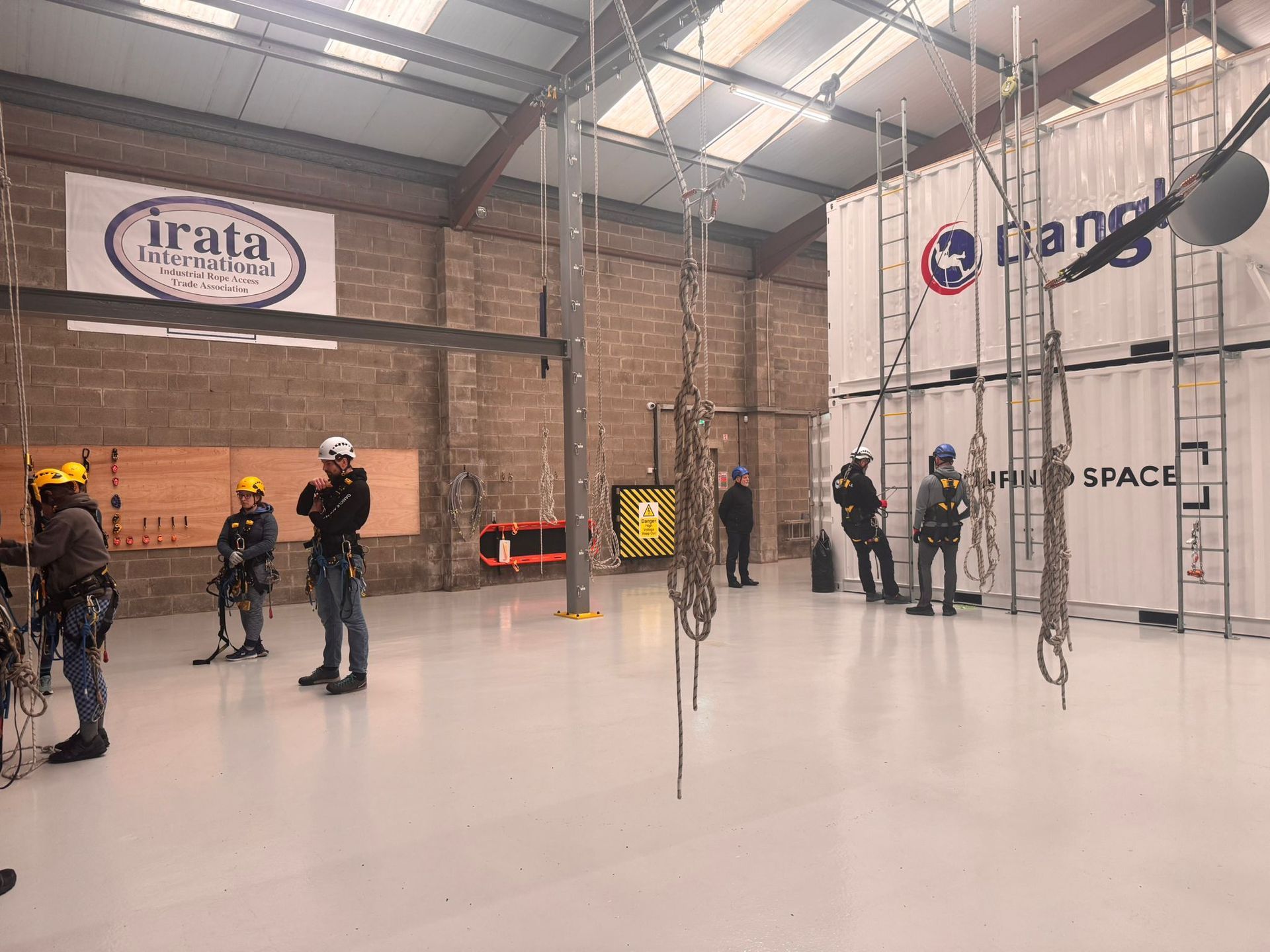
Rope access training operates within a clearly defined framework of knowledge, supervision, and rescue planning established by IRATA International. This framework places strong emphasis on technician competence, team structure, and methodical planning. Trained rope access technicians are required to work efficiently with minimal equipment, to plan access routes carefully, and to execute tasks with precision. This disciplined approach not only reduces risk to personnel, but also limits unnecessary disturbance, material use, and repeat interventions, directly supporting improved environmental performance.
Scaffolding operations are similarly governed by established design, erection, and inspection requirements, supported by guidance from the Health and Safety Executive. Where scaffolding is required, competent planning ensures that structures are proportionate to the task, appropriately designed, and maintained safely throughout the programme. Over-designed or poorly coordinated scaffolding can increase material use, extend programme durations, and introduce avoidable disruption, undermining both safety and sustainability objectives.
When assessing
rope access vs scaffolding, responsible organisations recognise that the most sustainable option is also the one that is competently planned and correctly applied. Early involvement of trained personnel, clear method selection, and effective supervision reduce uncertainty and prevent unnecessary temporary works. By embedding recognised safety frameworks and competent planning at the centre of access decisions, organisations are better placed to deliver work at height that is compliant, efficient, and environmentally responsible over the long term.
How do training requirements differ between rope access and scaffolding?
In rope access vs scaffolding, training reflects how each system is delivered. Rope access technicians must complete formal training and assessment under the framework set by IRATA International, including defined competency levels and rescue capability. Scaffolding operatives typically train through the Construction Industry Scaffolders Record Scheme (CISRS), focusing on the safe erection, alteration, and inspection of scaffold structures.
Which access method has a lower environmental impact?
In rope access vs scaffolding, rope access typically has a lower environmental impact due to reduced materials, fewer vehicle movements, and shorter programme durations. The overall impact depends on how long access is required and the scale of the works.
Is rope access suitable for large buildings and infrastructure?
Yes, rope access vs scaffolding assessments increasingly recognise rope access as a scalable solution for buildings, infrastructure, and energy assets where repeat inspections or targeted maintenance are required.
Can rope access and scaffolding be used together?
Yes. Modern access planning often treats rope access & scaffolding as complementary. Rope access can reduce scaffold scope by identifying and targeting only the areas that require extended access.
Why Choose Dangle
Here at Dangle, we pride ourselves on offering a wide range of professional and comprehensive inspection, access, coatings, and composite (IACC) industrial services and training courses to cater to the needs of both the private and public sectors. Our dedication to providing high-quality work at height solutions and training has helped us establish a strong reputation in the industry.
With a team of highly skilled and experienced professionals, we are committed to delivering exceptional results that not only meet but exceed our clients' expectations. Our on-site working at height services are designed to minimise maintenance costs in the long and short-term, allowing our clients to save on valuable resources.
Located in Belfast, Northern Ireland, our headquarters serve as the centre of our operations across Northern Ireland and Ireland. However still ensuring that we can extend our services to a wider clientele across the United Kingdom. No matter where you are located, our team is always ready to assist you with your industrial maintenance or training needs.
If you would like to learn more about how our dedicated team can help you, we encourage you to get in touch with us today. Our friendly and professional staff are always available to provide you with the information and support you require.
Contact Us
We'd Love a Share...
Recent Blog Posts