High Ropes Courses: How Recreational Height Challenges Inspire Real-World Rope Access Careers
High Ropes Courses: How Recreational Height Challenges Inspire Real-World Rope Access Careers
High ropes courses are often viewed simply as adventure activities — a chance to test balance, confront fears, and enjoy the thrill of being elevated above the ground. But beneath the sense of challenge and excitement lies something more substantial. High ropes courses introduce participants to systems, equipment, and safety protocols that mirror many of the foundational principles used across the rope access industry.
At Dangle Academy, we regularly meet trainees who say their first genuine encounter with height management, harness systems, and controlled movement at height, took place on a high ropes course. The confidence gained in these recreational environments often becomes the catalyst that motivates individuals to explore professional training pathways such as IRATA Level 1 Rope Access Training.
This article explores how high ropes courses act as a stepping stone toward technical height-based careers, and why they matter more than most people realise — both for personal development and for the wider rope access industry.
Understanding High Ropes Courses Within a Safe, Structured Height Environment
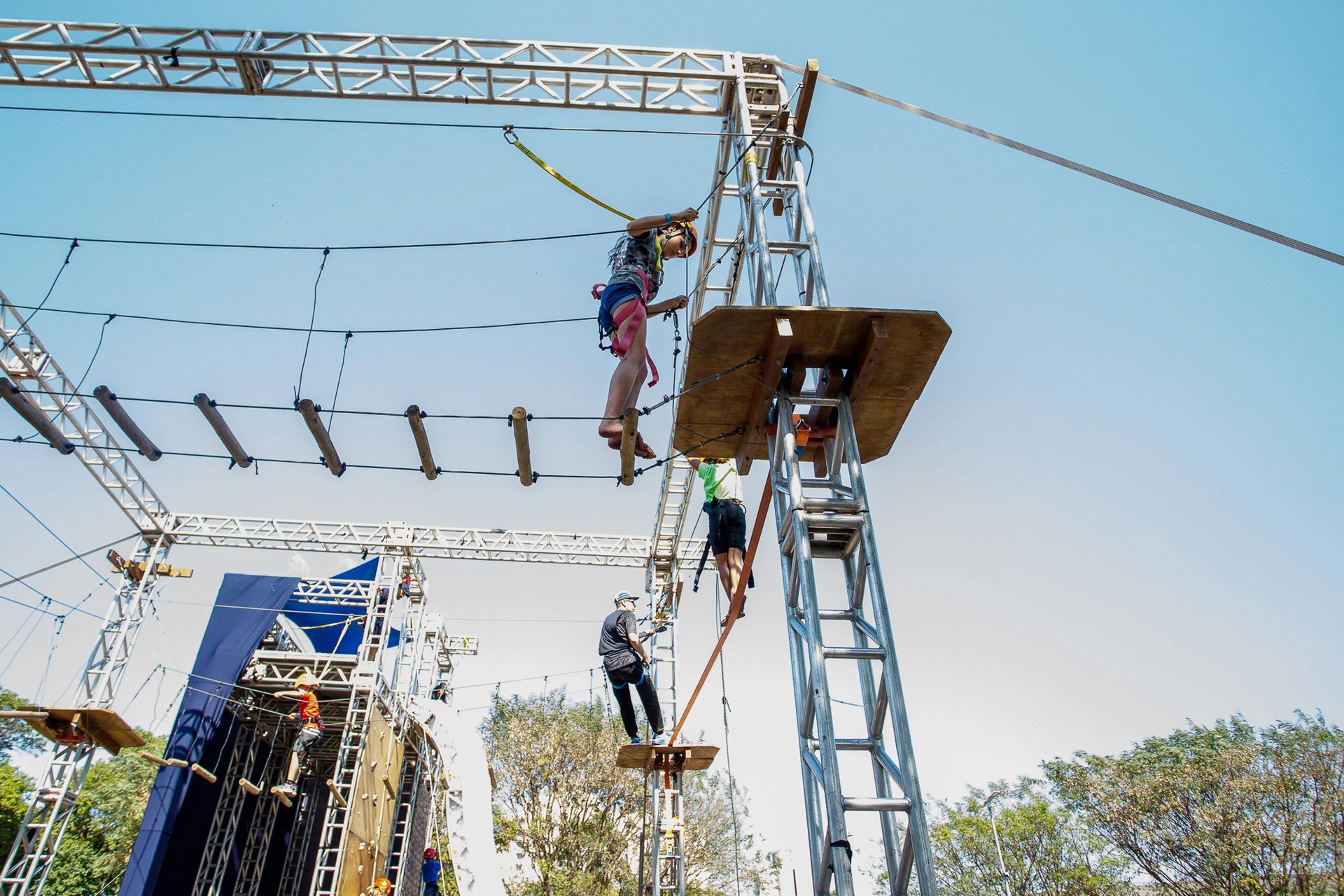
High ropes courses are typically built around a series of elevated elements: platforms, zip lines, suspended beams, cargo nets, aerial bridges, and controlled obstacles. While these challenges are designed to be enjoyable, they are underpinned by strict engineering, rigorous inspection routines, and detailed operational procedures. This is where the connection to rope access begins.
Participants on high ropes courses are introduced to pieces of equipment that meet the same EN and UIAA standards used throughout professional height-based industries. Harnesses, carabiners, fall-arrest lanyards, helmets, and belay systems mirror those found in industrial and rope access settings. The controlled environment introduces several key concepts including load management, personal protective equipment (PPE), the importance of redundancy in safety systems, and structured supervision. This early exposure means participants experience, without necessarily realising it, industry-aligned practices such as:
- trusting PPE that has been inspected and logged
- understanding that height can be managed safely
- following instructions from trained supervisors
- moving deliberately and maintaining body awareness
- recognising that fear can be controlled through knowledge and protocol
High ropes courses are therefore not simply leisure activities. They serve as carefully designed introductions to the fundamentals of safe height management. The controlled environment mirrors the expectations set by the HSE’s Work at Height Regulations (2005) — an authoritative reference that governs all height-related work in the UK, and one that rope access organisations must comply with. This alignment illustrates why high ropes courses play an important role in height-related learning, even before someone enters a professional training centre.
Why High Ropes Courses Support a Natural Transition Into IRATA Rope Access Training
A significant number of rope access technicians, painters, inspectors, and rigging professionals begin their journey long before they enter an industrial setting. Instead, they first experience the core principles of height safety on a high ropes course.
This is because high ropes courses introduce three elements that are fundamental in rope access:
Psychological readiness for height
Participants learn to regulate fear, focus their attention, and commit to safe movement. This emotional control is essential for technical rope access work.
Familiarity with harness systems and safety equipment
Even basic exposure to wearing a full-body harness or clipping into a continuous safety line helps participants understand the importance of proper fit, correct use, and trust in rated equipment.
Appreciation of structured safety oversight
Both recreational and industrial height environments require trained personnel, standard operating procedures, and strict adherence to instructions. Participants learn quickly that safety is not optional — it is procedural.
When trainees join IRATA Level 1 Rope Access training at Dangle Academy, many already possess these foundations, making the transition smoother and more intuitive.
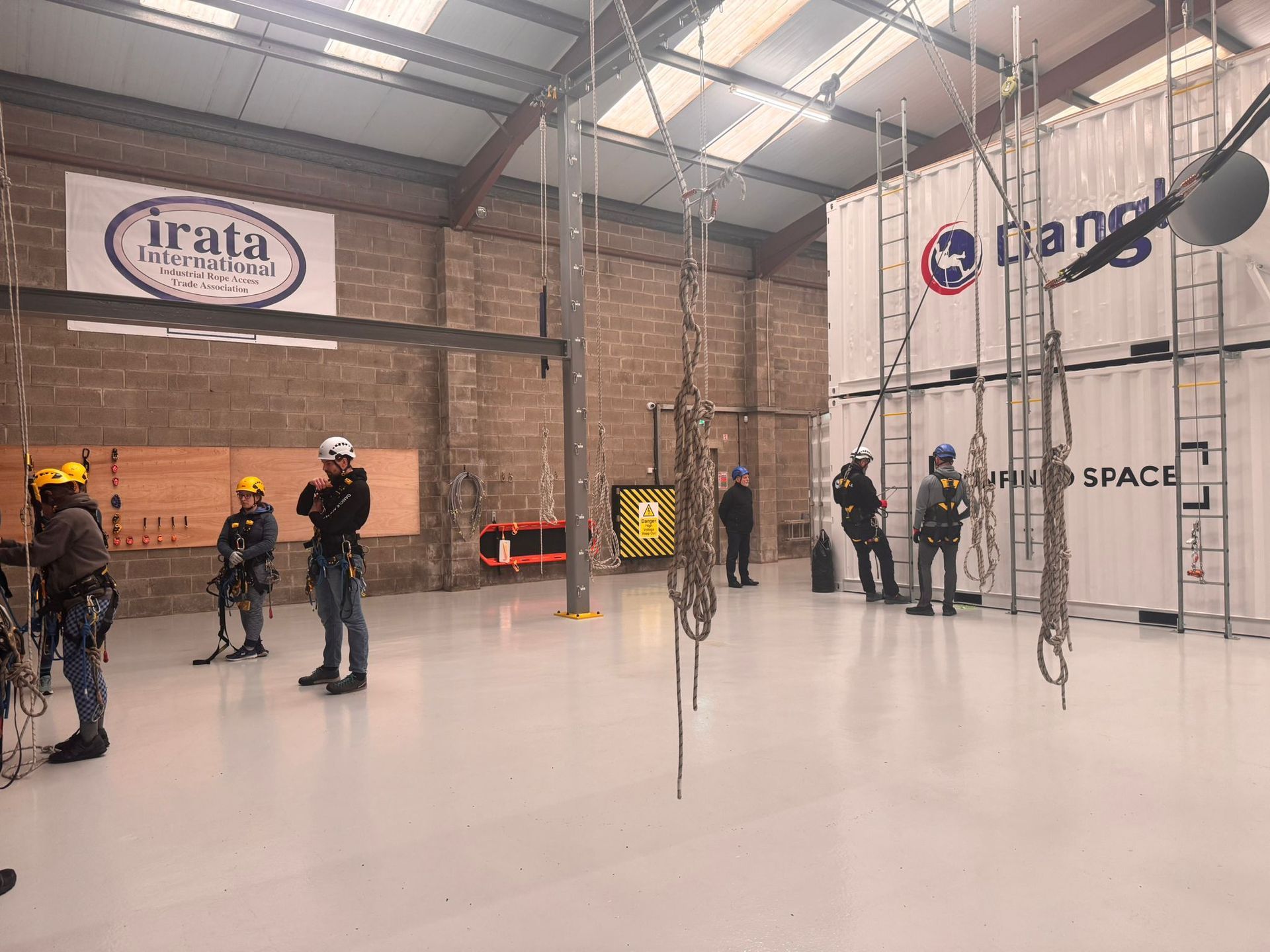
IRATA Level 1 training expands these early experiences into a formal skill set, including:
- safe ascent and descent
- changeovers
- deviations and re-belays
- knot passing
- equipment care and inspection
- basic rigging awareness
- rescue readiness and emergency response
- operating inside a defined safe system of work
These learning outcomes follow the IRATA Training, Assessment and Certification Scheme (TACS) and are delivered under the strict framework of the IRATA International Code of Practice (ICOP) — the globally recognised standard for rope access work.
Many individuals reach this point and realise they want to explore rope access more seriously but aren’t yet ready to commit to a full IRATA course. To support this progression, Dangle Academy offers a one-day Rope Access Taster Session, designed specifically for those who have enjoyed high ropes courses and want to experience the technical side of industrial height work. The session introduces participants to professional rope access equipment, basic rope manoeuvres, and safe system principles, giving a realistic insight into what IRATA training involves. It acts as a practical bridge between recreational height activities and a fully accredited qualification.
For many people, the foundational confidence developed on high ropes courses becomes the motivation to pursue professional qualifications. At this stage, it’s helpful to explore structured training pathways that build on those early experiences. You can view Dangle Academy’s full range of courses — including IRATA Level 1 Rope Access, industrial painting certifications, and complementary work-at-height programmes — through our dedicated training courses pages.
How High Ropes Courses Reinforce Equipment Integrity and Safety Compliance
Both recreational high ropes environments and industrial rope access settings depend on robust engineering controls, precise equipment standards, and rigorous inspection schedules.
In high ropes installations, structures are exposed to weather conditions that can affect long-term integrity. Timber elements must be protected, galvanised steel wires require periodic assessment, and coatings must resist moisture ingress and environmental wear. High ropes operators follow strict maintenance routines to ensure all platforms, anchor points, and structural elements remain safe.
This connection between environmental exposure and structural maintenance provides a useful link to wider industrial concerns. For example, in our recent Dangle Academy article on corrosion under insulation, we examine how trapped moisture can compromise equipment and structures that appear superficially sound. The principles discussed in that article apply equally to outdoor adventure structures, industrial assets, and rope access rigging points. Understanding these risks reinforces why integrity checks, coatings maintenance, and continuous monitoring are critical across all height-related disciplines.
Similarly, rope access equipment undergoes systematic checks aligned with manufacturer guidelines and industry standards. Every harness, descender, rope, backup device, and connector is subject to pre-use checks, formal inspections, retirement criteria, and traceable logging. Rope access technicians are trained to identify wear, deformation, contamination, and any deviation from safe operational condition.
This shared reliance on high-quality, properly maintained equipment creates continuity between high ropes courses and professional rope access environments. It also emphasises why proper training, compliance with the HSE, and adherence to recognised standards are non-negotiable for both recreational and industrial height activities. For further authoritative reading on adventure safety, the Royal Society for the Prevention of Accidents (RoSPA) provides guidance on managing safety in high-risk recreational environments. These frameworks align closely with the expectations placed on industrial rope access operations.
How High Ropes Courses Support Career Exploration, Technical Development, and Industry Opportunities
High ropes courses play an important role in exposing people to height-based work long before they enter a technical or industrial environment. Many individuals who thrive in these recreational challenges possess qualities that are directly transferable to rope access careers — physical coordination, calmness under pressure, and respect for safety systems.
This early interest often leads people to explore the wider possibilities available within the rope access sector.
The Rope Access Industry
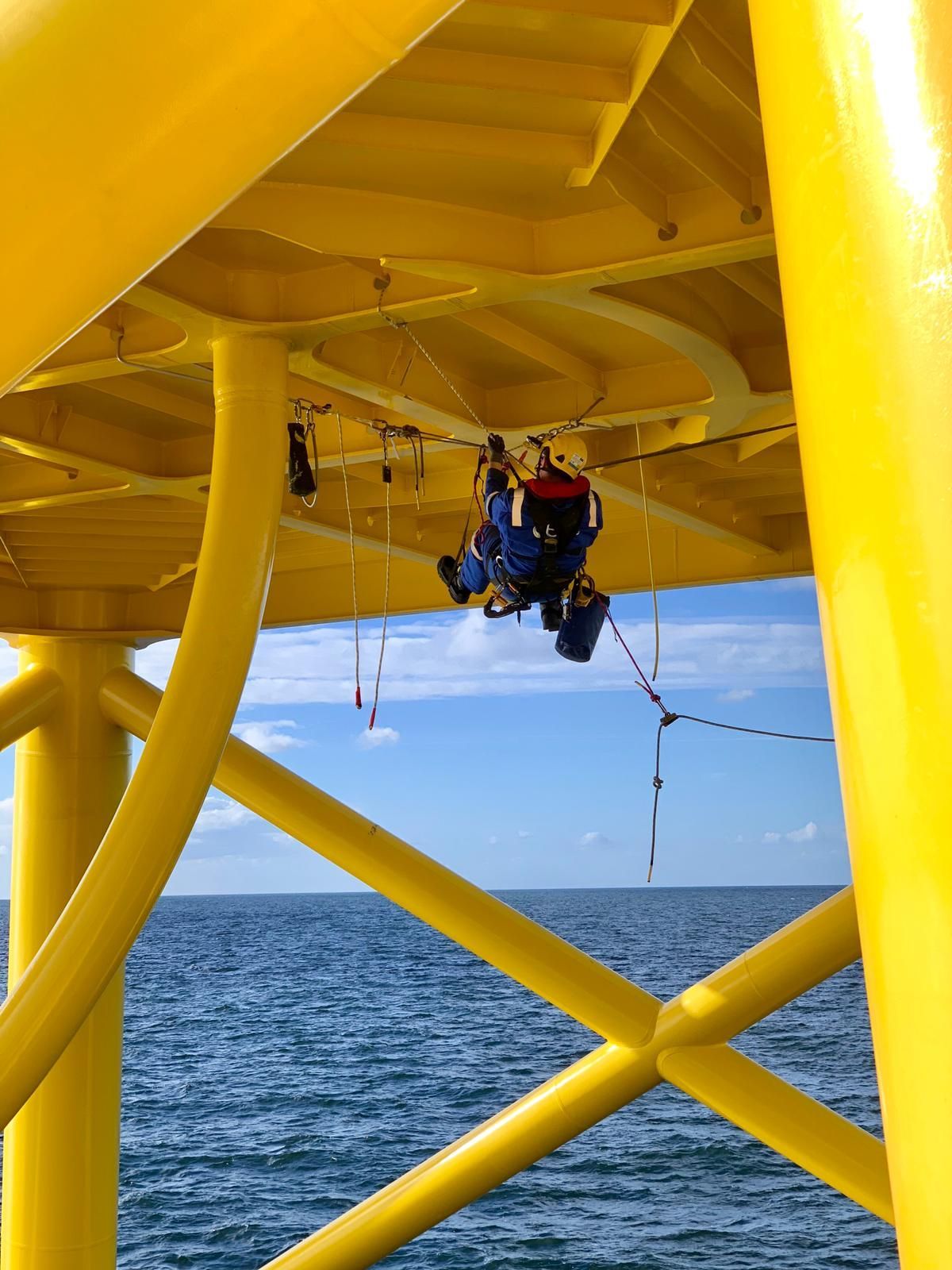
Rope access provides safe, efficient, and non-intrusive methods for working at height across sectors such as construction, renewables, offshore, marine, industrial painting, infrastructure, and film rigging. IRATA remains the global authority for rope access standards, and IRATA certification is required across most technical height-based roles.
Inspection, Surveying, and NDT Work
Individuals with strong height awareness from high ropes courses can often progress into inspection roles. Rope access technicians support ultrasonic testing, magnetic particle inspection, photographic surveys, and structural assessments across industry.
Film and TV Rigging
With Northern Ireland’s film industry growing rapidly, rope-based rigging skills support technicians working in studios, on set, and on location. High ropes experience helps build the confidence necessary to operate within complex rigging environments.
Renewables and Wind Energy
Modern wind turbine platforms require technicians who can work safely at height, carry out inspections, and perform blade repair or surface preparation. High ropes courses provide an early introduction to controlled height environments long before learners enter these specialist settings.
In every case, early exposure to structured height systems motivates individuals to explore future training and career paths. High ropes courses act as a gateway, giving learners the opportunity to recognise their strengths, understand their comfort level at height, and assess whether technical rope access work could be right for them.
High Ropes Courses and the Development of Height Awareness
One of the most important outcomes of high ropes participation is the development of height awareness — a measured, controlled understanding of how the body moves in elevated environments. People who excel on high ropes courses typically demonstrate:
- controlled breathing and emotional regulation
- strong situational awareness
- good balance and coordination
- confidence in equipment
- responsive decision-making
- the ability to remain calm under supervision
These qualities later become essential in rope access training. IRATA Level 1 does not require prior professional experience, but it does require individuals to remain composed, follow instructions, and apply safe movement principles. High ropes courses build these foundations in a supportive, instructor-supervised environment.
This is why adventure courses often become a learner’s first real indication of whether a career involving height is right for them. Many candidates who join our IRATA training programmes tell us that their initial curiosity, and their early confidence, came from a high ropes experience.
Why Choose Dangle
Here at Dangle, we pride ourselves on offering a wide range of professional and comprehensive inspection, access, coatings, and composite (IACC) industrial services and training courses to cater to the needs of both the private and public sectors. Our dedication to providing high-quality work at height solutions and training has helped us establish a strong reputation in the industry.
With a team of highly skilled and experienced professionals, we are committed to delivering exceptional results that not only meet but exceed our clients' expectations. Our on-site working at height services are designed to minimise maintenance costs in the long and short-term, allowing our clients to save on valuable resources.
Located in Belfast, Northern Ireland, our headquarters serve as the centre of our operations across Northern Ireland and Ireland. However still ensuring that we can extend our services to a wider clientele across the United Kingdom. No matter where you are located, our team is always ready to assist you with your industrial maintenance or training needs.
If you would like to learn more about how our dedicated team can help you, we encourage you to get in touch with us today. Our friendly and professional staff are always available to provide you with the information and support you require.
Contact Us
We'd Love a Share...
Recent Blog Posts