Abseiling and Rappelling: Why It’s a Job for Trained Rope Access Professionals
Abseiling and Rappelling: Why It’s a Job for Trained Rope Access Professionals
When most people hear the terms abseiling and rappelling, they picture charity drops from tall buildings, thrill-seekers descending a tower block, or recreational climbing adapted for the city environment. While those activities do exist, the truth is that what many people call abseiling work is actually part of a much more technical and regulated profession, called industrial rope access.
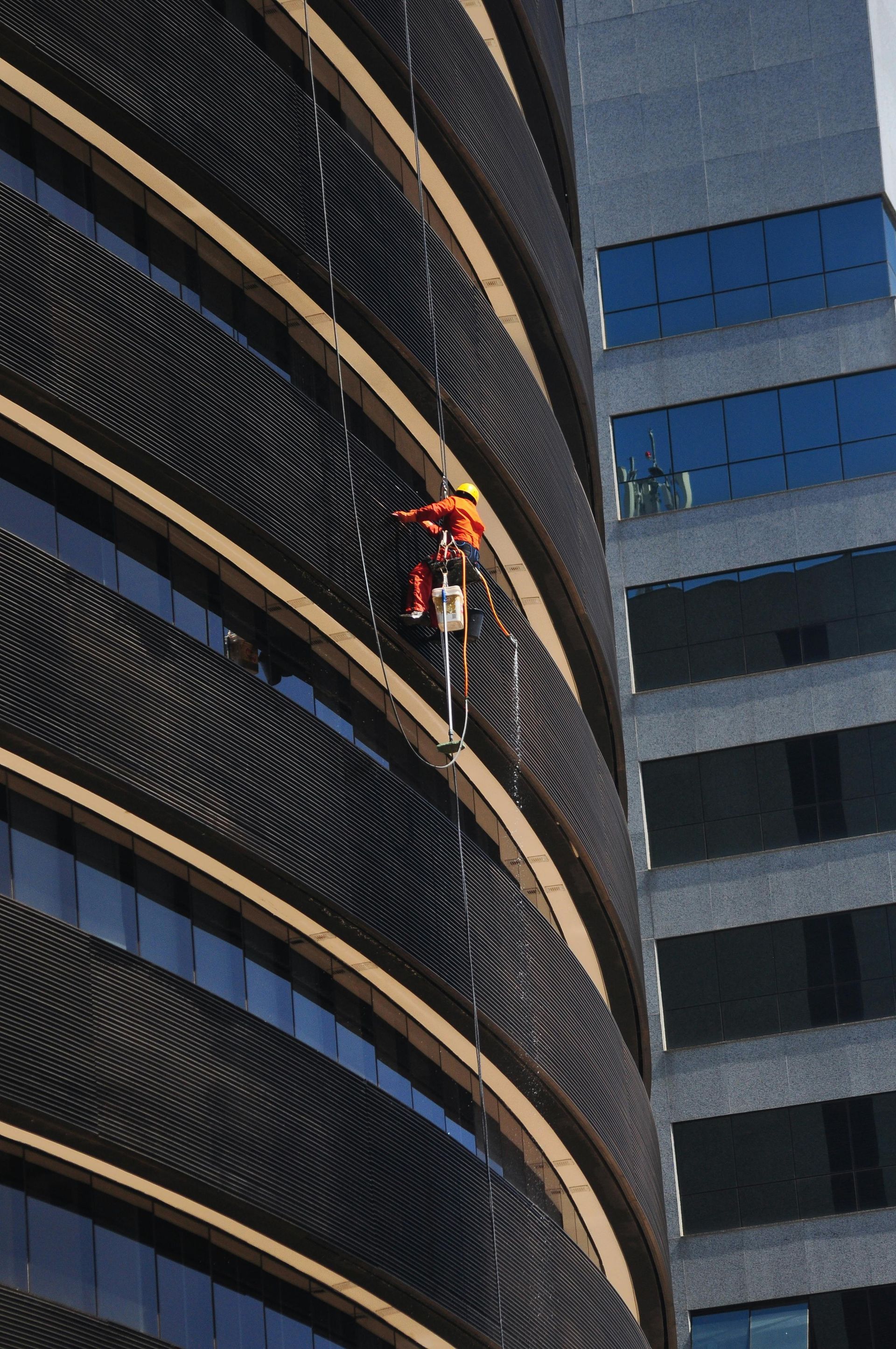
From high-rise maintenance to detailed inspections and façade repairs, rope access technicians operate across the built environment using advanced systems, rigorous training and strict safety protocols. What appears to the public as “abseiling or rappelling down a building” is, in practice, a sophisticated work-at-height methodology delivered by highly trained professionals.
This blog explores what the term really means today, the typical tasks carried out on buildings and structures, and how professional rope access technicians deliver this work safely.
What Is Abseiling and Rappelling?
Abseiling and rappelling describes descending, ascending or work-positioning a person on ropes in the built environment, typically involving structures such as:
- High-rise commercial buildings
- Residential towers
- Stadiums and arenas
- Car parks and concrete structures
- Bridges and transport infrastructure
- Shopping centres and retail complexes
- Industrial estates and warehouses
Unlike recreational abseiling, which is normally done in controlled environments with limited objectives, abseiling and rappelling are used as work-at-height access methods to carry out specific tasks as the safe system of work, including:
- Cleaning
- Inspection
- Maintenance
- Repairs
- Surveys
- Installation work
Although the public often use the terms “abseiling and rappelling,” the correct professional terminology is rope access — a regulated and globally recognised system for safely working at height using ropes as the access method.
Abseiling and Rappelling vs Rope Access: What’s the Difference?
While the phrases are sometimes used interchangeably, there is a very clear distinction:
Abseiling and rappelling
a broad, informal term often used to describe rope-based work on buildings
It generally refers to any rope-based activity that happens on buildings or structures. Abseiling and rappelling = WHAT the public sees.
Rope access
the formal, professional, safety-managed system used by trained technicians
Rope access is governed by strict standards, advanced rescue procedures and competence-based training. Rope access = HOW the work is safely and professionally delivered.
Rope Access technicians are not hobbyists — They are industrial professionals using complex rigging systems, conducting dynamic risk assessments, operating as part of a team and following structured methods for safe working at height.
Many organisations searching for "abseiling and rappelling services” are ultimately looking for the capability and assurance that comes with professional rope access teams.
Why Rope Access Is the Professional Standard Abseiling and Rappelling
IRATA (Industrial Rope Access Trade Association) sets the global benchmark for safe rope-based access in industrial and urban environments. Created by the offshore industry, IRATA’s systems and procedures are now used in cities worldwide due to their exceptional safety track record.
Key reasons rope access is used for abseiling and rappelling work:
- Industry-leading safety performance
IRATA’s safety statistics are among the best of any work-at-height method globally due to rigorous training and supervision. In its most recent Work & Safety Analysis, IRATA members collectively reported tens of millions of working hours with only a very small number of incidents—consistently demonstrating one of the lowest incident rates in the wider work-at-height industry.
- Redundancy and backup systems
Every rope access technician operates on two independently anchored ropes: a working line and a safety line. This dual-system approach ensures that if one line becomes compromised, the second line immediately provides fall protection. This level of redundancy far exceeds the safety provisions of many other work-at-height methods and is central to the reliability of rope access in demanding city environments.
- Mandatory rescue capabilities
Rope access teams must always include Level 3 technicians who are trained and competent in carrying out rescue procedures. Unlike other access methods—which may rely on external emergency responders—rope access crews can initiate a rescue instantly, using pre-planned and rehearsed techniques. This capability is essential for urban worksites, where fast response times can significantly reduce risk.
- Competence-based progression
IRATA technicians do not advance through the levels automatically or through time served. Each level (1, 2 and 3) requires formal training, documented logged hours, and an independent assessment. This structure ensures that only genuinely competent technicians progress to roles that involve greater responsibility, rigging decisions or team supervision. It also contributes to the consistently high standards seen across industrial rope access worldwide.
- Detailed documentation and compliance
Rope access projects require method statements, detailed risk assessments, equipment inspection logs, and rescue plans before any work begins. IRATA member companies also maintain rigorous equipment inspection regimes and audit processes. This structured approach ensures traceability, consistency, and regulatory compliance—qualities essential in modern urban environments where building owners, contractors and safety managers require clear accountability.
What Types of Work Require Abseiling and Rappelling?
Abseiling and rappelling is more than descending a rope—it supports a wide range of operational tasks required to maintain the built environment. Below are the most common work scopes delivered by rope access teams.
High-Level Cleaning and Building Maintenance
One of the most visible uses of rope access in cities is high-level cleaning and building maintenance. Technicians carry out window and façade cleaning, remove debris or vegetation, clear gutters, undertake minor cladding repairs and perform targeted pressure washing. Because rope access requires minimal equipment and no ground-level obstruction, these activities can be completed quickly and with little disruption to building occupants or the public.
Urban Inspection and Surveying
Inspection work is a core element of rope access due to its efficiency and precision. Technicians are used to assess defects, examine structural elements, inspect bolts and fixings, and support engineering surveys. This may include photographic or video documentation, drone-assisted inspections or thermal imaging assessments. These inspections help building owners, surveyors and asset managers make informed decisions about maintenance, safety and long-term asset performance.
Installation and Repair Work
Abseiling and rappelling also supports a wide variety of installation and repair tasks. Rope access technicians regularly fit signage, lighting systems, CCTV equipment, bird deterrents and cabling routes, as well as installing anchors and eyebolts. Because they can position themselves with accuracy at height, technicians are able to complete these works without the need for scaffolding or mechanical platforms, reducing both cost and disruption.
Painting and Coating Application
Many buildings require periodic repainting or coating to prevent corrosion and protect exposed surfaces. Rope access painters carry out façade painting, steel coating application, remedial touch-ups, rust treatment and surface preparation. In urban environments where scaffolding may be visually intrusive or impractical, rope access offers a flexible, low-impact method for completing these works to a high standard.
Emergency Works and Rapid Response
Rope access is often the fastest and safest way to respond to urgent issues at height. Technicians can quickly access areas affected by loose cladding, storm damage or falling debris risks, securing dangerous elements and carrying out temporary safety measures. Rapid-response work may also involve post-storm inspections, making rope access invaluable where time and safety are critical.
Why Training Is Essential for Anyone Interested in Abseiling and Rappelling
Abseiling and rappelling may look straightforward from the ground, but the reality is that it relies on structured training, accreditation and robust safety systems. Anyone considering a career in this field should understand the importance of choosing a recognised and accredited training provider. We explored this further in a recent blog on what it means to be an accredited training provider, including the standards and oversight that underpin professional rope access training.
Because abseiling and rappelling can be a professional work-at-height activity, formal training is mandatory. IRATA is the global standard for rope access and the qualification that all reputable rope access companies require. Urban environments bring unique risks, including traffic, pedestrians, glass façades, environmental exposure and public interaction. IRATA training ensures technicians can work safely, efficiently and professionally.
Why Companies Choose Rope Access Over Scaffolding in Urban Environments
As cities grow more complex and building designs evolve, the demand for safe, efficient and adaptable work-at-height methods continues to rise. Rope access has become the preferred choice for many organisations because it delivers these qualities without the disruption associated with more traditional access systems.
Rope access is often more efficient and less disruptive than traditional access solutions. It requires no large structures or heavy machinery, meaning work can take place without street closures, pedestrian diversions or prolonged site occupation. The minimal equipment footprint allows teams to mobilise quickly, reducing overall project time and cost while keeping visual impact to a minimum.
Rope access also brings clear environmental advantages. With fewer vehicle movements, reduced material use and no need for the transport, erection or removal of scaffolding components, rope access offers a significantly lower carbon footprint compared with other access methods. This makes it an attractive option for companies working toward sustainability goals or seeking to minimise their environmental impact during maintenance or construction activities.
Flexibility in tight urban spaces and the ability to reach complex architectural features make rope access a practical choice for modern cities, where accessibility, efficiency and environmental responsibility increasingly shape project planning. Technicians can complete work that would take days to scaffold in a fraction of the time, allowing businesses to operate with minimal disruption.
Why Choose Dangle
Here at Dangle, we pride ourselves on offering a wide range of professional and comprehensive inspection, access, coatings, and composite (IACC) industrial services and training courses to cater to the needs of both the private and public sectors. Our dedication to providing high-quality work at height solutions and training has helped us establish a strong reputation in the industry.
With a team of highly skilled and experienced professionals, we are committed to delivering exceptional results that not only meet but exceed our clients' expectations. Our on-site working at height services are designed to minimise maintenance costs in the long and short-term, allowing our clients to save on valuable resources.
Located in Belfast, Northern Ireland, our headquarters serve as the centre of our operations across Northern Ireland and Ireland. However still ensuring that we can extend our services to a wider clientele across the United Kingdom. No matter where you are located, our team is always ready to assist you with your industrial maintenance or training needs.
If you would like to learn more about how our dedicated team can help you, we encourage you to get in touch with us today. Our friendly and professional staff are always available to provide you with the information and support you require.
Contact Us
We'd Love a Share...
Recent Blog Post's